Why Are Some People Hyper-Aware?
TL;DR
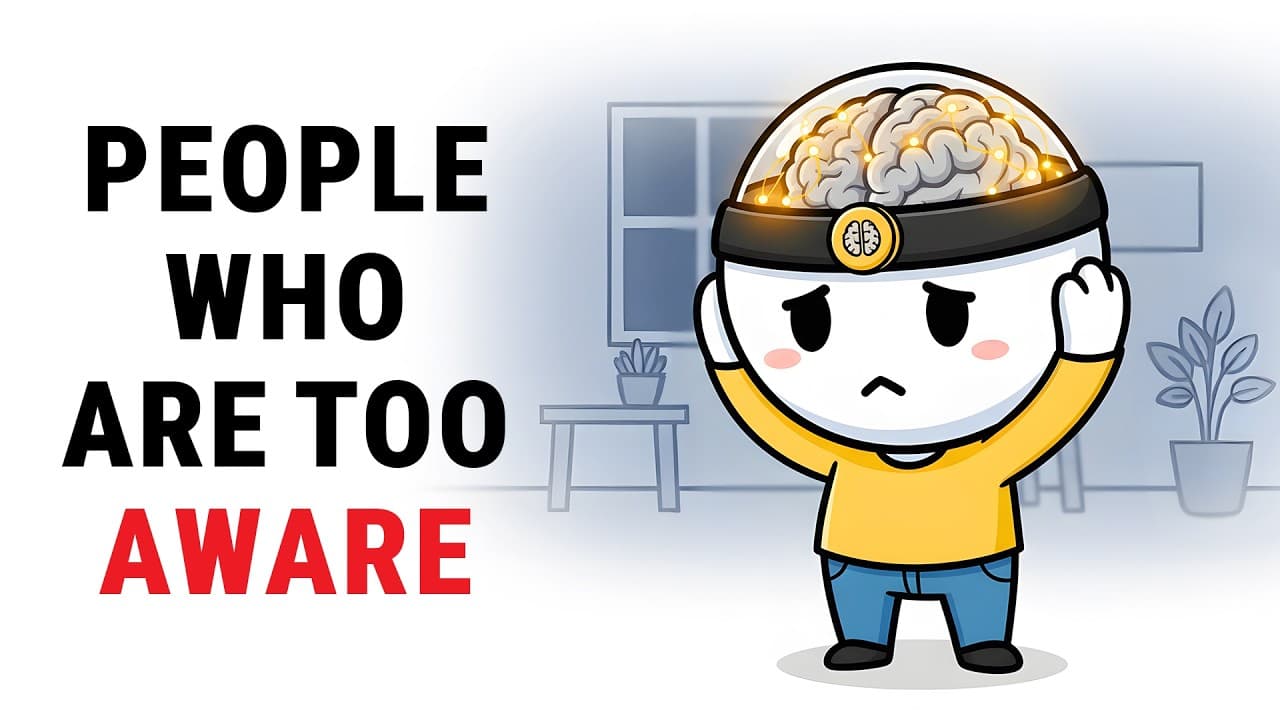
Hyper-awareness can be a psychological trap, as it often leads to constant analysis and emotional exhaustion. People with this trait may either be born with high sensitivity or develop it from past emotional instability. To manage this, they must learn to set boundaries and avoid absorbing everything, allowing them to appreciate life without being overwhelmed.
Transcript
There is a certain kind of person who is very strange. They walk into a room and almost instantly feel that something is off. No one is raising their voice. There's no drama, but their brain has already finished scanning everything. An avoided glance, a forced smile, a sentence that sounds normal, but is full of hidden fake energy. Many people thin... Read More
Key Insights
- Hyper-awareness is not always a gift; it can be a psychological burden.
- Highly sensitive persons (HSP) are often born with sensory processing sensitivity (SPS).
- Hypervigilance often develops from childhood experiences in unstable environments.
- Living in constant analysis mode drains emotional energy and prevents rest.
- Hyper-self-awareness leads to constant self-judgment and loss of natural presence.
- Overly aware individuals often lose relational innocence, leading to distrust.
- Empathy in hyper-aware individuals is constant, leading to emotional exhaustion.
- Awareness can be managed by setting boundaries and not absorbing everything.
Install to Summarize YouTube Videos and Get Transcripts
Explore YouTube Video Summarizer or Get YouTube Transcript Extractor
Questions & Answers
Q: What causes hyper-awareness in individuals?
Hyper-awareness can stem from two main causes: inborn sensitivity and environmental factors. Some individuals are born with sensory processing sensitivity (SPS), making them highly sensitive persons (HSP). Others develop hyper-awareness due to past experiences in emotionally unstable environments, often during childhood, leading to a state known as hypervigilance.
Q: How does hyper-awareness affect relationships?
Hyper-awareness can cause individuals to lose relational innocence, making them distrustful of others' intentions. They may overanalyze interactions, suspecting hidden motives behind compliments or gestures. This heightened awareness can lead to caution and loneliness, as they struggle to fully trust the surface of words and actions.
Q: Why do overly aware individuals struggle with constant analysis?
Overly aware individuals struggle with constant analysis due to an overactive default mode network (DMN) in their brains, which keeps them in a state of reflection and self-referential thinking. This results in them analyzing every interaction and emotion, leading to exhaustion and preventing them from fully resting or enjoying the present moment.
Q: What is the impact of empathy on overly aware individuals?
For overly aware individuals, empathy is a constant state rather than a skill they can turn on or off. They often absorb and internalize the emotions of those around them, leading to emotional exhaustion. This heightened empathy makes them effective emotional regulators but also leaves them feeling drained and in need of understanding themselves.
Q: How can overly aware people manage their heightened awareness?
Overly aware people can manage their heightened awareness by setting emotional boundaries and learning not to absorb everything they notice. They should practice letting go of unnecessary analysis, understand that not every emotion needs action, and realize that not every insight requires intervention. This approach helps them appreciate life without being overwhelmed.
Q: What is the role of the amygdala in hyper-awareness?
The amygdala plays a crucial role in hyper-awareness by acting as the brain's danger alarm center. In individuals who developed hyper-awareness due to past emotional instability, the amygdala is constantly activated, leading to a heightened state of vigilance. This results in them scanning for potential threats and becoming overly aware of their surroundings.
Q: What is interoception and its effect on overly aware individuals?
Interoception is the ability to sense the internal state of the body, processed by the insular cortex. In overly aware individuals, this system is extremely sensitive, leading them to misinterpret normal physical sensations as warning signals. This heightened interoception can create anxiety loops, where physical sensations are perceived as signs of danger, causing constant unease.
Q: How can hyper-awareness transform into a strategy of control?
Hyper-awareness can transform into a strategy of control as individuals attempt to predict and prepare for potential pain. By analyzing every possible scenario, they believe they can avoid surprises and protect themselves from disappointment. However, this leads to analysis paralysis, where they become trapped in a cycle of assumptions and lose touch with the present moment.
Summary & Key Takeaways
-
Hyper-awareness can be a psychological burden, leading to constant analysis and emotional exhaustion. People with this trait may be born with high sensitivity or develop it from past emotional instability. Managing it involves setting emotional boundaries and refusing to absorb everything, allowing them to appreciate life without being overwhelmed.
-
People who are overly aware often live in constant analysis mode, which drains their emotional energy and prevents them from resting. They may lose relational innocence, leading to distrust, and their constant empathy can result in emotional exhaustion. Understanding these traits can help manage their impact.
-
To cope with hyper-awareness, individuals should learn to set boundaries and avoid absorbing every detail. This can help them move from using awareness to predict to using it to be present, allowing them to enjoy life without being overwhelmed by constant vigilance or analysis.
Read in Other Languages (beta)
Share This Summary 📚
Summarize YouTube Videos and Get Video Transcripts with 1-Click
Try YouTube Summary with ChatGPT & Claude or YouTube Transcript Generator
Explore More Summaries from Apex Psychology 📚

Summarize YouTube Videos and Get Video Transcripts with 1-Click
Try YouTube Summary with ChatGPT & Claude or YouTube Transcript Generator