What Is the Psychology Behind the Man Child?
TL;DR
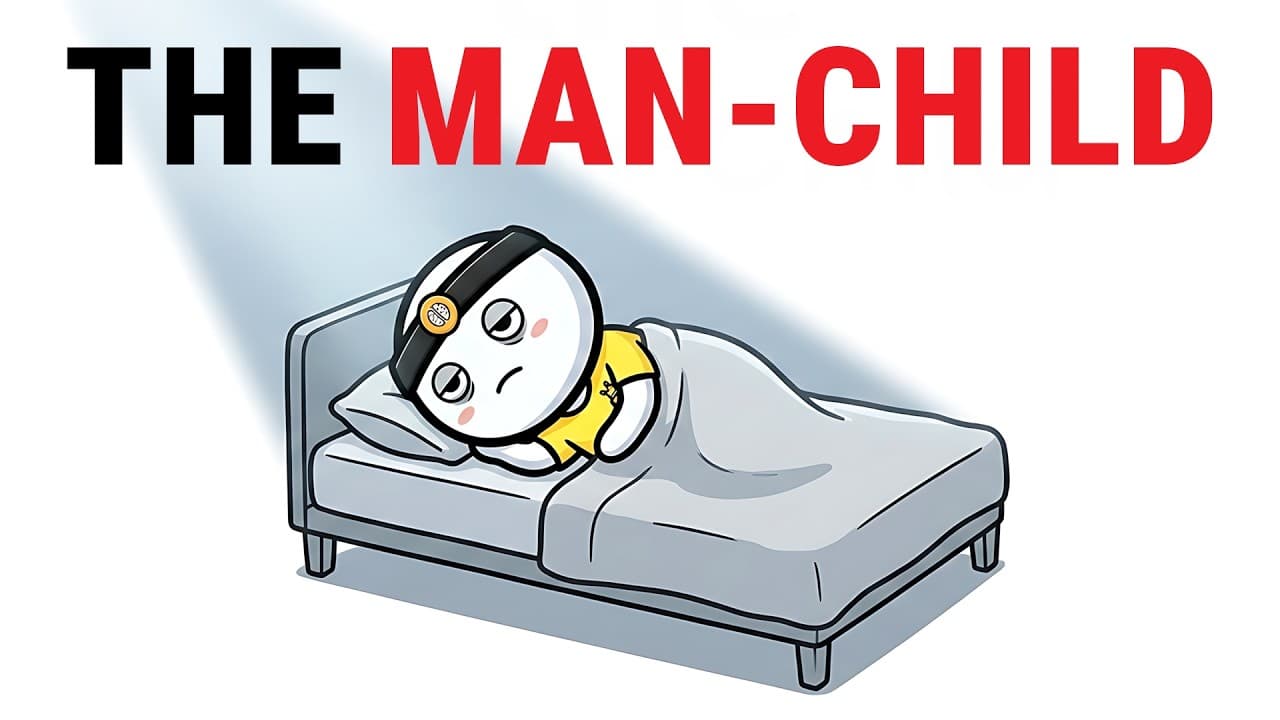
The man child is not simply lazy but a deeper pattern rooted in the psyche, where the desire for total freedom clashes with real life demands. Procrastination shields an ego threatened by failure, while four steps show how to shift thinking, accept responsibility, and move from provisional living to real action.
Transcript
Have you ever felt like life was passing right in front of your eyes and you weren't doing a thing about it? Waking up late, scrolling on your phone, playing one more game, watching one more video, telling yourself, "I'll start in a little bit, but that little bit never comes." And by the end of the day, you're lying there again with that same fami... Read More
Key Insights
- Puer Aeternus, or the eternal boy, describes the inner child who seeks absolute freedom.
- The provisional life keeps you in a state of potential rather than action and outcomes.
- Procrastination serves as a defense mechanism to protect an ego that fears real failure.
- Three common traps are used to avoid reality: numbness, fear of commitment, and victim mentality.
- The fear of reality drives the eternal child to cling to fantasies rather than faced responsibilities.
- Early praise for being exceptional can create a fragile ego that resists real-world demands.
- Real growth requires stepping into reality, learning, and taking responsibility for mistakes.
- Four steps to exit the cocoon include reframing growth, embracing responsibility, and pursuing consistent effort.
Install to Summarize YouTube Videos and Get Transcripts
Explore YouTube Video Summarizer or Get YouTube Transcript Extractor
Questions & Answers
Q: What is the Puer Aeternus and how does it relate to the man child?
Puer Aeternus is described as the eternal boy, a childlike state where the person craves unlimited freedom and avoids fixed life commitments. In adults, this manifests as the man child who holds back from taking responsibility, lives in a provisional life, and keeps doors open without stepping through them. Understanding this helps explain why some people delay action and cling to endless potential rather than pursuing real achievements.
Q: Why is procrastination described as more than laziness in the video?
Procrastination is framed as a psychological strategy to protect a wounded ego that believed they were special as a child. When faced with real-world demands, delaying action preserves the self view of limitless potential. It avoids the fear of failure by ensuring the person never tests whether they can meet adult responsibilities, thereby maintaining a fantasy of superiority.
Q: What are the three traps of the eternal child, and how do they function?
The three traps are (1) using short-term comforts to numb awareness, (2) fear of long-term commitment, which leads to withdrawal and blaming others, and (3) a victim mentality that sees external pressures as proof the world is against you. Together, they prevent stepping into reality and perpetuate a cycle of avoidance and illusion about one’s abilities.
Q: How does early praise influence adult behavior according to the video?
Early praise for being exceptional can create a self-worth tied to potential rather than achievement. When real life demands outcomes, that fragile ego resists effort and takes refuge in the belief that they simply need to start to prove they are the best. This mismatch leads to chronic procrastination and avoidance of real responsibility.
Q: What does the video suggest is the healthiest response to the fear of reality?
The healthiest response is to recognize the fear, accept that reality includes limits and responsibilities, and take concrete steps toward growth. This involves changing how you think about growing up, embracing practical disciplines, and applying effort to smaller tasks that build toward larger goals. It is about moving from fantasy to tested capability.
Q: What are the four steps to step out of the cocoon, as described in the video?
The four steps include transforming the belief about growing up, committing to responsibility, practicing consistent effort, and facing reality through deliberate actions. These steps aim to replace avoidance with structured progress, turning potential into demonstrable outcomes. They encourage creating habits that support accountability and resilience in daily life.
Q: How is responsibility framed in relation to adult life in the talk?
Responsibility is presented as an essential marker of adulthood, replacing the temporary and flexible stance of the provisional life with concrete commitments. Taking responsibility means facing the risk of failure, learning from mistakes, and consistently pursuing goals rather than staying in the comfort of open-ended possibilities.
Q: What role does reality play in transforming the man child into a responsible adult?
Reality acts as the ultimate grader of potential. By engaging with reality—accepting bills, deadlines, and accountability—one learns to work, revise plans, and persist through setbacks. The video argues that facing reality courageously, rather than avoiding it through fantasy, is the core process by which the man child becomes capable and resilient.
Summary & Key Takeaways
-
The video frames the man child as a persistent inner child that resists responsibility, identifying it as a psychic pattern rather than mere laziness. It introduces Carl Jung’s Puer Aeternus and the idea of a provisional life where potential is valued over actual outcomes. It emphasizes that change requires confronting fear and making concrete steps.
-
The content outlines three traps that reinforce the eternal child: numb the awareness with short term pleasures, avoid long term commitments, and adopt a victim mentality. It then proposes four actionable steps to reframe growth, accept reality, and pursue disciplined, responsible living.
-
The overall message is a wake-up call to move from a spectator to an active participant in one’s life, using psychology, self-awareness, and practical steps to break free from comfort zones and embrace accountability.
Read in Other Languages (beta)
Share This Summary 📚
Summarize YouTube Videos and Get Video Transcripts with 1-Click
Try YouTube Summary with ChatGPT & Claude or YouTube Transcript Generator
Explore More Summaries from Apex Psychology 📚


Summarize YouTube Videos and Get Video Transcripts with 1-Click
Try YouTube Summary with ChatGPT & Claude or YouTube Transcript Generator