What causes nightmares and how REM shapes them?
TL;DR
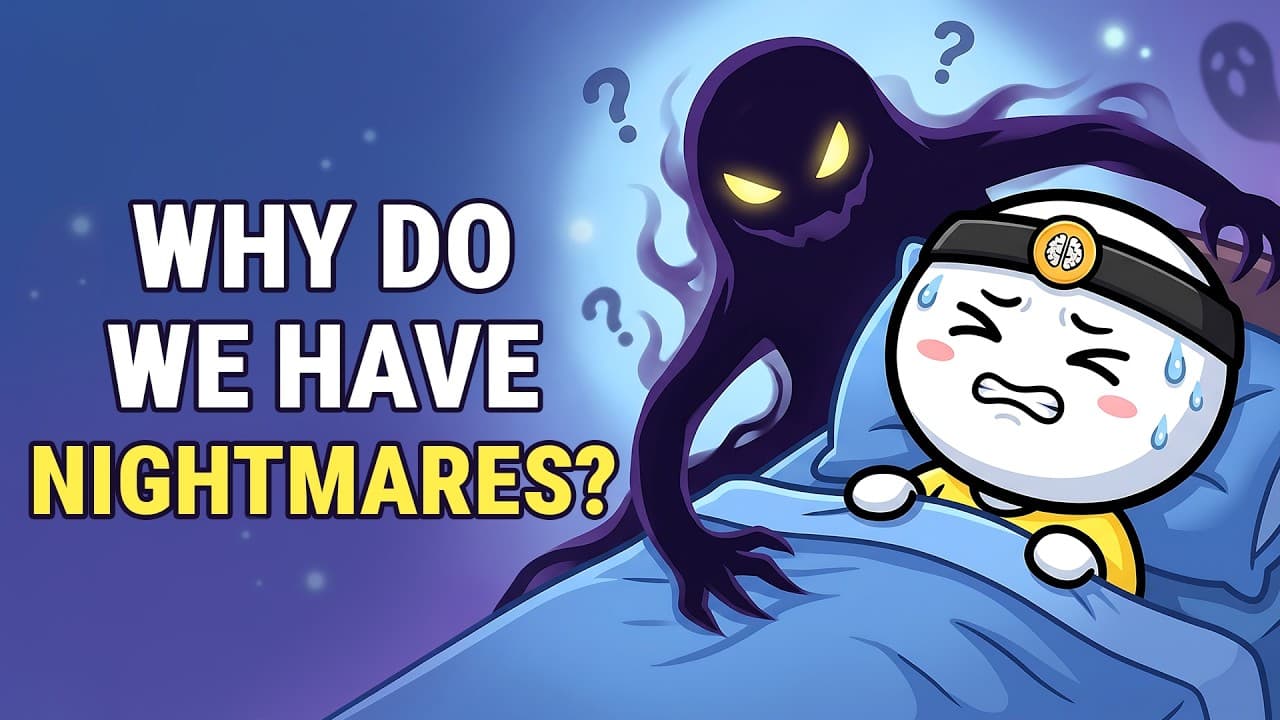
Nightmares happen during REM sleep when emotions are processed, not random; the amygdala drives fear while the prefrontal cortex is asleep, so dreams feel real. REM atonia paralyzes the body to keep you safe, and unresolved stress or trauma can fuel recurring nightmares. This mechanism once aided survival.
Transcript
You're running. Your lungs are burning, the air is thick, and your legs feel like lead. Right behind you is a monster, a clown with a chainsaw, or maybe your boss demanding a deadline at 3:00 a.m. You trip, the dark shadow rushes in, and boom, you jolt awake dripping with sweat, your heart pounding like it wants to burst out of your chest. In that ... Read More
Key Insights
- Nightmares occur specifically during REM sleep, the brain’s emotional processing stage, not during wakefulness or other sleep stages.
- The prefrontal cortex shuts down during REM, allowing the amygdala to drive fear and vivid dream content without logical checks.
- REM atonia locks down the body with two chemicals, glycine and GABA, preventing movement and creating sleep paralysis when the system misfires.
- The brain uses REM as a natural emotional therapy room where intense daily emotions are processed and cooled down.
- Dreams fuse emotion and memory processing, which is why nightmare content often feels intensely real and logical in the dream context.
- Recurring nightmares often reflect unprocessed or repressed emotions, serving as red warning lights from the mind’s dashboard.
- Threat simulation theory reframes nightmares as an ancient survival tool that rehearsed fear responses to real threats in a safe setting.
- Stress, trauma, and unresolved life events increase the likelihood of nightmares by populating dreams with unresolved emotional material.
Install to Summarize YouTube Videos and Get Transcripts
Explore YouTube Video Summarizer or Get YouTube Transcript Extractor
Questions & Answers
Q: A real search query question about the video (How to, What is, Why does). Question 1
What is the role of REM sleep in nightmares and why does the amygdala take control during this stage? REM sleep is the stage where emotion processing peaks, while the prefrontal cortex which handles logic is largely offline. This shift allows the amygdala to drive fear responses, producing vivid nightmare content that feels real, because the brain cannot apply normal logical checks to the dream narrative.
Q: Question 2
Why does REM sleep include atonia, and how does this protect the sleeper during nightmares? REM atonia is a safety feature that temporarily paralyzes most muscles, preventing the person from acting out dream events. The brain uses glycine and GABA to lock down muscles, creating a protective disconnect between dream actions and physical movement, a mechanism that can sometimes produce sleep paralysis if the timing overlaps with waking consciousness.
Q: Question 3
How do nightmares relate to daily emotions and stress according to the video? Nightmares act as the brain’s way of processing pent up emotions from the day, turning unresolved anger, fear, or stress into dramatic dream scripts. When emotional material is not resolved, the brain replays similar nightmare themes, signaling that underlying issues need attention.
Q: Question 4
What is the threat simulation theory and how does it apply to nightmares? The theory proposes that nightmares evolved as a survival feature, letting our ancestors rehearse fear responses to real threats in a safe dream environment. This rehearsal supposedly improved future reaction times, linking nightmares to a long history of adaptive emotional processing.
Q: Question 5
Why do children have more nightmares than adults, based on the video? Children’s brains are confronted with many new experiences daily, which creates a surge of intense emotions that need processing. This makes nightmares more common as the developing brain works through strong, fresh feelings and experiences.
Q: Question 6
What happens when the brain’s emotional processing dominates during REM and the logic center is quiet? The result is dreams that feel emotionally true yet nonsensical upon waking. The brain can’t apply normal reasoning to the dream, so the content seems highly plausible while the player in the dream remains governed by fear and emotion rather than logic.
Q: Question 7
How can understanding nightmares help reduce their frequency? Recognizing that nightmares reflect unresolved emotions and stress can guide focusing on processing those emotions, addressing trauma if present, and managing stress levels. Practical steps can target emotional processing outside sleep to reduce nightly fear-based scripts.
Q: Question 8
What ancient function do nightmares likely serve and is it still relevant today? Nightmares likely served as a rehearsal mechanism for fear responses in dangerous environments, a function that could still be relevant by training alertness and rapid responses. In modern life, unresolved stress can hijack this mechanism, producing frequent, vivid nightmares instead of protective rehearsals.
Summary & Key Takeaways
-
During REM sleep the brain becomes highly active in emotion and memory areas while logic remains quiet, creating vivid dreams. Nightmares emerge from emotional processing and unaddressed stress, not random signals, and may reflect hidden concerns that the brain is trying to resolve. The body is briefly paralyzed in REM to prevent acting out dreams, which can contribute to sleep paralysis if the system misfires.
-
The threat simulation theory suggests nightmares were once a survival feature, helping early humans rehearse fear responses in a safe environment so they could react better to real dangers. Over time, the same mechanism processes modern psychological stress, turning everyday pressure into dramatic nocturnal scripts.
-
Children experience nightmares more often because their brains are handling many new experiences, but adults still carry chronic stress or trauma that can produce recurring nightmares, turning nightmares into a visual language for silent emotional pain that signals unresolved issues to address.
Read in Other Languages (beta)
Share This Summary 📚
Summarize YouTube Videos and Get Video Transcripts with 1-Click
Try YouTube Summary with ChatGPT & Claude or YouTube Transcript Generator
Explore More Summaries from Apex Psychology 📚


Summarize YouTube Videos and Get Video Transcripts with 1-Click
Try YouTube Summary with ChatGPT & Claude or YouTube Transcript Generator