How to stop overthinking and rewrite your thought patterns
TL;DR
Overthinking comes from a highly capable pattern recognition brain and a dopamine driven loop that makes thinking feel rewarding. You can break the cycle by changing how you relate to thoughts, using cognitive diffusion to create mental space, and reframing language to detach from internal chatter. Two core techniques help you regain control and reduce rumination.
Transcript
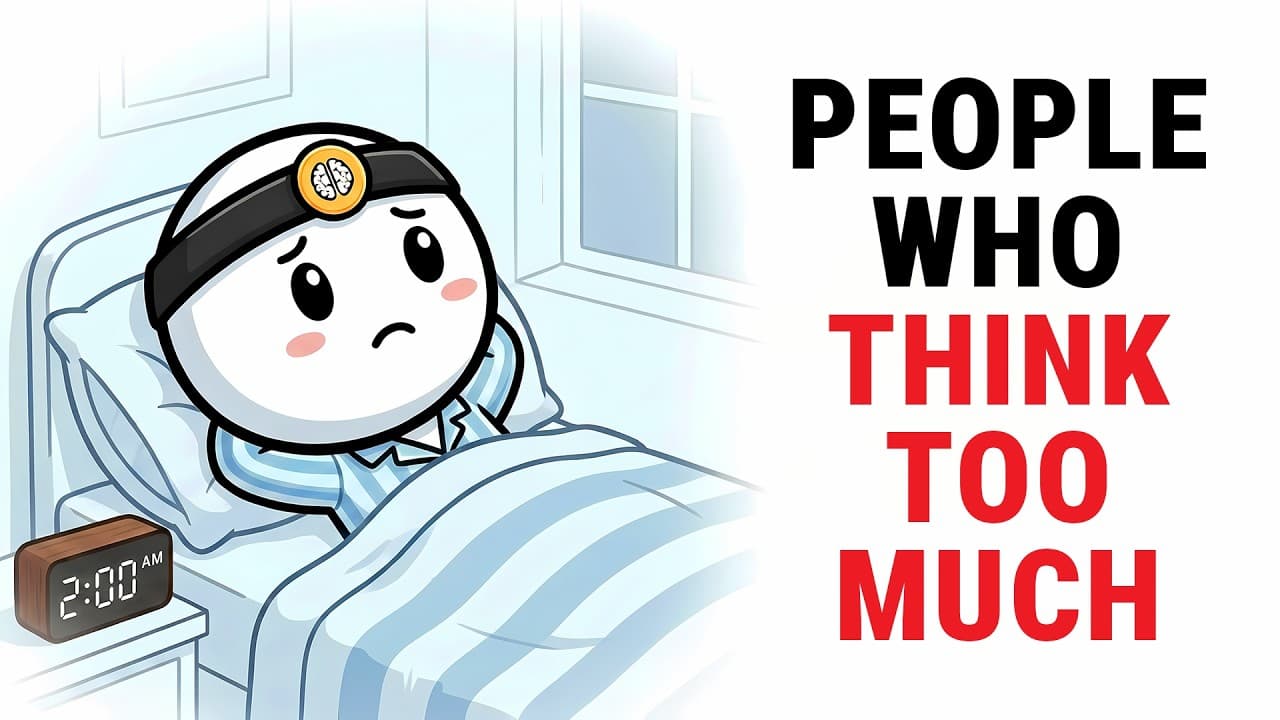
There's a kind of exhaustion that doesn't even have an official name, yet millions of people go through it every night. It's when you're lying in bed at 2:00 a.m., your body completely drained, but your brain is sprinting at full speed. You're about to fall asleep, then boom, a conversation from 6 hours ago suddenly comes back. You replay it over a... Read More
Key Insights
- Overthinking is termed maladaptive rumination and is linked to uncertainty and past events you can’t change.
- The prefrontal cortex acts as a CEO that normally brakes panic signals from the amygdala, but it can be overwhelmed by constant internal chatter.
- The default mode network keeps the mind online, causing endless review of past events and imagined conversations.
- Reflective rumination can be a source of high emotional intelligence and growth when kept in balance.
- Brooding rumination is passive and keeps you stuck, leading to sleep disruption and analysis paralysis.
- The illusion of mental progress makes you feel productive while you are not moving forward.
- Dopamine release during imagined problem solving creates an addiction like loop that reinforces thinking.
- Cognitive diffusion involves saying 'I am having the thought that...' to create mental space and reduce power of thoughts.
- Two core techniques from ACT and somatic experiencing help reframe thoughts and regulate the nervous system.
Install to Summarize YouTube Videos and Get Transcripts
Explore YouTube Video Summarizer or Get YouTube Transcript Extractor
Questions & Answers
Q: How can I identify whether I am in reflective vs brooding rumination
Reflective rumination turns inward to understand emotions and grow, and can be productive when balanced with action. It helps improve self awareness, empathy, and problem solving. Brooding rumination, by contrast, is passive, repeats the problem without seeking solutions, and often worsens sleep, mood, and decision making. Recognizing the shift is the first step to changing the pattern.
Q: Why does overthinking feel addictive and hard to stop
Overthinking taps into a dopamine driven reward loop where problem solving, even imaginary, provides small dopamine hits. This makes thinking feel productive and rewarding, reinforcing the habit. As long as the brain gets those rewards, the urge to think continues, making willpower alone ineffective for stopping the cycle.
Q: What is cognitive diffusion and how does it help
Cognitive diffusion is a technique to separate you from your thoughts by reframing them as mere mental events. Saying 'I am having the thought that...' creates space between you and the thought, reducing its perceived reality. This shifts neural activity away from the amygdala toward the prefrontal cortex, aiding calm and better control.
Q: How does the brain’s default mode network relate to overthinking
The default mode network keeps the brain online with internal focus on past events and imagined conversations. When it combines with a overactive prefrontal cortex, it sustains a loop of thinking that can feel productive but is unproductive. Understanding DMN helps explain why thoughts persist even when not solving real problems.
Q: What role does childhood environment play in overthinking
A history where outcomes are unpredictable or criticism is harsh teaches a survival strategy to anticipate everything and read for risk. This adaptation helps safety but becomes maladaptive in adulthood, turning into excessive rumination. Recognizing this origin can help reframe thoughts as protective rather than personal flaws.
Q: What practical steps can help reduce rumination before bed
Identify whether thoughts are reflective or brooding and apply diffusion to label them as thoughts. Limit engagement with the thoughts by setting time boundaries and practice grounding or breathing exercises to calm the nervous system. Over time, this reduces the mind’s tendency to stay online and improves sleep quality.
Q: How can acceptance and commitment therapy strategies help
ACT suggests accepting thoughts without judgment and committing to valued actions. Cognitive diffusion is part of this, helping you detach from the impact of thoughts. The approach focuses on changing your relationship with thoughts rather than eliminating them, which reduces their power and supports healthier behavior.
Q: Why is forcing yourself to stop thinking usually ineffective
Because thinking is driven by a learned dopamine reward system, simply stopping creates frustration and rebound thoughts. Instead, changing the way you engage with thoughts reduces their hold. Therapies emphasize altering the interaction with thoughts rather than trying to suppress them outright.
Summary & Key Takeaways
-
Overthinking is explained as maladaptive rumination driven by a highly intelligent nervous system that scans for hidden meaning. The video contrasts reflective rumination, which can be a strength, with brooding rumination, which drains energy and disrupts sleep and decision making. The goal is to change your relationship with thoughts.
-
Cognitive diffusion is introduced as a technique to detach from thoughts by labeling them as thoughts rather than reality, which shifts neural activity away from the amygdala toward the prefrontal cortex.
-
The speaker explains a dopamine based reward loop that makes thinking feel productive, and recommends two evidence based strategies from ACT and somatic therapies to reduce the urge to overthink and regain peace of mind.
Read in Other Languages (beta)
Share This Summary 📚
Summarize YouTube Videos and Get Video Transcripts with 1-Click
Try YouTube Summary with ChatGPT & Claude or YouTube Transcript Generator
Explore More Summaries from Apex Psychology 📚




Summarize YouTube Videos and Get Video Transcripts with 1-Click
Try YouTube Summary with ChatGPT & Claude or YouTube Transcript Generator