How does the federal bureaucracy implement laws
TL;DR
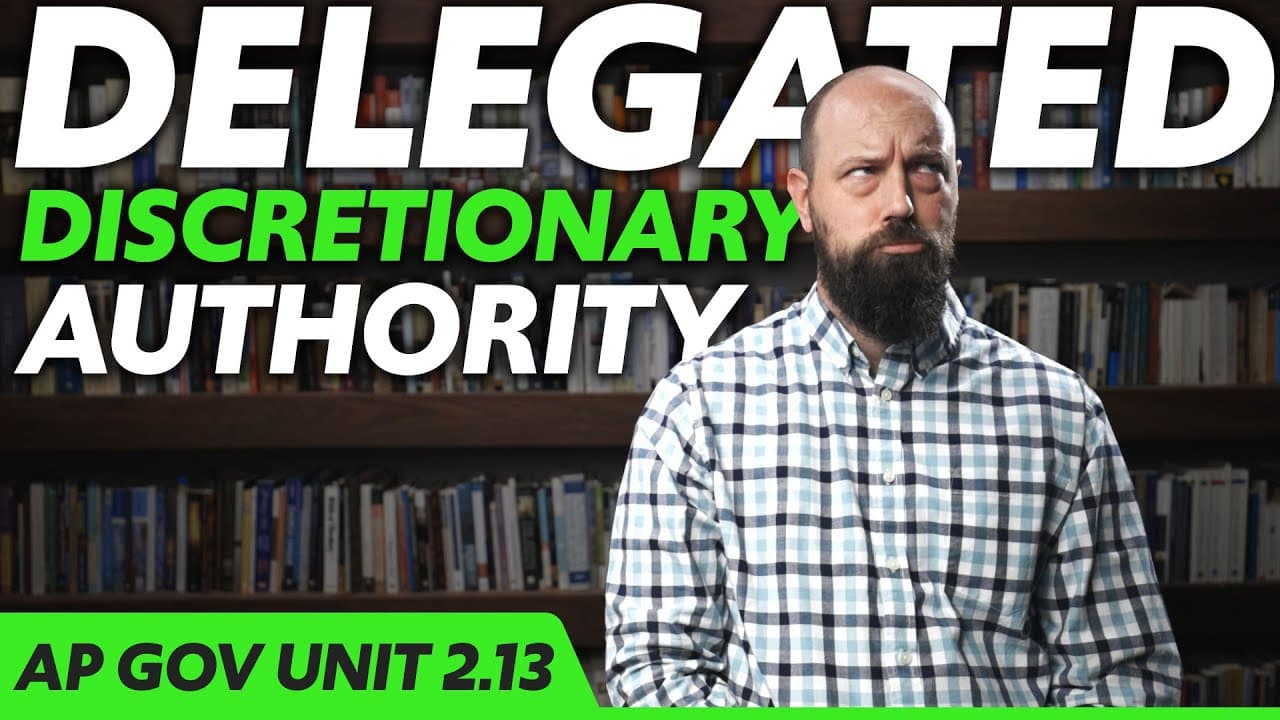
The bureaucracy uses delegated discretionary authority to interpret and implement laws. Agencies filled with experts create specific rules and procedures to carry out broad statutes. Examples include DHS, DOT, VA, Education, EPA, FEC, and SEC, which detail how policies translate into practice and enforcement.
Transcript
well hey there and welcome back to heimlich's history now we've been going through unit 2 of the ap government curriculum and more specifically we've started talking about the federal bureaucracy so in this video we're going to see exactly how the federal bureaucracy carries out the will of the executive branch so if you're ready to get them brain ... Read More
Key Insights
- The federal bureaucracy carries out executive branch will by applying delegated discretionary authority.
- Discretion is granted because agencies have domain-specific expertise the legislature lacks.
- Rule making authority lets agencies specify how broad laws are enforced in practice.
- The IRS demonstrates rule making by setting tax due dates and payment methods beyond the broad tax mandate.
- Multiple major agencies have specialized roles in enforcing environmental, transportation, and financial rules.
- Agency discretion shapes immigration, transportation, veterans affairs, education, and environmental policy through concrete rules.
- Campaign finance and stock market regulation are governed by the FEC and SEC rules respectively.
- The seven highlighted agencies illustrate the diversity of delegated authority in government.
- More videos from this channel:
- More from this channel: Heimler's History
Install to Summarize YouTube Videos and Get Transcripts
Explore YouTube Video Summarizer or Get YouTube Transcript Extractor
Questions & Answers
Q: How does the IRS create rules for paying taxes beyond the general tax mandate
The Internal Revenue Service is the bureaucratic agency that steps in after Congress passes a broad income tax law. It creates specific rules for how taxes are collected, when they are due, and acceptable payment methods. These rules translate a simple legal obligation into a practical system for enforcement and compliance.
Q: What is delegated discretionary authority
Delegated discretionary authority refers to powers granted to bureaucratic agencies by Congress. These agencies do not have constitutional authority of their own, but are empowered to interpret, implement, and enforce laws within their specialized domains. This enables tailored regulations that reflect technical expertise and practical considerations.
Q: Why do agencies like the EPA issue concrete rules
Agencies like the EPA issue concrete rules because Congress passes broad statutes about environmental protection, but lacks detailed technical knowledge. The EPA employs scientists and experts to determine how to reduce pollution, set standards, and enforce compliance, turning general mandates into actionable requirements for industry and government entities.
Q: What role does the Department of Homeland Security play in rule making
The Department of Homeland Security creates rules that determine who is admitted, who can seek asylum, and related border policies. These discretionary decisions are based on the department’s mandate to protect Americans, manage immigration procedures, and apply regulatory criteria to real-world situations presented by individuals seeking entry or refuge.
Q: How does rule making affect education policy
Rule making in education involves determining how federal grants are distributed and what qualifications are required to receive them. The Department of Education uses its discretionary authority to specify implementation standards that states must meet to access federal funds, thereby shaping how educational policies are applied nationwide.
Q: What examples show how multiple agencies use discretionary authority
Examples include the DHS regulating immigration, the DOT governing work hours for flight attendants, the VA setting veterans hospitals and education programs, the EPA enforcing environmental standards, the FEC regulating campaign finance, and the SEC overseeing stock market rules. Each agency adapts broad laws to sector-specific practices.
Q: How do cabinets and commissions enforce laws
Cabinets and commissions enforce laws by issuing regulations and rules that interpret statutory language. They rely on specialized staff to assess technical feasibility, monitor compliance, and determine penalties or incentives. This ongoing rule making ensures laws are implemented consistently across different contexts and administrative levels.
Q: What is the relationship between Congress and the bureaucracy in law execution
Congress enacts laws and assigns broad objectives, while the bureaucracy fills in details through rule making and discretionary enforcement. Agencies interpret the intent of statutes, develop concrete standards, and oversee implementation to ensure compliance, creating a functional system where laws become enforceable practices.
Summary & Key Takeaways
-
The video explains that Congress often passes vague laws and that federal agencies have the expertise to fill in details, creating rules to implement these laws.
-
It details how rule making and discretionary enforcement allow agencies to translate statutory language into concrete standards and procedures.
-
Examples of agencies and their rule making illustrate how policy becomes enforceable reality across different domains.
Read in Other Languages (beta)
Share This Summary 📚
Summarize YouTube Videos and Get Video Transcripts with 1-Click
Try YouTube Summary with ChatGPT & Claude or YouTube Transcript Generator
Explore More Summaries from Heimler's History 📚






Summarize YouTube Videos and Get Video Transcripts with 1-Click
Try YouTube Summary with ChatGPT & Claude or YouTube Transcript Generator