How to Use Conditionals for IELTS Speaking Success
TL;DR
Conditionals are crucial for scoring high in IELTS speaking and writing tests. They help in developing answers, showing hypothetical situations, and speculating about the future. Understanding different types of conditionals, avoiding common grammar mistakes, and practicing pronunciation can enhance your fluency and coherence scores.
Transcript
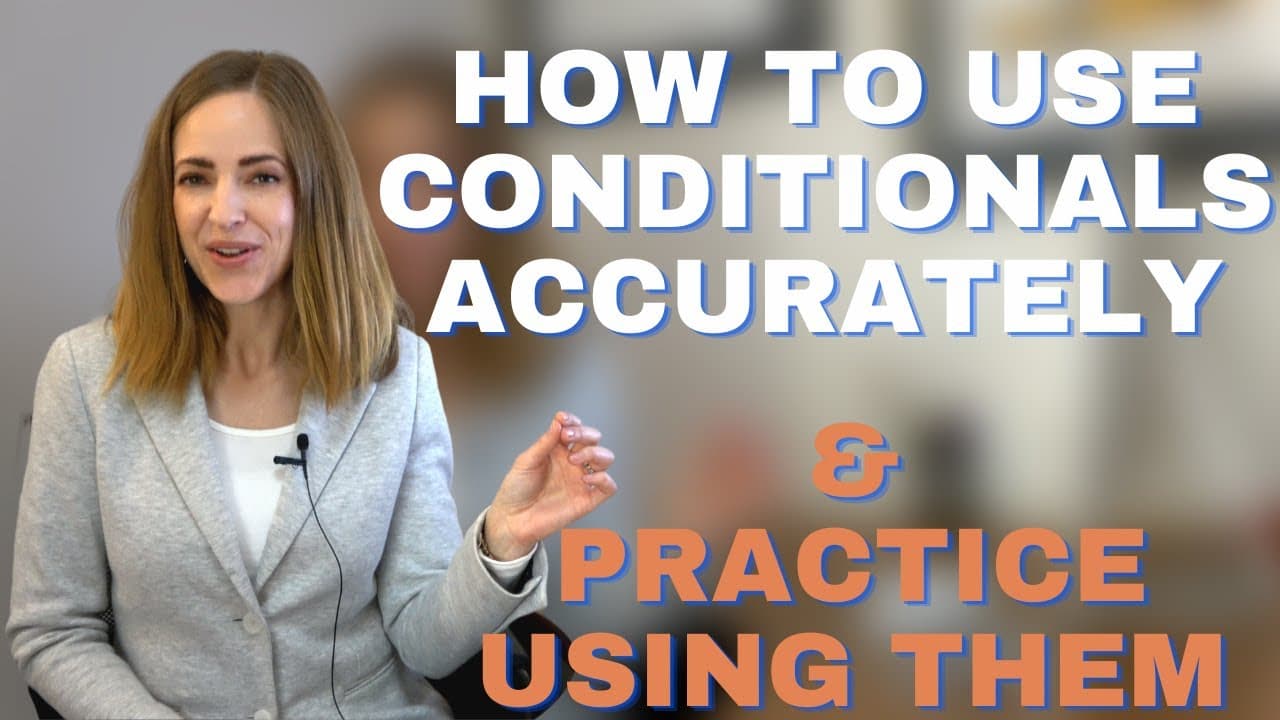
hi it's michelle from ielts advantage how do you feel today me i'm a little bit tired my neighbor's dog started barking at 4 30 this morning and woke me up and now i'm feeling a little bit tired if my neighbor's dog hadn't started barking at 4 30 in the morning i wouldn't have woken up and i wouldn't be so tired today we are going to practice condi... Read More
Key Insights
- Conditionals are essential for scoring 7 or higher in IELTS speaking.
- They help develop answers and demonstrate a range of grammar structures.
- Common mistakes include incorrect use of modals in if clauses.
- Pronunciation errors often occur due to reduced forms in conditionals.
- Zero conditional is used for universal truths and facts.
- First conditional expresses future possibilities based on current actions.
- Second conditional deals with hypothetical or imaginary situations.
- Third conditional reflects on past hypothetical scenarios and regrets.
Install to Summarize YouTube Videos and Get Transcripts
Explore YouTube Video Summarizer or Get YouTube Transcript Extractor
Questions & Answers
Q: How can conditionals help in IELTS speaking?
Conditionals aid in developing answers by allowing candidates to express hypothetical situations and speculate about future outcomes. They help demonstrate a range of grammar structures, which is crucial for achieving a high score in fluency and coherence. Using conditionals accurately can impress examiners and enhance overall performance.
Q: What are common mistakes with conditionals?
Common mistakes with conditionals include placing modals incorrectly in if clauses and pronunciation errors due to reduced forms. For example, using 'will' in the if clause or mispronouncing contracted forms like 'I'd have' can lead to misunderstandings. Practicing these aspects helps avoid such errors and improves clarity.
Q: Why is pronunciation important in conditionals?
Pronunciation is crucial because conditionals often involve reduced forms and contractions, which can lead to misunderstandings if not pronounced correctly. For instance, 'I'd have' may sound like 'I'da,' which can confuse listeners. Practicing pronunciation ensures clear communication and helps candidates convey their ideas effectively.
Q: What is the zero conditional used for?
The zero conditional is used to express universal truths and factual statements. It typically employs the present simple tense in both clauses, such as 'If it rains, the roads get wet.' This conditional is useful for stating facts that are generally always true and do not depend on specific circumstances.
Q: How does the first conditional work?
The first conditional is used to discuss future possibilities that depend on present actions. It often uses the present simple tense in the if clause and 'will' in the main clause, like 'If you study, you will pass the exam.' This structure is useful for discussing likely outcomes based on current decisions.
Q: What is the second conditional used for?
The second conditional is used for hypothetical or imaginary situations that are unlikely to happen. It typically uses the past simple tense in the if clause and 'would' in the main clause, such as 'If I had a million dollars, I would travel the world.' It helps express wishes or unlikely scenarios.
Q: When should the third conditional be used?
The third conditional is used to reflect on past hypothetical scenarios and express regrets or missed opportunities. It employs the past perfect tense in the if clause and 'would have' in the main clause, like 'If I had studied harder, I would have passed the exam.' It is useful for discussing past events that did not occur.
Q: How can conditionals improve IELTS scores?
Conditionals improve IELTS scores by showcasing a candidate's ability to use complex grammar structures accurately, which is essential for achieving a high band score in fluency and coherence. They help develop answers, express hypothetical ideas, and speculate on future outcomes, making responses more comprehensive and engaging for examiners.
Summary & Key Takeaways
-
Conditionals play a vital role in achieving a high score in IELTS speaking and writing tests by helping candidates develop their answers and demonstrate a range of grammar structures. Understanding and correctly using different types of conditionals can significantly improve fluency and coherence scores.
-
Common errors in conditionals include incorrect placement of modals in if clauses and pronunciation issues due to reduced forms. Practicing these aspects can help candidates avoid mistakes and enhance their speaking performance in the IELTS exam.
-
Different types of conditionals serve distinct purposes: zero conditional for universal truths, first conditional for future possibilities, second conditional for hypothetical situations, and third conditional for past hypothetical scenarios. Mastery of these can aid in effectively answering part three speaking questions.
Read in Other Languages (beta)
Share This Summary 📚
Summarize YouTube Videos and Get Video Transcripts with 1-Click
Try YouTube Summary with ChatGPT & Claude or YouTube Transcript Generator
Explore More Summaries from IELTS Advantage 📚


Summarize YouTube Videos and Get Video Transcripts with 1-Click
Try YouTube Summary with ChatGPT & Claude or YouTube Transcript Generator