How Do Top Performers Think and Make Decisions?
TL;DR
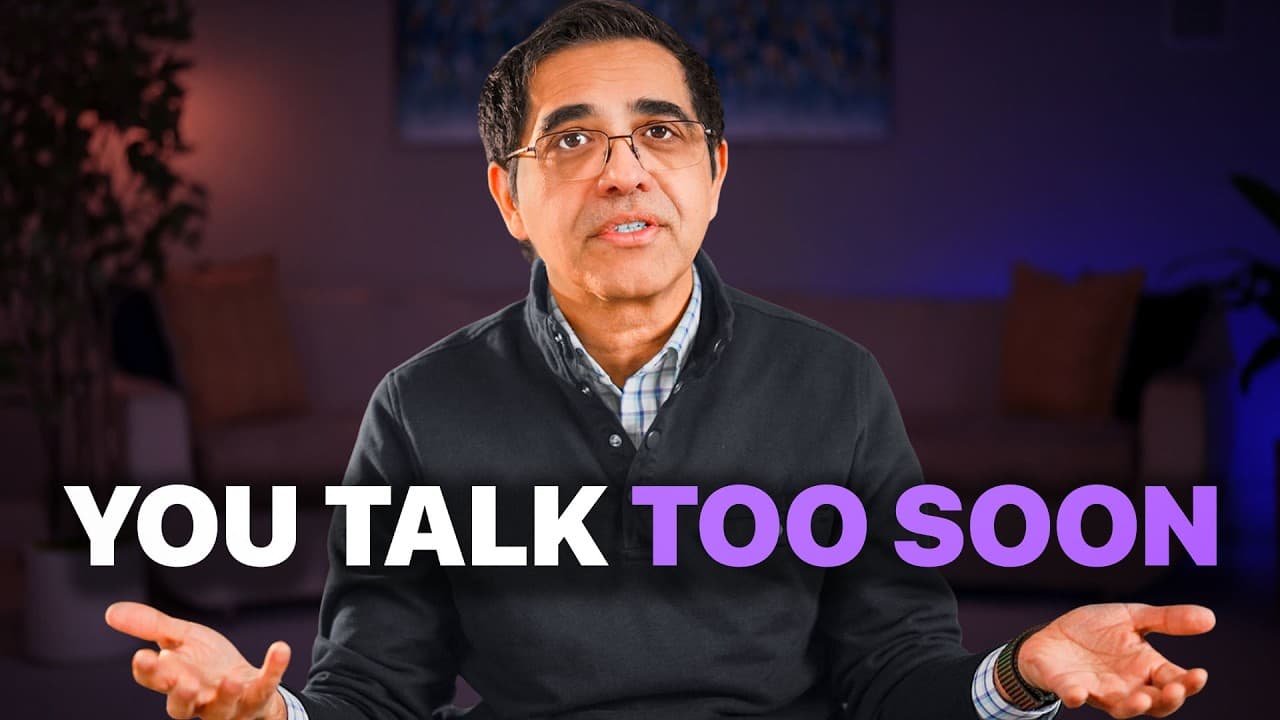
Top performers improve their decisions by examining missing evidence, correcting specific errors, staying composed during tense conversations, and choosing longer time horizons. These habits can be practiced by questioning absent data, measuring performance through repeated feedback loops, using curiosity and empathy to reduce defensiveness, and making choices whose benefits compound beyond immediate rewards.
Transcript
Most people think success is about working harder or being smarter. But after spending years inside billion-dollar boardrooms and working with some of the most successful CEOs, I started to see a third pattern, a deeper set of rules the top 1% actually play by. These are principles I have seen repeat across every arena. And almost no one talks abou... Read More
Key Insights
- Missing evidence is often more informative than visible evidence because available data may represent only the outcomes that survived selection. The aircraft example shows why decision-makers should examine where expected observations are absent before deciding what the visible pattern means.
- Ghost notes are the facts, costs, failures, or qualifications that logically should appear but do not. A retention presentation that omits customer acquisition cost, or a candidate who cannot describe failure, provides useful information through what remains unmentioned.
- A practical meeting habit is to write down three relevant items that should have appeared in the discussion but were missing. Calmly asking one or two questions about those gaps helps expose assumptions without allowing the loudest presentation elements to dominate judgment.
- Effective learning is driven by high-quality mistakes that are noticed and corrected. Repeating tasks that already feel easy can produce a plateau, while slowing down enough to locate precise errors creates the feedback needed to improve future performance.
- The five-step loss function loop is a structured method for improvement: define what better means, predict a measurable outcome, perform deliberately, locate the exact failure point, then adjust one variable and repeat the cycle.
- Adaptive tension is the discomfort created by difficult conversations, decisions, feedback, and negotiation. Top performers build the capacity to remain calm inside that discomfort rather than escaping it, allowing important issues to be addressed without unnecessary aggression or avoidance.
- The CORE protocol is a framework for tense conversations built on curiosity, objectivity, reassurance, and empathy. It redirects attention from blame toward facts and systems, clarifies mutual purpose, and acknowledges other people's effort and perspective.
- A long time horizon is a competitive advantage because many people prioritize immediate outcomes. Operating on a 7-year horizon, or using cathedral thinking across generations, encourages investments and preparations whose value may emerge long after the original decision.
Install to Summarize YouTube Videos and Get Transcripts
Explore YouTube Video Summarizer or Get YouTube Transcript Extractor
Questions & Answers
Q: How can leaders identify missing information in meetings?
Leaders can identify missing information by listing three facts, measures, or perspectives that logically should have appeared but did not. They should then ask one or two calm, curious questions about those gaps. Examples include asking why customer acquisition cost is absent from a retention discussion or why an otherwise accomplished candidate cannot describe a meaningful failure and its lessons.
Q: What are ghost notes in business decision-making?
Ghost notes are relevant data points that are felt through their absence rather than directly presented. They include costs omitted from a positive performance report, failures missing from a candidate's career story, or other expected evidence that never appears. Listening for these omissions helps decision-makers avoid becoming absorbed by polished presentations and investigate what may exist behind the visible narrative.
Q: What does the aircraft story teach about survivorship bias?
The aircraft story shows that visible evidence may come only from cases that survived. Military leaders examined bullet holes on planes that returned and initially wanted to reinforce those damaged areas. Abraham Wald instead pointed toward the engines and cockpits without bullet holes, reasoning that aircraft struck there did not return. The missing observations revealed where added protection was actually needed.
Q: How does the five-step loss function loop improve learning?
The loop begins by defining a specific improvement metric, such as speed, clarity, accuracy, retention, or learning rate. Next, the learner predicts a numerical outcome, performs slowly enough to notice errors, and identifies the exact point of failure. Finally, the learner changes only one variable, such as technique, speed, tool, or approach, and repeats the process.
Q: Why do mistakes help top performers learn faster?
Mistakes provide a clear signal about the gap between a predicted result and an actual result. The transcript argues that repeating familiar tasks produces little rewiring, while errors trigger agitation and create conditions for new neural pathways. Top performers therefore seek high-quality, correctable mistakes and focus on becoming less wrong during each cycle instead of protecting the appearance of competence.
Q: How can someone handle difficult conversations calmly?
Difficult conversations can be handled through the CORE protocol: curiosity, objectivity, reassurance, and empathy. Begin with questions that invite examination rather than blame. Shift attention from personal stories to facts, processes, and systems. State that the goal is shared improvement, then acknowledge the other person's effort and perspective without pretending to agree with every claim.
Q: What is adaptive tension and why is it valuable?
Adaptive tension is the discomfort people experience during difficult feedback, negotiation, disagreement, or consequential decisions. Avoiding it can leave important problems unresolved. Building comfort with it allows a leader to stay composed, make a clear proposal, tolerate silence, and keep others focused. The acquisition story illustrates how calmness under tension helped move a stalled negotiation toward board consideration.
Q: How does a long time horizon create an advantage?
A long time horizon changes which investments and solutions appear worthwhile. The transcript recommends operating on a 7-year horizon because many people focus on nearer outcomes. Its Oxford story extends the principle across generations: the college's founders reportedly planted replacement oak trees because they anticipated that the dining hall beams would eventually rot, demonstrating preparation far beyond immediate needs.
Summary & Key Takeaways
-
Exceptional decision-making begins with noticing information that is absent. The returning aircraft example illustrates how visible evidence can create survivorship bias, since damage to surviving planes did not reveal where fatal hits occurred. In meetings, leaders can counter this tendency by identifying expected but missing facts and asking calm, specific questions about those gaps.
-
Faster learning requires deliberate exposure to mistakes instead of repeatedly performing comfortable tasks. The proposed loss function loop defines a metric, predicts an outcome, performs slowly enough to observe errors, identifies the exact failure point, and changes one variable before repeating. Progress comes from becoming measurably less wrong with every cycle.
-
Strong leaders tolerate adaptive tension without becoming aggressive or evasive. The CORE protocol uses curiosity, objectivity, reassurance, and empathy to lower perceived threats while preserving honest discussion. Combined with a 7-year or even multigenerational horizon, this approach supports decisions that prioritize durable systems and outcomes over immediate comfort or approval.
Read in Other Languages (beta)
Share This Summary 📚
Summarize YouTube Videos and Get Video Transcripts with 1-Click
Try YouTube Summary with ChatGPT & Claude or YouTube Transcript Generator
Explore More Summaries from Sandeep Swadia 📚


Summarize YouTube Videos and Get Video Transcripts with 1-Click
Try YouTube Summary with ChatGPT & Claude or YouTube Transcript Generator