How Will AI Agents Transform Work and Business?
TL;DR
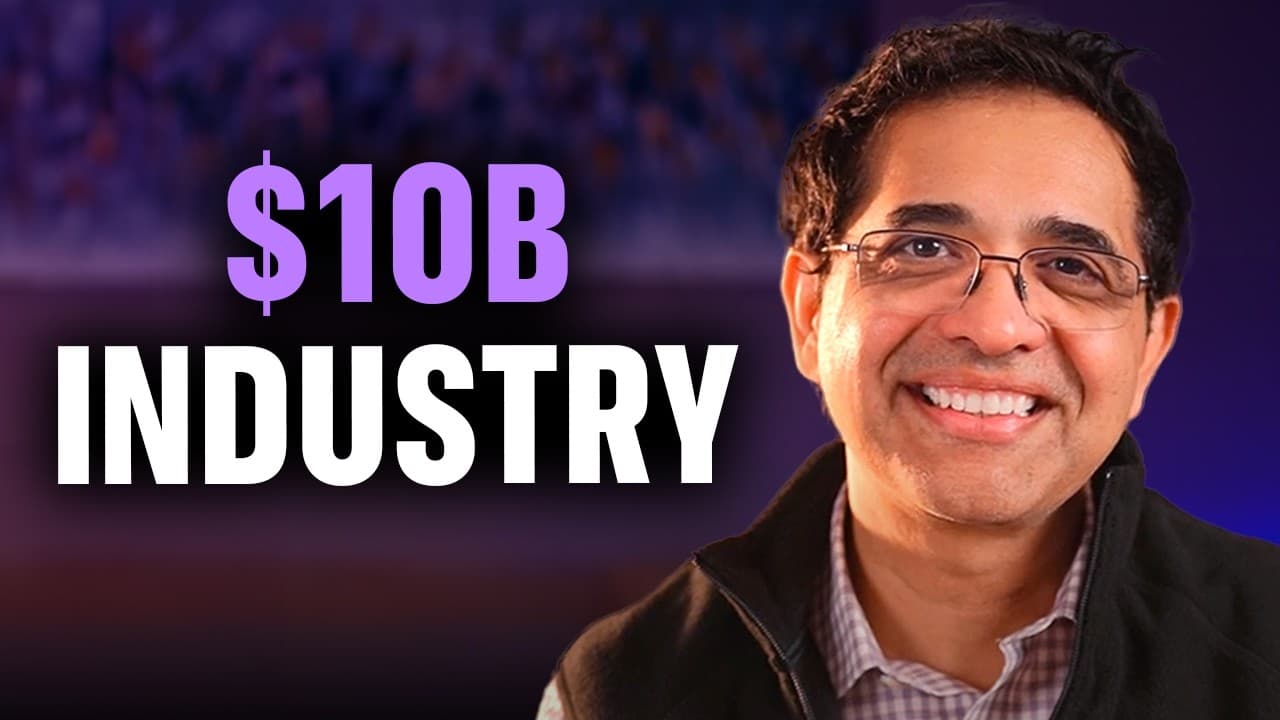
AI agents can independently plan and execute tasks across connected apps, allowing businesses and individuals to delegate repeatable workflows rather than merely generate content. The opportunity is still early, with only 19% of companies piloting agents, but success will depend on rapid experimentation, clearly defined processes, ethical use, and stronger human skills such as empathy, storytelling, relationship building, and critical thinking.
Transcript
Every few years, a new industry turns the whole world upside down. This is one of those moments. If you're not paying attention, you may miss out on billions of dollars. I have been fortunate to serve as a CEO and board member, and I have seen what happens when you ignore the early signs. Let's dig into what's happening, what's changing, and why it... Read More
Key Insights
- AI agents are autonomous digital workers that can plan and execute tasks by connecting with applications, websites, and tools. Unlike text generators alone, they can attend meetings, record detailed notes, summarize discussions, make decisions, and complete multi-step workflows for human users.
- Corporate adoption is still at an early stage, with only 19% of companies piloting AI agents and 81% still exploring AI. The speaker presents this gap as an opportunity for people who begin experimenting before agent-based workflows become widely adopted across organizations.
- Speed is a central advantage in the AI agent economy because machine learning systems can improve rapidly. AlphaZero reportedly learned chess by playing against itself and, in under 24 hours, progressed from no chess knowledge to defeating some of the world’s best grandmasters.
- The CRAFT framework identifies five areas suited to AI agents: communication, research, analytics, functional operations, and technical work. These categories include customer support, legal research, marketing analysis, logistics optimization, approvals, fulfillment, transactions, and software development.
- Repeatable and verifiable work is especially suitable for AI agents because outcomes can be checked and processes can be refined. Clearly defining each workflow makes delegation easier, while automating routine tasks can shrink a person’s to-do list and increase their capacity to scale.
- One-person kingdoms are becoming more feasible because entrepreneurs can use AI agents instead of building large teams immediately. The speaker contrasts the traditional strategy of hiring fast with wiring fast, meaning that connected automated workflows can support substantial operations with relatively few employees.
- Job displacement is an unavoidable concern as agents reshape existing roles, although new positions are also appearing. The speaker reports seeing titles such as VP of AI, machine learning engineer, and AI workflow designer, illustrating how the employment landscape is being reorganized.
- Human capabilities are expected to become more important as agents absorb repetitive work. Relationship building, empathy, storytelling, and critical thinking remain areas for deliberate development, while curiosity and small automation experiments can help workers adapt without becoming anxious or paralyzed.
Install to Summarize YouTube Videos and Get Transcripts
Explore YouTube Video Summarizer or Get YouTube Transcript Extractor
Questions & Answers
Q: What is the AI super agent economy?
The AI super agent economy is an emerging industry built around autonomous software agents that plan and execute tasks through connected applications, websites, and tools. These agents function more like tireless digital employees than simple text generators. They can attend meetings, take notes, summarize discussions, research subjects, operate workflows, publish content, and track results with limited ongoing human involvement.
Q: How are AI agents different from tools like ChatGPT or Gemini?
AI agents go beyond generating text because they can act across other applications and services. The transcript describes them as invisible employees that independently plan and execute tasks. For example, an agent-based content workflow could research topics, generate a script, create a thumbnail, edit footage, publish the finished content on social platforms, and monitor its performance for the creator.
Q: Why is the AI agent market considered an early opportunity?
The opportunity is considered early because only 19% of companies are currently piloting AI agents, while 81% are still exploring AI. The speaker describes much of that exploration as strategy discussions and slide decks rather than operating deployments. This leaves room for individuals and businesses to gain practical experience by automating real tasks before agent adoption becomes widespread.
Q: What does the CRAFT framework for AI agents mean?
CRAFT identifies five categories where AI agents could have a dramatic impact. Communication covers email, chat, customer support, call routing, and scheduling. Research includes deep investigation and legal memos. Analytics finds patterns and recommends actions. Functional agents manage approvals, fulfillment, and transactions. Technical agents write code and build software, although the transcript says they are not completely autonomous yet.
Q: Which tasks should businesses delegate to AI agents first?
Businesses should begin with work that is repeatable, clearly defined, and verifiable. The transcript highlights customer communication, research, data analysis, approvals, fulfillment, transactions, and coding as promising areas. A documented process is easier to transfer to an agent because the required steps and expected result are explicit. Human judgment should remain involved where context and discretion are important.
Q: How can AI agents help entrepreneurs build companies with small teams?
AI agents can let entrepreneurs automate workflows that previously required additional employees, supporting what the speaker calls one-person kingdoms. Instead of scaling only by hiring fast, founders can scale by wiring fast, connecting agents to operational tasks. The transcript cites Kalai, an AI-powered nutrition and calorie-tracking app with 5 million downloads, a team of 15, and projected revenue of $30 million for the year.
Q: Will AI agents replace human jobs?
AI agents will reshape or displace some roles, according to the transcript, but they will also contribute to the creation of new positions. The speaker reports already seeing roles such as VP of AI, machine learning engineer, and AI workflow designer. The practical response is to assess how a role may change, reposition around the new economy, and preserve human judgment in delegated workflows.
Q: How can workers prepare for the growth of AI agents?
Workers can prepare by moving from writing isolated prompts to delegating complete tasks. The speaker recommends choosing preferred tools, agents, or models and automating one task over a weekend. At the same time, workers should develop relationship building, empathy, storytelling, and critical thinking because these human qualities become more important as agents assume repetitive responsibilities. Curiosity and continued experimentation are presented as the guiding approach.
Summary & Key Takeaways
-
AI agents are evolving from content-generating tools into autonomous digital teammates that can plan, decide, and execute tasks through connected applications. For a content creator, agents could eventually research topics, write scripts, design thumbnails, edit footage, publish across platforms, and monitor performance, substantially reducing the creator’s operational workload.
-
Adoption remains early despite rapid development. Only 19% of companies are piloting AI agents, while 81% are still exploring AI. The CRAFT framework identifies communication, research, analytics, functional, and technical work as leading opportunities, especially when tasks are repeatable, verifiable, rule-based, or supported by clearly documented processes.
-
AI agents could enable small teams and individual entrepreneurs to build larger businesses by wiring automated workflows instead of hiring rapidly. At the same time, some jobs will be reshaped or displaced. Workers should practice delegating tasks to agents while strengthening empathy, relationships, storytelling, critical thinking, and other human capabilities.
Read in Other Languages (beta)
Share This Summary 📚
Summarize YouTube Videos and Get Video Transcripts with 1-Click
Try YouTube Summary with ChatGPT & Claude or YouTube Transcript Generator
Explore More Summaries from Sandeep Swadia 📚
Summarize YouTube Videos and Get Video Transcripts with 1-Click
Try YouTube Summary with ChatGPT & Claude or YouTube Transcript Generator