How to ignore six common life-advice traps?
TL;DR
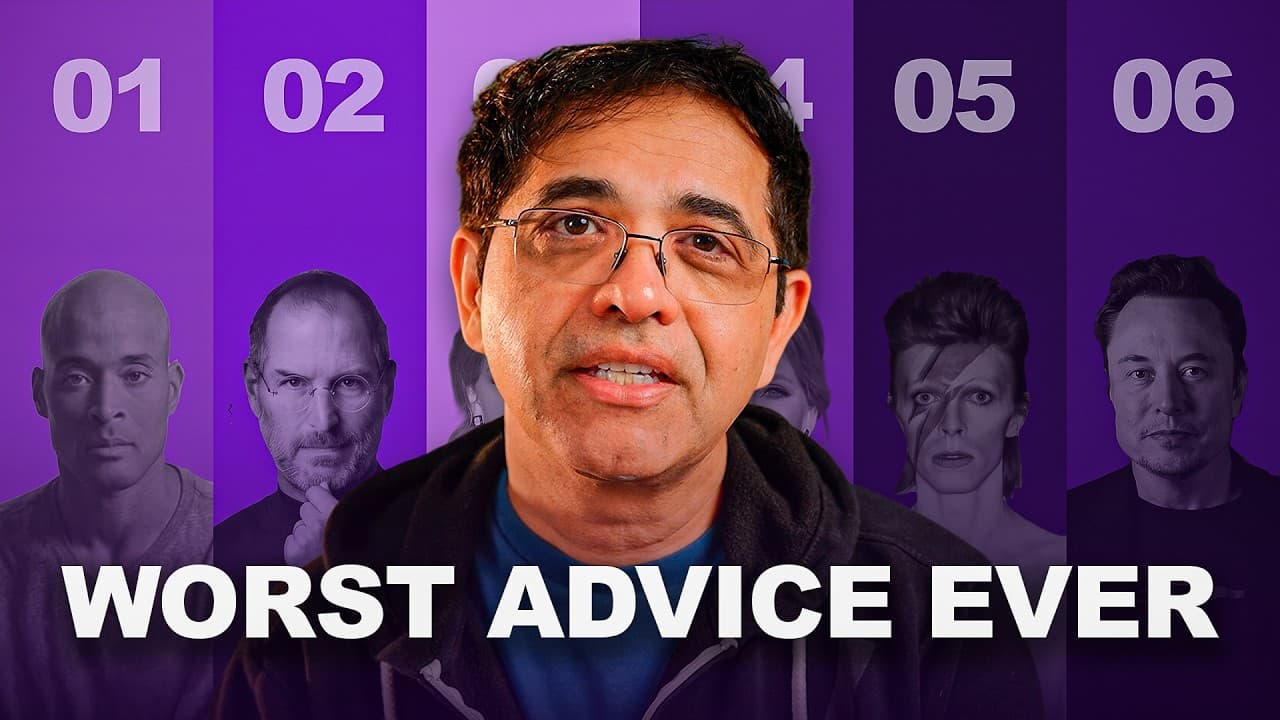
The video argues that popular advice like never give up, looking out for yourself, following passion, or money cannot buy happiness is often incomplete. It introduces a three cost framework to decide when to persist or quit: future cost, sunk cost, and opportunity cost. It also shows how collaboration and zero-sum thinking influence success and resilience.
Transcript
Some life advice sounds good, but it can ruin your life. Every day you're inundated with advice. >> If I may be so bold, just offer some advice. >> No matter where you look, someone's busy telling you what to do. >> Buy this right now. >> Stop buying random stuff. >> Always wear shoes when you're in a thumbtack factory. >> I was a homeless teen in ... Read More
Key Insights
- Persistence and stubbornness resemble each other from the inside, but judgment decides when to continue or stop based on future feasibility.
- The three cost framework helps distinguish whether a change is possible by examining future costs, sunk costs, and opportunity costs before acting.
- Zero sum thinking is not universal; many relationships and opportunities can benefit all parties when collaboration and support are pursued.
- Following passion requires testing skills over time and asking if the livelihood depends on it before making a leap.
- Money changes life by enabling choice, safety, and time, yet money alone does not guarantee happiness, so the intended changes should be defined.
- Careful assessment of what money should change prevents unhelpful spending and aligns finances with real life goals.
- Passion and skill development may require time and experimentation to determine if a path is viable as a career, not just a hobby.
- Relationships and networks can create future opportunities even when current efforts do not immediately yield results.
Install to Summarize YouTube Videos and Get Transcripts
Explore YouTube Video Summarizer or Get YouTube Transcript Extractor
Questions & Answers
Q: A real search query question about the video (e.g. 'How to...', 'What is...', 'Why does...', 'When should...'). Question 1
What is the three cost framework and how can it help when evaluating whether to stay in a job or relationship? The three cost framework includes future cost, which asks what would need to change to improve the current situation; sunk cost, which questions whether continued investment is worth it given what has already been spent; and the opportunity cost, which considers what other possibilities are forgone by staying. This framework guides a practical assessment rather than sticking with generic optimism.
Q: Question 2
How can the idea that life is not always zero sum change how you view other people’s successes and your own goals? The video argues that not every win requires someone else to lose and that helping others can create new chances for you as well. This shifts focus from pure competition to collaboration, expanding possible pathways to success and reducing unhealthy rivalry.
Q: Question 3
Why might following your passion not guarantee a viable living, and how should you test it safely? The speaker notes that passion alone is not a business model and income depends on market demand. Testing requires first doing the work long enough to improve, then seeking feedback from someone earning in that field, and finally evaluating if you want to commit when income depends on it.
Q: Question 4
What role can money play in improving life, and what does it not guarantee? Money can buy freedom, safety, and options, but it does not automatically bring happiness. The key is to define what change money should enable and avoid chasing luxury for its own sake, using money as a tool to improve meaningful outcomes.
Q: Question 5
How should someone approach the idea of finding a soulmate or a compatible partner with realistic expectations? The guidance is that soulmates may become roommates, and that partners cannot read your mind. It highlights the importance of communication, regular repair work in a relationship, and understanding that disagreements are normal rather than a sign of incompatibility.
Q: Question 6
What does it mean to let go of outdated identities in a changing world shaped by AI, and why is it important? The description mentions shedding old identities as essential to navigating change. This implies adapting to new tools, workflows, and social norms, staying curious, and updating self-concepts to remain relevant and capable in evolving environments.
Q: Question 7
What practical steps can you take to determine whether a dream job or project is worth pursuing instead of a quick leap? Practical steps include testing the skill over time, getting real-world feedback on market viability, and evaluating whether you can sustain effort and income if the dream becomes your livelihood, rather than relying on hope alone.
Q: Question 8
How can you apply the concept that not all advice is fully true to everyday decisions? The idea is to examine the underlying assumptions of common advice, test them in your own context, and balance short term gains with long term consequences. This approach encourages critical thinking and personalized decision making.
Summary & Key Takeaways
-
The video introduces a critical view of six conventional bits of wisdom and explains that persistence can become stubbornness if the destination no longer makes sense. It emphasizes using judgment to decide when to give up or continue. A three cost framework helps evaluate situations.
-
The discussion reframes looking out for yourself as not zero sum, showing that helping others can create future opportunities and that relationships can sustain growth. It uses personal anecdotes to illustrate the nuanced balance between self and others.
-
The sections on following passion and money explain that passion alone is not a business model and money can enable freedom and options. It guides viewers to test interest over time and consider what money should actually change in life before chasing it.
Read in Other Languages (beta)
Share This Summary 📚
Summarize YouTube Videos and Get Video Transcripts with 1-Click
Try YouTube Summary with ChatGPT & Claude or YouTube Transcript Generator
Explore More Summaries from Sandeep Swadia 📚

Summarize YouTube Videos and Get Video Transcripts with 1-Click
Try YouTube Summary with ChatGPT & Claude or YouTube Transcript Generator