How to 10X Claude Code workflow with agents
TL;DR
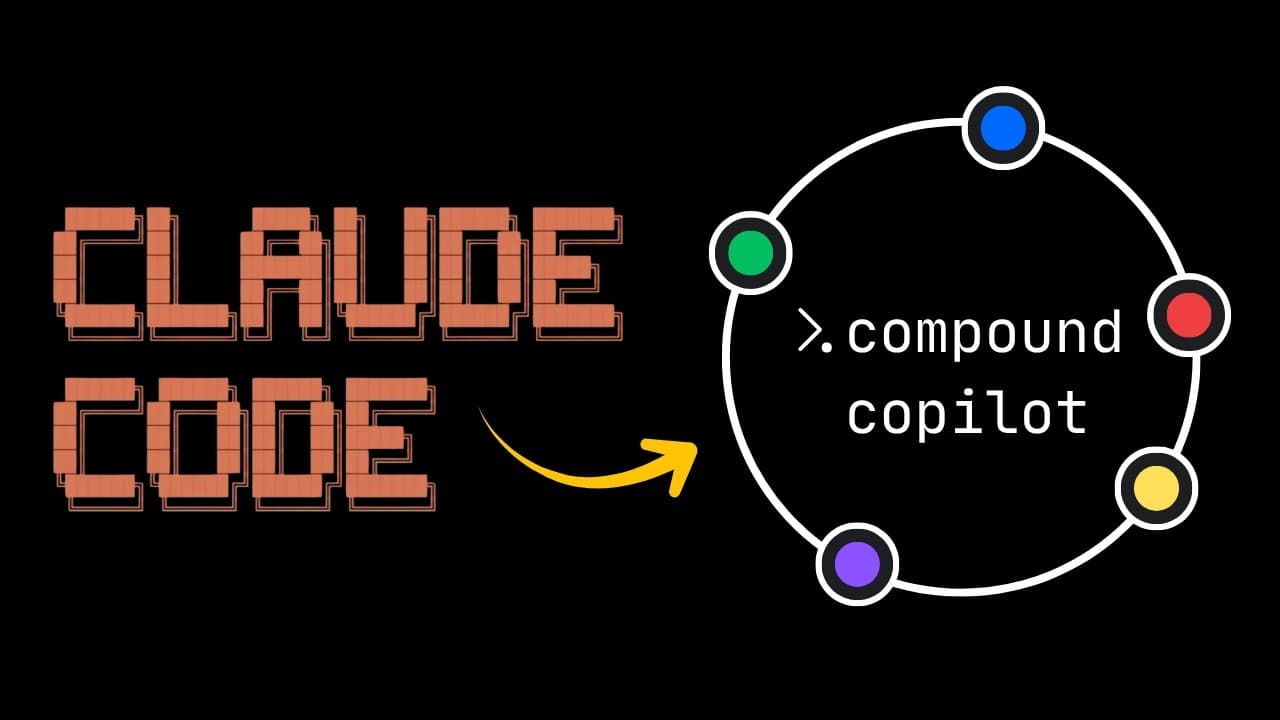
The method shown uses a sub agent structure, plan work, and a to-do driven workflow inside Claude Code to automate planning, delegation, and execution. It creates work trees, GitHub issues, and persistent context across sessions, enabling parallel reviews and phased delivery. The result is faster, organized AI coding with enhanced context retention.
Transcript
Development in this space never truly stops. Every month we get new models and with Anthropic, every new model released brings new qualities and new features that make us think of AI coding in a completely new way. Today we'll be looking at a new agentic framework for AI coding that actually takes advantage of a new feature that Claude Code just re... Read More
Key Insights
- Agents and sub agents orchestrate tasks within Claude Code to automate coding workflows.
- Plan and delegate steps generate a structured roadmap before implementation.
- Work trees isolate features, ensuring clean environments for each feature.
- To-do persistence across sessions allows resuming incomplete workflows without data loss.
- GitHub integration provides context and traceability for architectural decisions.
- Plugins in Claude Code enable standardized configurations and reuse across teams.
- Review, triage, and codify stages enable continuous improvement and learning from issues.
- Naming conventions significantly impact manageability when handling multiple components and pages.
Install to Summarize YouTube Videos and Get Transcripts
Explore YouTube Video Summarizer or Get YouTube Transcript Extractor
Questions & Answers
Q: What is the core idea of the agentic Claude Code workflow and how does it start a project from a PRD
The core idea is to use a structured, multi agent setup to manage AI driven coding projects. It starts by accepting a PRD and details about what to build, then launches specialized agents such as a research agent, a best practices agent, and a framework agent. This creates a plan that outlines phases and required files, effectively pre engineering the context for the project.
Q: How does the framework handle planning and phase creation
During planning, the framework creates a new work tree and a GitHub issue in a dedicated AMD file. It breaks down the research and architecture into six phases, each detailing backend and frontend setup. This yields a ready to execute plan, with tasks and dependencies clearly mapped for subsequent execution.
Q: What role do sub agents and plugins play in Claude Code workflows
Sub agents run specialized tasks like research or code review, while plugins provide a library of commands, sub agents, MCP servers, and hooks. Together they enable a standardized, shareable configuration ecosystem, making it easy to scale and reuse across team members and projects. Plugins thus extend Claude Code’s capabilities.
Q: How does execution progress once planning is complete
Execution uses a delegate command to run tasks one by one within isolated work trees. A work command triggers actions like creating a separate git work tree, storing results, and updating the to do list. This structured progression allows reviewing each phase before moving forward and supports parallel work where possible.
Q: What is the purpose of the to do tool and how persistency is achieved
The to do tool records every planned task inside the Claude Code environment, persisting across sessions even after compaction. This ensures continuity and allows the user to resume work where they left off. The GitHub issue also serves as a contextual anchor, while to-dos guide ongoing execution.
Q: How does the framework handle review and triage of issues
During review, multiple sub agents assess aspects like language correctness, security, performance, architecture, and data integrity. They list critical issues by priority, then a triage step asks whether to implement fixes. If chosen, issues are turned into to not files with detailed remediation steps.
Q: What is BMAD method comparison and when is Claude Code workflow preferable
BMAD is more thorough and planning heavy which suits large, detailed projects but can slow things down. The Claude Code workflow described is plug in based, easy to set up, and efficient for smaller projects or when faster iteration is desired. It integrates planning, executing, and learning into a concise loop.
Q: How does the workflow ensure reliable feature delivery and context management
The workflow ensures reliability by creating distinct work trees for each feature, which isolates changes and simplifies rollback if needed. Context persistence and to do item storage across sessions keep the project coherent. Regular reviews, codify steps, and parallel execution strategies further enhance reliability and speed of delivery.
Summary & Key Takeaways
-
The video explains a new agentic framework for Claude Code that uses sub agents, slash commands, and plugins to automate engineering tasks. It emphasizes planning, delegation, and execution across multiple phases with a focus on context persistence and parallel work. The approach aims to improve efficiency over traditional methods.
-
It demonstrates creating a new work tree, generating a GitHub issue, and outlining six phases with backend and frontend requirements. The system uses a to-do tool to persist tasks and allows resuming sessions without losing progress, facilitating continuous iteration.
-
The comparison with the BMAD method highlights tradeoffs between depth of planning and speed, arguing the new framework is plug-in based, easy to set up, and convenient for smaller projects while offering structured, scalable workflows in Claude Code.
Read in Other Languages (beta)
Share This Summary 📚
Summarize YouTube Videos and Get Video Transcripts with 1-Click
Try YouTube Summary with ChatGPT & Claude or YouTube Transcript Generator
Explore More Summaries from AI LABS 📚
Summarize YouTube Videos and Get Video Transcripts with 1-Click
Try YouTube Summary with ChatGPT & Claude or YouTube Transcript Generator