Abhijit Banerjee, Prize in Economic Sciences 2019: Official interview
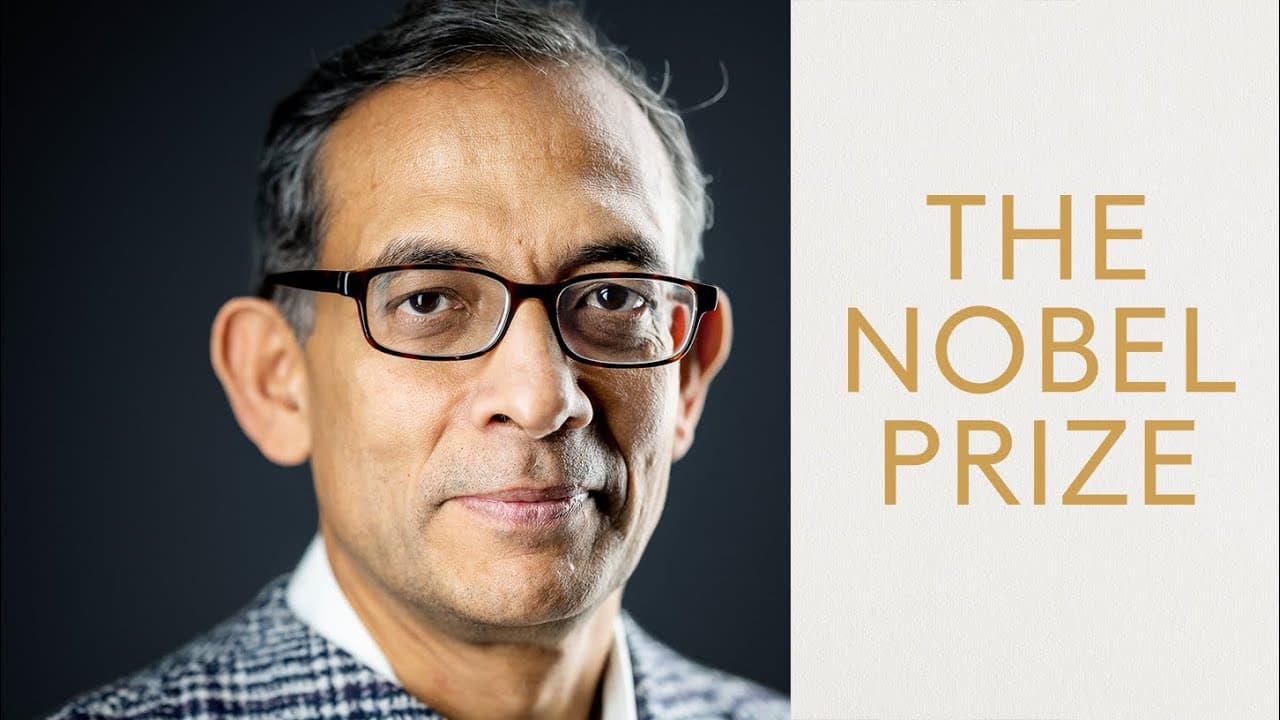
TL;DR
Poor people share the same psychology as everyone else, valuing tasty food or fun over pure nutrition, so studying them needs no separate theory. Banerjee argues the most pressing threat is climate change: up to 200 million people in the Bengal Delta could be displaced as their land goes underwater, and no one has an answer.
Transcript
I grew up in a in a middle-class family in the city of Kolkata I just by accident more or less happen to live right next door to one of the biggest slums and Kolkata so I had a slightly resentful childhood in the sense that ice I was surrounded by kids who didn't go to school who were playing all day whereas I had to go to this extremely boring sch... Read More
Key Insights
- The poor are not fixed machines without choices. Banerjee argues they are both creative and cautious, looking for opportunities, trying things, getting scared, and making mistakes, just like anyone else, so studying them requires no special psychology.
- The biggest mistake in poverty research is assuming the poor differ from us. They share our psychology, so a starving person may sacrifice nutritious food to eat something tasty, because they too want to enjoy their lives, not just survive.
- Climate change is the central challenge the poor will face over the next 50 years. Banerjee calls finding a way to deal with it the most pressing question for the lives of the poor.
- The southern Bengal Delta, stretching across India and Bangladesh, is home to an estimated 150 to 200 million mostly poor people. It could all go underwater, and no one has thought about where those people would go.
- Behavior change on energy use is cheaper than assumed. Sending people a notice saying they are among the top ten percent of energy users in their neighborhood measurably reduces consumption, showing people adjust once they see others doing it.
- Banerjee entered economics by accident. He went to study mathematics at the Indian Statistical Institute in Kolkata but disliked its serious social life, and switching fields without losing a year left economics as his option.
- Banerjee identifies as Indian regardless of where he lives, defining identity by social milieu rather than citizenship. India matters to him in a way no other country does, shaping who he thinks of when doing anything.
- Filmmaking arose from frustration at research failing to capture people's stories. Each data point carries a whole narrative, like the extra clinic visit where the door was closed, that surveys cannot record, so he turned to documentaries.
Install to Summarize YouTube Videos and Get Transcripts
Explore YouTube Video Summarizer or Get YouTube Transcript Extractor
Questions & Answers
Q: How can we better understand poverty according to Abhijit Banerjee?
Banerjee says the key is recognizing that the poor have the same psychology as everyone else, not a different one. The common mistake is assuming that because someone is starving they must only want nutritious food, when in fact they also want fun and may sacrifice some nutrition to eat something tasty. The poor are creative and cautious, look for opportunities, try things, get scared, and make mistakes, so studying them needs no separate psychology.
Q: How is Abhijit Banerjee's work connected to climate change?
Banerjee considers climate change central to the challenges the poor will face over the next 50 years, calling it the most pressing question for their lives. He points to the southern Bengal Delta stretching across India and Bangladesh, where an estimated 150 to 200 million mostly poor people live on small amounts of land that could all go underwater. No one has an answer for where that many people would go, which he finds a completely frightening question.
Q: Why did Abhijit Banerjee end up studying economics?
He ended up in economics by accident. He originally wanted to study mathematics and enrolled at the Indian Statistical Institute in Kolkata, a well-known institute offering an undergraduate degree in math. He realized he was not cut out for it, not because he lacked ability since he was actually pretty good at math, but because he disliked the serious, heavy social life of the place. In India, changing fields meant losing a year, which he wanted to avoid, so economics was what he could switch into at that late date.
Q: What does Abhijit Banerjee believe about changing people's energy consumption?
Banerjee argues that adjusting to a different lifestyle is not that costly, and people often change their minds once they see others doing it. He cites that simply sending people a notice saying they are among the top ten percent of energy users in their neighborhood reduces energy consumption, because they read it and decide to switch off a light or similar. He views much energy use as gratuitous and sees the challenge as a matter of political will and creative solutions people do not find onerous.
Q: What is Abhijit Banerjee's relationship with India?
Banerjee says that in his mind he has always been an Indian, regardless of where he lives or his affiliation and citizenship. To him identity is about the social milieu that inspires you and the people you think of when you do anything good or bad. For him those people are largely in India, and India somehow matters to him in a sense that no other country does. This connection shapes how he relates to his work and the world.
Q: Why did Abhijit Banerjee get into filmmaking?
He got into filmmaking out of frustration with his inability to capture in his research the many wonderful stories people tell. When you interview people, they do not just give a number like four visits; they add nuance, such as another time when the health center door was closed or the doctor shooed them away, and wonder whether that counts. Banerjee felt there is a whole narrative around each data point, that these narratives are interesting in themselves, and that need to capture them inspired his attempt to make documentaries.
Q: Are insights about poverty the same across different countries?
Banerjee says his research suggests the same insights largely apply to poor people in many places, though perhaps not in Sweden where the social welfare net works much better and being poor is very different. He has worked in Indonesia, Ghana, Kenya and India, which are very different places, yet he finds the similarities more striking than the differences. People everywhere are creative and cautious, look for opportunities, and share the same fundamental psychology, so poverty does not require a different sense of psychology across the world.
Q: How does Abhijit Banerjee balance work and fun in his daily life?
Banerjee says he gets bored with everything he does unless he has some relief, so he arranges his day to include at least one or two hours, often three or four, doing something he genuinely enjoys. He loves cooking and cooks almost every day for about an hour and a half, likes playing racquet sports such as tennis, ping-pong or badminton, and enjoys being with his kids. Without arranging enough relief, he says he gets bored out of his mind very quickly.
Summary
In this video, the speaker talks about growing up in Kolkata, living next to a slum, and the impact it had on his understanding of poverty. He also discusses how he ended up studying economics and his deep connection to India. He shares insights on the psychology of the poor and the similarities he has observed across different countries. Furthermore, he raises the daunting question of climate change and its implications for the lives of the poor. The speaker emphasizes the importance of finding creative solutions and the role of political will in addressing these challenges. He also touches on his own personal interests and passions, such as teaching and filmmaking.
Questions & Answers
Q: How did growing up next to a slum shape the speaker's understanding of poverty?
The speaker grew up in a middle-class family in Kolkata, living next to one of the city's biggest slums. He noticed that while he had to go to school, the kids in the slum were able to play all day. This early exposure to poverty and the stark difference in lifestyles between him and the poor children led him to develop an interest in understanding why the poor are different and how economic theory can be applied to explain these differences.
Q: How did the speaker end up studying economics?
Initially, the speaker wanted to study mathematics and enrolled in a prestigious institute called the Indian Statistical Institute in Kolkata. However, he realized that he didn't enjoy the social atmosphere there. In order to switch fields without losing a year, he decided to study economics instead. This choice was somewhat accidental, but it allowed him to explore the connection between economic theory, the lives of the poor, and the world he had been exposed to.
Q: What is the speaker's connection to India?
The speaker considers himself to be an Indian at heart, regardless of where he lives or his citizenship. He believes that one's social milieu and the people who inspire and influence you determine your sense of identity and affiliation. For the speaker, there are many people in India who have had a significant impact on him, and he feels that India matters to him in a way that no other country does.
Q: Are there similarities or differences in the psychology of the poor across different countries?
The speaker has worked with poor people in various countries, including Indonesia, Ghana, Kenya, and India. He asserts that the similarities in the psychology of the poor are more striking than the differences. Poor people, like everyone else, are creative, seek opportunities, and make mistakes. They have desires for both nutritious and tasty food, just as anyone else would. It is important not to underestimate the psychology of the poor and to recognize that it is not fundamentally different from that of wealthier individuals.
Q: How does the issue of climate change impact the lives of the poor?
The speaker highlights the pressing question of climate change and its effect on the poor. He specifically mentions the Bengal Delta in India and Bangladesh, where around 150 to 200 million people live. Unless drastic actions are taken, this region will be submerged underwater, displacing a massive population. The speaker raises concerns about the lack of solutions and the potential consequences for these predominantly poor individuals who already live on limited land. He considers this to be one of the most alarming questions for the future of the poor.
Q: How can people be motivated to change their lifestyles to combat climate change and energy consumption?
The speaker believes that people are capable of change, especially when they witness others making similar changes. People are not inherently resistant to adjusting their lifestyles. Even simple interventions, like sending a letter informing individuals that they are among the top energy consumers in their neighborhood, can lead to reduced consumption. The speaker suggests that challenging the gratuitous habits of energy consumption and finding creative, non-burdensome solutions requires both political will and a sense of responsibility.
Q: What inspired the speaker to pursue filmmaking?
The speaker felt a frustration in his ability to capture and convey the stories and narratives he encountered during his research. He recognized that there were so many interesting stories to be told, beyond just isolated data points. This realization inspired him to use the medium of filmmaking to capture and share these narratives. By making documentaries, he hoped to bring attention and highlight the significance of these stories.
Q: What does the speaker hope to achieve in the next 15 years?
The speaker expresses a desire to continue his work and enjoy what he is doing. He hopes that winning the prize will open doors for him and allow for more meaningful interventions and research. He aims to make a case for the importance of addressing poverty-related issues and hopes that his voice will be heard more effectively. Overall, he does not envision a significant change in his lifestyle but hopes to continue making a positive impact.
Summary & Key Takeaways
-
Banerjee grew up middle-class in Kolkata next to one of the city's biggest slums, watching poor children play while he attended a boring school. That early exposure drove him to become an economist trying to connect economic theory with the real facts of poverty he witnessed.
-
His core research insight is that the poor share the same psychology as everyone else. They are creative, cautious, and make mistakes; they may trade nutritious food for tasty food because they too want fun. Insights hold across India, Indonesia, Ghana and Kenya, where similarities outweigh differences.
-
Climate change is the most pressing threat to the poor, with 150 to 200 million people in the Bengal Delta facing displacement. Banerjee believes behavior change is not costly, cites energy-use notices as proof, and hopes the prize opens doors for more useful interventions.
Read in Other Languages (beta)
Share This Summary 📚
Summarize YouTube Videos and Get Video Transcripts with 1-Click
Try YouTube Summary with ChatGPT & Claude or YouTube Transcript Generator
Explore More Summaries from Nobel Prize 📚

Summarize YouTube Videos and Get Video Transcripts with 1-Click
Try YouTube Summary with ChatGPT & Claude or YouTube Transcript Generator