Answer: Can we divide leptons and quarks into even smaller particles?
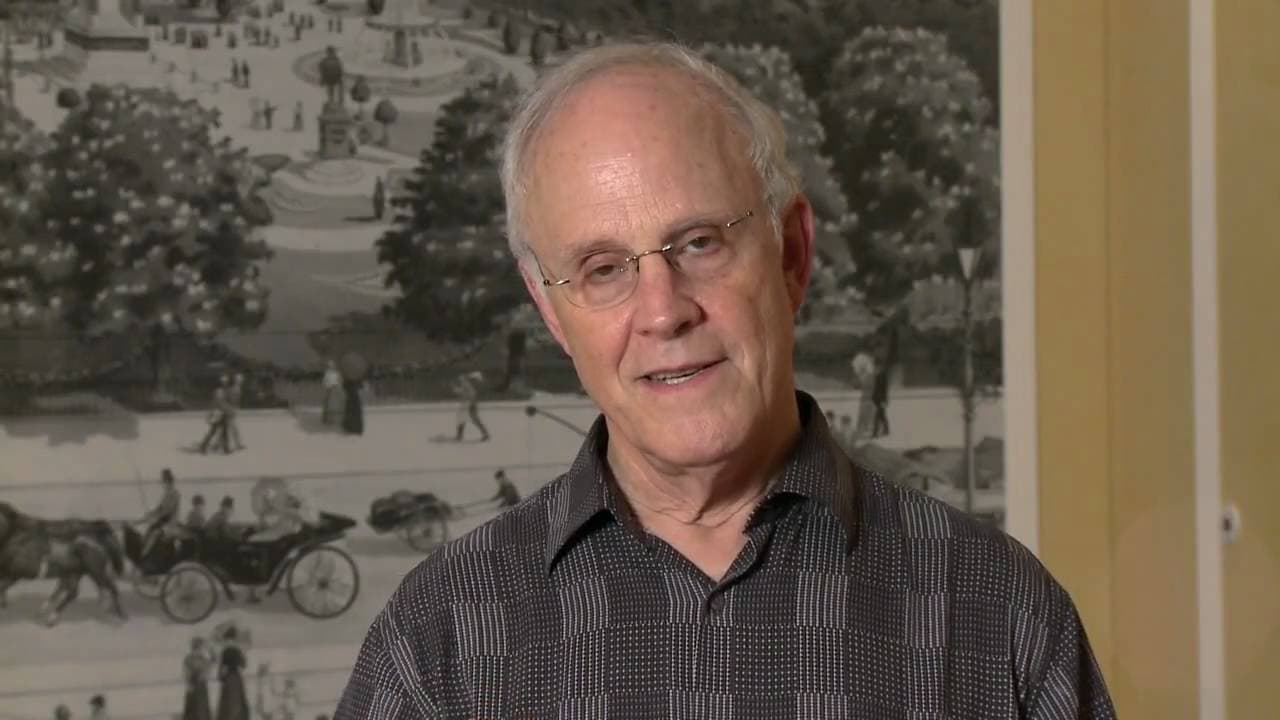
Transcript
Read and summarize the transcript of this video on Glasp Reader (beta).
Install to Summarize YouTube Videos and Get Transcripts
Explore YouTube Video Summarizer or Get YouTube Transcript Extractor
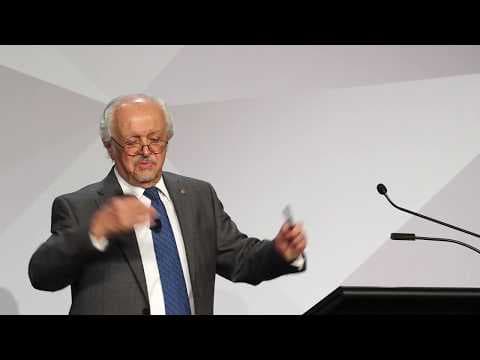
Summary
In this video, Mario asks if it's possible to divide leptons and quarks into more fundamental quarks, and how we can prove that they are the most fundamental particles. The speaker explains that historically, we have discovered that elementary particles like atoms are made up of simpler objects. However, we have not found any evidence of substructure within electrons and quarks so far. While there are attempts to unify all the forces of nature based on string theory, which suggests that elementary particles are different vibrational modes of a single extended string, there is currently no evidence to support this idea.
Questions & Answers
Q: Can we divide leptons and quarks into more fundamental quarks?
Historically, we have found that matter is made up of simpler objects. Atoms were once thought to be indivisible, but we discovered they have structure - electrons and nuclei. The nucleus itself is made up of protons and neutrons. And finally, protons and neutrons are made up of point-like quarks. However, there is no evidence to suggest that we can divide quarks further into more fundamental particles.
Q: How can we prove that leptons and quarks are the most fundamental particles?
Our current standard theory of elementary particle physics identifies electrons, neutrinos, and quarks as the most basic constituents of matter. We have probed the structure of electrons and quarks down to a very small scale, and we have seen no evidence of further substructure. While it's always possible that there are even smaller fundamental particles, there is currently no evidence to support this.
Q: Are electrons and quarks themselves made up of even more fundamental sub-particles?
While it's theoretically possible that electrons and quarks have substructure, there is currently no evidence to support this notion. We have explored their structure down to approximately one millionth of their size, and no evidence of further sub-particles has been found. It could be that electrons and quarks are truly point-like constituents of matter.
Q: What are some open problems in elementary particle physics?
There are several open problems in elementary particle physics. One of them is the question of whether there is physics at shorter length scales beyond quarks and leptons. While there is no evidence for this, it's an area of ongoing exploration. Additionally, there are efforts to unify all the forces of nature based on string theory, which suggests that elementary particles are different vibrational modes of a single extended string. However, this remains a theoretical possibility without concrete evidence.
Q: How does string theory propose a different approach to understanding elementary particles?
String theory suggests that when we look at a quark with an incredibly powerful microscope, we wouldn't find sub-quarks or smaller units. Instead, we would observe that the quark itself is not a point-like object but an extended, vibrating string. The different vibrational modes of this string give rise to the various elementary particles we observe. So, according to string theory, substructure within elementary particles doesn't exist at a smaller scale but rather in the form of different modes of vibration.
Q: Is there experimental evidence for the concepts proposed by string theory?
Currently, there is no experimental evidence to support the concepts proposed by string theory. While string theory suggests that the elementary particles we observe are different vibrational modes of a single extended string, this remains a theoretical idea without empirical validation. String theory requires a level of experimental precision that is beyond our current capabilities.
Q: How does string theory differ from the notion of substructure within elementary particles?
The concept of substructure within elementary particles suggests that there are smaller, more fundamental particles making up electrons and quarks. However, string theory takes a different approach by proposing that elementary particles are different vibrational modes of an extended, vibrating string. Rather than being composed of point-like sub-particles, elementary particles are different manifestations of the same fundamental string.
Q: Are there any attempts to unify all the forces of nature based on string theory?
Yes, there are attempts to unify all the forces of nature based on string theory. String theory provides a framework that allows for the unification of gravity with the other fundamental forces. By considering strings as the fundamental objects, rather than point-like particles, string theory offers a different approach to understanding the nature of elementary particles and their interactions.
Q: What does it mean for elementary particles to have substructure?
Substructure within elementary particles refers to the possibility of breaking down particles like electrons and quarks into smaller, more fundamental particles. However, as of now, there is no experimental evidence to support the notion of substructure within electrons and quarks. While it's theoretically possible, our current understanding suggests that electrons and quarks are point-like objects without any internal structure.
Q: What is the current consensus on the existence of sub-particles within electrons and quarks?
The current consensus is that there is no evidence to support the existence of sub-particles within electrons and quarks. We have probed their structure down to a very small scale and found no indication of further substructure. While it's always possible that there are even smaller fundamental particles, our current knowledge suggests that electrons and quarks are themselves the most fundamental particles.
Takeaways
In summary, while historically we have found that elementary particles like atoms are composed of simpler objects, there is currently no evidence to suggest that leptons and quarks can be divided into more fundamental particles. Our current understanding identifies electrons, neutrinos, and quarks as the most basic constituents of matter. Despite ongoing exploration and attempts to unify all the forces of nature using string theory, there is no experimental evidence to support the existence of sub-particles within electrons and quarks. String theory proposes a different approach by suggesting that elementary particles are different vibrational modes of an extended string, but this remains a theoretical idea without empirical validation.
Read in Other Languages (beta)
Share This Summary 📚
Summarize YouTube Videos and Get Video Transcripts with 1-Click
Try YouTube Summary with ChatGPT & Claude or YouTube Transcript Generator
Explore More Summaries from Nobel Prize 📚
Summarize YouTube Videos and Get Video Transcripts with 1-Click
Try YouTube Summary with ChatGPT & Claude or YouTube Transcript Generator