Rainer Weiss, Nobel Prize in Physics 2017: Official interview
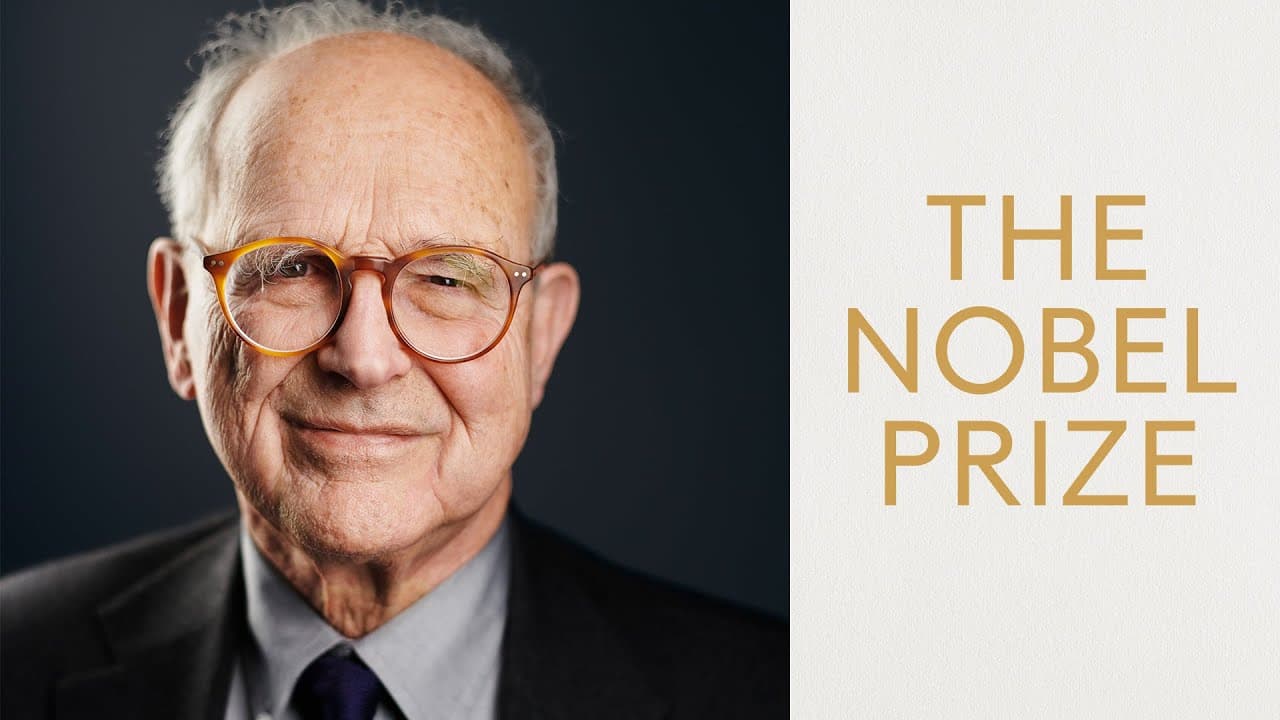
Transcript
well it was it is what i enjoy about science is a lot of things i mean i like making things and i like making i i am designing something and then having it work or not work and then trying to fix it so it turns out science was and the thing that got me really into what you guys would call science was a different thing what happened is i gone to col... Read More
Install to Summarize YouTube Videos and Get Transcripts
Explore YouTube Video Summarizer or Get YouTube Transcript Extractor
Summary
In this video, the speaker discusses his journey into science, starting from his interest in electronics as a child to his work on atomic clocks and gravitational waves. He emphasizes the importance of finding mentors and getting hands-on experience in research labs. He also shares his insights on the process of scientific discovery and the need to persevere through challenges.
Questions & Answers
Q: How did the speaker first become interested in science?
The speaker became interested in science, specifically electronics, as a child after coming across surplus electronic components on the streets of New York after World War II. He began building amplifiers and fixing radios for people in his community.
Q: What led the speaker to pursue a career in physics?
The speaker's interest in physics was sparked while working in a lab at MIT, where he was tasked with building an icebox. He proved his electronics skills and eventually worked on atomic clocks, which piqued his interest in the study of gravity.
Q: What were atomic clocks used for and why were they important?
Atomic clocks were a new type of clock that used the internal vibrations of atoms to measure time more accurately than the rotation of the Earth. These clocks became the standard for timekeeping and are now used in various applications, including GPS.
Q: How did the speaker's involvement in atomic clock research lead to his interest in studying gravity?
The speaker's mentor, Dr. Gerald Zacharias, wanted to build a better clock and decided to focus on making a measurement of the Einstein redshift, a prediction from Einstein's theory of gravity. This sparked the speaker's interest in gravity and led him to work on developing a better clock for the experiment.
Q: What challenges did the speaker face in trying to measure the Einstein redshift?
Despite working on the experiment, the clock they were trying to use for the measurements never worked. However, the experience deepened the speaker's interest in studying gravity and taught him the importance of having a mentor like Dr. Zacharias.
Q: How did Dr. Zacharias influence the speaker's career in science?
Dr. Zacharias played a significant role in the speaker's career as a scientist. He had faith in the speaker's abilities, which encouraged him to pursue a career in physics. The speaker credits Dr. Zacharias as the reason he became a physicist.
Q: What advice does the speaker give to those interested in pursuing science?
The speaker advises individuals interested in science to look for opportunities to work in research labs and gain hands-on experience. He emphasizes the importance of finding mentors and learning through the apprentice system. He encourages students to be proactive in seeking out opportunities and working on real problems.
Q: Is it ever too late to pursue a career in science?
No, it is never too late to pursue a career in science. The speaker mentions examples of scientists who changed their careers later in life and became successful. He believes that as long as one has the passion and interest in science, they can embark on a scientific journey at any stage in life.
Q: How did the speaker's teaching experience lead to the development of the first prototype for LIGO?
While teaching a course on general relativity, the speaker and his students became interested in gravitational waves. This curiosity led the speaker to think about ways to measure gravitational waves, which eventually led to the idea of using a clock and a laser to detect the time difference caused by a passing gravitational wave. The speaker then secured funding to build a prototype, leading to the development of LIGO (Laser Interferometer Gravitational-Wave Observatory).
Q: How does the speaker suggest approaching the scientific discovery process?
The speaker believes that scientific discovery should be driven by curiosity and the enjoyment of the process. He suggests having an idea, making a plan, and enjoying the journey of building and designing something. He also encourages being open to collaboration and learning from others' expertise.
Takeaways
The speaker's journey into science highlights the importance of mentors, hands-on experience, and perseverance in scientific discovery. He encourages individuals interested in science to seek opportunities in research labs and work with experienced scientists. The speaker's advice emphasizes the apprentice system and finding enjoyment in the process of inquiry and experimentation.
Read in Other Languages (beta)
Share This Summary 📚
Summarize YouTube Videos and Get Video Transcripts with 1-Click
Try YouTube Summary with ChatGPT & Claude or YouTube Transcript Generator
Explore More Summaries from Nobel Prize 📚

Summarize YouTube Videos and Get Video Transcripts with 1-Click
Try YouTube Summary with ChatGPT & Claude or YouTube Transcript Generator