How Did IM8 Reach a $100M Run Rate in 11 Months?
TL;DR
IM8 reached a $100 million annual run rate in under a year by combining founder-led decisions, rapid creative production, subscription economics, and heavy paid acquisition. The company runs roughly 1,500 ads, spends about $150,000 daily across marketing, targets a 3 to 3.5 CAC-to-LTV ratio, and recovers acquisition costs in under four months on a blended basis.
Transcript
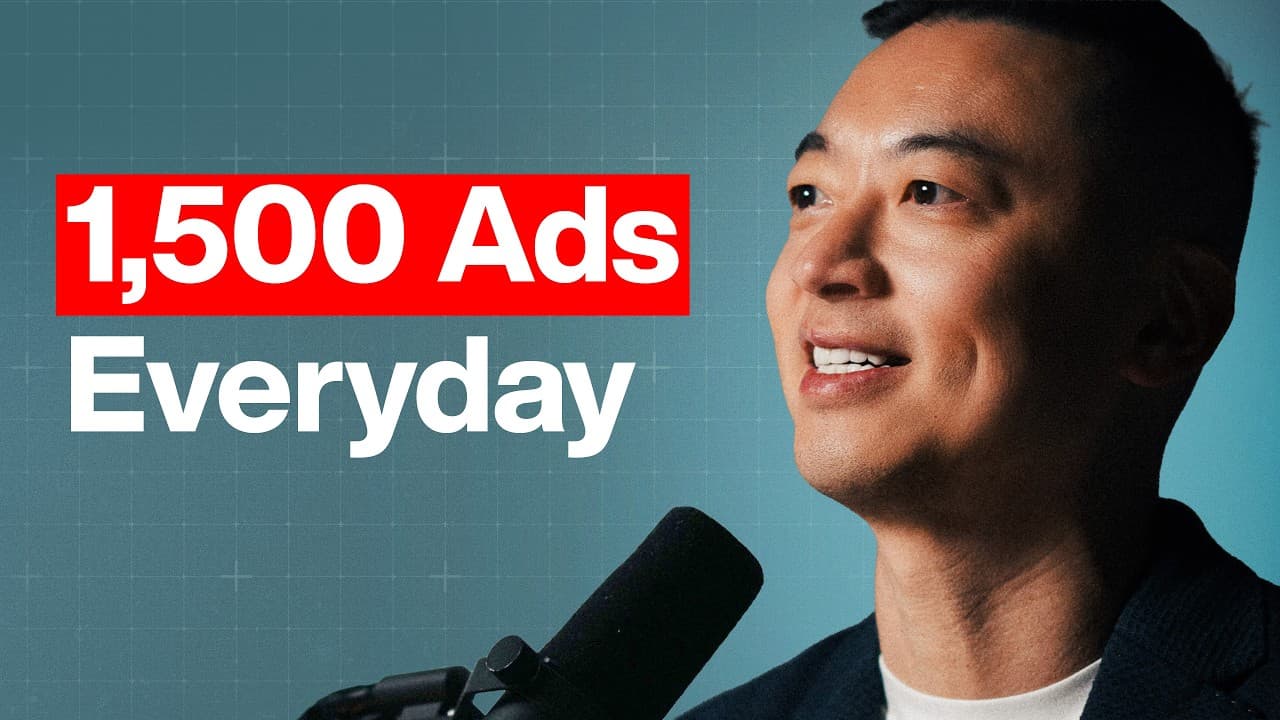
We have about 1,500 ads. We started from like 50 ads maybe 13 months ago. Right now we're spending 150 grand a day, but we want to spend like 200 300,000 a day. >> Danny Young is the founder of IM8. We grew up from zero to 100 million annual run rate in under one year and landing partnerships with David Beckham and Arena Sabalanka. I think individu... Read More
Key Insights
- IM8 reached a $100 million annual run rate in under one year by pairing aggressive customer acquisition with subscription economics. Its growth system connects advertising expenditure to CAC, lifetime value, and payback period, allowing the company to increase spending while monitoring whether acquired customers repay their costs quickly enough.
- IM8's paid marketing mix is approximately 85% Meta and 15% Google. Management believes Meta still offers another 24 to 36 months of potential upside before saturation, even though the business already spends approximately $100,000 per day on Meta and about $150,000 daily across total marketing.
- Creative volume is a central constraint on IM8's ability to spend more. The company increased its active advertising inventory from roughly 50 ads to about 1,500 in approximately 13 months, but says reaching $200,000 or $300,000 in daily marketing spend requires producing more high-quality content.
- IM8's creative system depends on continuous testing and creative diversity. Internal and external teams produce and evaluate content every day, while AI supports rapid static-ad production. The company emphasizes that merely increasing output is insufficient because scalable media spending also requires advertisements that perform effectively.
- Static advertisements are currently efficient because AI makes them fast to produce at scale. However, management expects that accessibility to turn AI-generated static creative into a commodity, making real people, authentic stories, and expanded video production increasingly important sources of differentiation over the following three to six months.
- IM8 targets a CAC-to-LTV ratio of roughly 3 to 3.5 over a 24-month horizon. Its blended customer-acquisition payback period is under four months across approximately three product configurations, giving management confidence that the company can continue scaling its marketing expenditure aggressively.
- Founder-led decision-making is presented as a speed advantage at IM8. Danny Yeung remains deeply involved in operational choices, uses his experience to reduce unnecessary discussion, and argues that larger decision groups can slow execution when too many people debate actions that require a clear and timely answer.
- Retention became a major focus after approximately 9 to 12 months centered primarily on customer acquisition. IM8 subsequently introduced a three-month subscription program in the United States, aligning retention initiatives with a business model whose growth depends on the relationship between acquisition cost and customer lifetime value.
Install to Summarize YouTube Videos and Get Transcripts
Explore YouTube Video Summarizer or Get YouTube Transcript Extractor
Questions & Answers
Q: How did IM8 reach a $100 million annual run rate so quickly?
IM8 reached a $100 million annual run rate in under one year through a founder-led operating model, high advertising expenditure, rapid creative testing, subscription revenue, and strategic partnerships. The company concentrated most paid acquisition on Meta, maintained roughly 1,500 active advertisements, and used CAC, lifetime value, and payback period to determine how aggressively it could continue spending.
Q: What is IM8's paid advertising channel mix?
IM8 allocates roughly 85% of its paid marketing mix to Meta and 15% to Google. The company has maintained this mix consistently because management believes Meta still contains substantial room for expansion. It plans to explore additional channels, including YouTube, podcasts, AppLovin, TikTok, and connected television, while continuing to pursue growth on its established platforms.
Q: How much does IM8 spend on marketing each day?
IM8 spends about $150,000 per day across total marketing, including approximately $100,000 daily on Meta alone. Management wants to increase total daily expenditure toward $200,000 or $300,000, but creative supply is the principal constraint. Reaching those spending levels requires a larger continuing flow of effective advertisements, not simply a willingness to increase the media budget.
Q: Why does IM8 keep roughly 1,500 ads running?
IM8 keeps roughly 1,500 advertisements active because Meta scaling requires both creative diversity and a continuous supply of fresh, effective content. The company started with about 50 advertisements approximately 13 months earlier and built a daily testing loop involving internal and external teams. This volume provides more opportunities to identify successful messages while supporting greater advertising expenditure.
Q: How does IM8 use AI in its advertising workflow?
IM8 uses AI primarily to increase the speed and efficiency of static-ad production. Its current video content remains real, while static and video formats are combined within the broader creative system. Management expects AI-generated static advertisements to become widely accessible, so it is investing more in video, real people, and authentic stories as potential sources of differentiation.
Q: What CAC-to-LTV ratio and payback period does IM8 target?
IM8 targets a CAC-to-LTV ratio of approximately 3 to 3.5 when evaluated over a 24-month horizon. Its blended acquisition-cost payback period is currently under four months across approximately three product configurations. These economics give management confidence to scale aggressively because customer acquisition costs are recovered relatively quickly while the subscription relationship can continue producing value.
Q: How does founder involvement help IM8 move faster?
Founder involvement helps IM8 reduce the delays created by extended discussion and layered decision-making. Danny Yeung remains closely involved in many decisions and says his accumulated knowledge helps him identify options with a high probability of success. This approach keeps him deeply involved in operations and enables the organization to make choices and scale initiatives more quickly.
Q: How is IM8 improving subscription retention?
IM8 began giving retention greater attention after spending approximately the first 9 to 12 months primarily focused on customer acquisition. One initiative introduced within the preceding 45 days was a three-month subscription program, initially launched in the United States. The program supports a business model in which retention, lifetime value, acquisition cost, and payback period determine sustainable growth.
Summary & Key Takeaways
-
IM8 built its initial acquisition engine primarily on Meta and Google, allocating roughly 85% of its channel mix to Meta and 15% to Google. Its total daily marketing spend reached about $150,000, including approximately $100,000 on Meta, while management aimed to increase total spending toward $200,000 or $300,000 per day.
-
Creative volume supports IM8's advertising scale. The company expanded from roughly 50 advertisements to about 1,500 in approximately 13 months, using daily testing and a combination of internal and external teams. AI helps accelerate static production, while current video advertisements use real footage to preserve authentic people, stories, and brand differentiation.
-
IM8 evaluates growth through subscription economics, targeting a CAC-to-LTV ratio of roughly 3 to 3.5 over a 24-month horizon and achieving a blended payback period below four months. After initially prioritizing customer acquisition for approximately 9 to 12 months, the company increased its focus on retention and introduced a three-month subscription program.
Read in Other Languages (beta)
Share This Summary 📚
Summarize YouTube Videos and Get Video Transcripts with 1-Click
Try YouTube Summary with ChatGPT & Claude or YouTube Transcript Generator
Explore More Summaries from Open Residency 📚



Summarize YouTube Videos and Get Video Transcripts with 1-Click
Try YouTube Summary with ChatGPT & Claude or YouTube Transcript Generator