How to Position an Affordable Product as Luxury
TL;DR
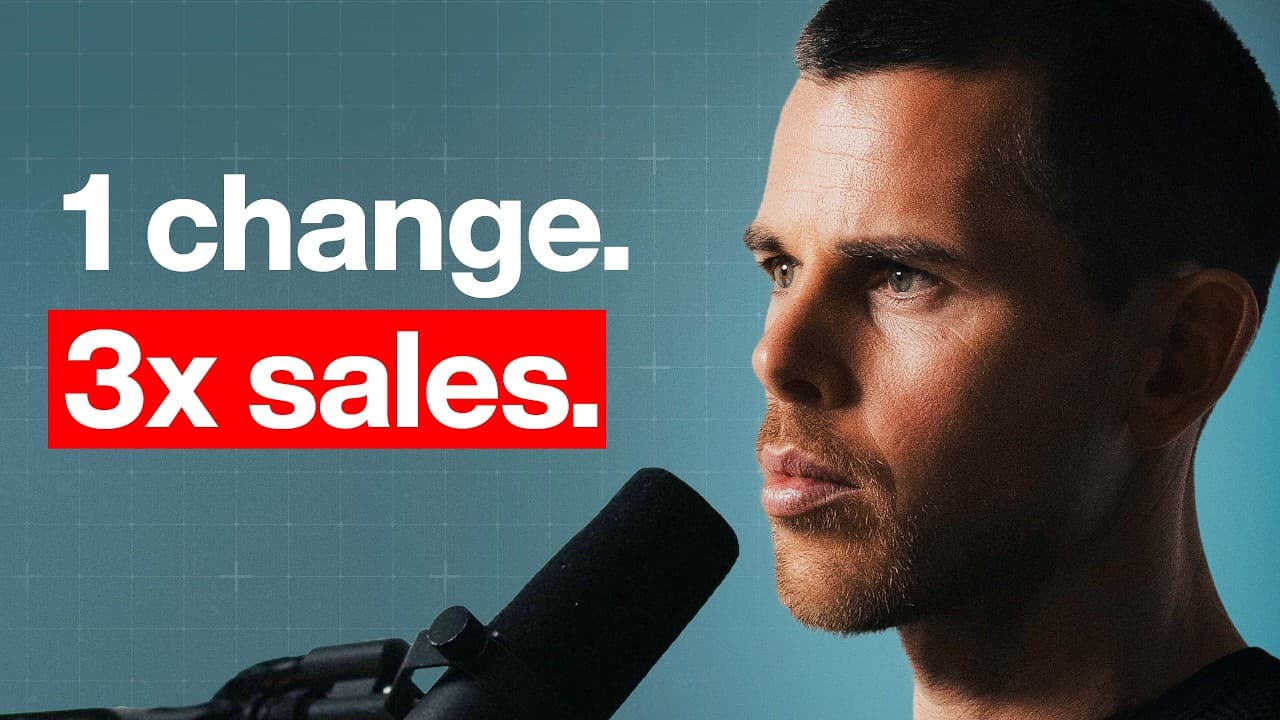
Premium positioning comes from brand design, content, partnerships, distribution, and product experience, not simply from charging a high price. Cadence kept its drink near familiar category pricing but redesigned its packaging for faster shelf comprehension, and sales tripled with the same liquid, showing how clear communication can convert positioning into retail performance.
Transcript
I'm your SAS but learning. I'll [music] stay up in the middle of the night, watching podcasts, reading books, studying analyst notes, and understanding what went wrong. Listen, we're not going to win on capital. We're not going to win on resources. We're going to win on speed. That's Ross Mackay, founder of Cadence, a brand that's building the worl... Read More
Key Insights
- Premium positioning is created through content, brand partnerships, distribution choices, retail presentation, and product experience, rather than price alone. Cadence uses these elements to describe an electrolyte drink selling for roughly $2 as a luxury product without moving far outside familiar category pricing.
- Strong brands remove confusion from a category instead of adding noise. Cadence redesigned its can so shoppers could identify the flavor and key attributes within milliseconds, using a large colored rim and prominent no-sugar and no-caffeine messages to improve comprehension at the shelf.
- Packaging can materially change retail performance without any reformulation. When Cadence replaced its original minimalist direct-to-consumer can with a retail-oriented design, the liquid remained the same while sales rose threefold in its early stores, Vitamin Shoppe and GNC.
- Retail design must reflect where the product will actually be sold. Cadence learned that packaging created for attractive online presentation did not necessarily generate sufficient shelf velocity, so the company evolved its visual architecture while preparing to make retail a central focus in 2026.
- Category familiarity reduces the amount of change consumers must process. Cadence retained the standard 355 ml can format used by other beverages and focused its differentiation on design, positioning, and liquid, based on the view that a category product may need only a small improvement rather than wholesale reinvention.
- Product quality is necessary for repeat purchasing even when branding wins the first trial. Cadence invested heavily in making its liquid delicious and craveable because opening and drinking the product determines whether customers return through direct-to-consumer channels or physical retail.
- Premium at scale requires balancing broad availability with an elevated identity. Mackay points to On as an example because dentists and elite athletes can both wear the brand, while its stores in locations such as Bond Street and New York reinforce premium positioning.
- Speed is an early-stage advantage when a company cannot win through greater capital or resources. Mackay combines rapid execution with intensive research, including studying shoppers in store aisles, reviewing category price points, analyzing shelf differentiation, and repeatedly revising the brand based on performance data.
Install to Summarize YouTube Videos and Get Transcripts
Explore YouTube Video Summarizer or Get YouTube Transcript Extractor
Questions & Answers
Q: How can an affordable product be positioned as luxury?
An affordable product can be positioned as luxury through its brand identity, content, partnerships, retail environment, packaging, and customer experience rather than through price alone. Cadence applies this approach to an electrolyte drink costing roughly $2. It maintains a price that consumers recognize within the category while using premium presentation, lifestyle associations, differentiated positioning, and a carefully developed liquid to elevate perceived value.
Q: Why did Cadence redesign its beverage can?
Cadence redesigned its can because the original minimalist design, created with a direct-to-consumer sensibility, did not perform at the desired velocity in Vitamin Shoppe and GNC. Retail shoppers had only milliseconds to understand the product. The revised package made flavor easier to identify through a large colored rim and highlighted practical claims such as no sugar and no caffeine.
Q: How did packaging affect Cadence's retail sales?
Packaging had a direct and measurable effect on Cadence's retail sales. After the company introduced a redesigned can, sales increased threefold even though the liquid inside remained unchanged. The result indicated that the earlier package was limiting shelf comprehension and selection. Clearer flavor identification and more visible product attributes helped shoppers understand the drink quickly enough to choose it in stores.
Q: What does premium at scale mean for a consumer brand?
Premium at scale means preserving an elevated identity while making a product available to a broad customer base. Mackay identifies On as an example because both ordinary professionals and leading athletes wear it, while its stores reinforce a premium image. For Cadence, the challenge is similarly to expand distribution and sales without allowing wider adoption to weaken the brand's aspirational positioning.
Q: How should a consumer brand choose its price point?
A consumer brand should consider the prices shoppers already expect within its category. Mackay argues that selling at twice or three times the familiar price can be difficult because consumers compare a new product with established alternatives. Cadence therefore aligned its price with category expectations and created differentiation through branding, positioning, packaging, content, partnerships, and liquid quality instead of depending on a dramatically higher price.
Q: What should beverage packaging communicate on a retail shelf?
Beverage packaging should quickly communicate flavor, product type, and the attributes most relevant to purchase. Cadence concluded that shoppers have only milliseconds to notice and select a can, so subtle online-oriented minimalism was insufficient. Its retail package uses a prominent colored flavor rim and visible no-sugar and no-caffeine statements while still balancing branding goals with required regulatory, barcode, origin, and product callouts.
Q: Why did Cadence keep a standard 355 ml can?
Cadence kept a standard 355 ml can because consumers were already familiar with that format in the beverage category. Mackay's view is that a new brand does not need to reinvent every element of an established product. By retaining a recognizable size and form, Cadence reduced friction and concentrated its meaningful changes on the areas it considered better: visual design, market positioning, and the liquid itself.
Q: Why is product taste important to brand growth?
Product taste is important because branding and packaging may persuade someone to try a beverage, but the liquid determines whether that person buys it again. Mackay says the drink must be delicious and craveable to support repeat purchasing in both retail and direct-to-consumer channels. Cadence therefore devoted substantial effort to product development, not only to the visual identity that attracts initial attention.
Summary & Key Takeaways
-
Cadence positions an affordable electrolyte drink as luxury by coordinating its branding, content, partnerships, retail presence, and product quality. Rather than relying on a price far above category norms, the company presents a familiar product format through a differentiated identity described internally and externally as $2 luxury and the champagne of electrolytes.
-
Retail performance forced Cadence to revise a minimalist design that had worked for direct-to-consumer presentation but performed poorly on store shelves. The updated can added a large colored flavor rim and visible no-sugar and no-caffeine claims. With the liquid unchanged, sales increased threefold after the new package entered stores.
-
Ross Mackay studies shoppers, category conventions, price expectations, and shelf behavior to find useful gaps. His broader strategy is premium at scale: preserve an elevated identity while reaching many consumers. Familiar can dimensions reduce adoption friction, while distinctive design, clear positioning, and a craveable liquid support trial and repeat purchases.
Read in Other Languages (beta)
Share This Summary 📚
Summarize YouTube Videos and Get Video Transcripts with 1-Click
Try YouTube Summary with ChatGPT & Claude or YouTube Transcript Generator
Explore More Summaries from Open Residency 📚






Summarize YouTube Videos and Get Video Transcripts with 1-Click
Try YouTube Summary with ChatGPT & Claude or YouTube Transcript Generator