How to Grow and Monetize an Email Newsletter
TL;DR
Newsletter growth comes from consistently combining several tactics, not finding one shortcut. Build demand before launch, publish useful content on channels you already control, convert that attention into portable email subscriptions, and strengthen growth through referrals, lead magnets, paid acquisition, and transparent founder-led storytelling.
Transcript
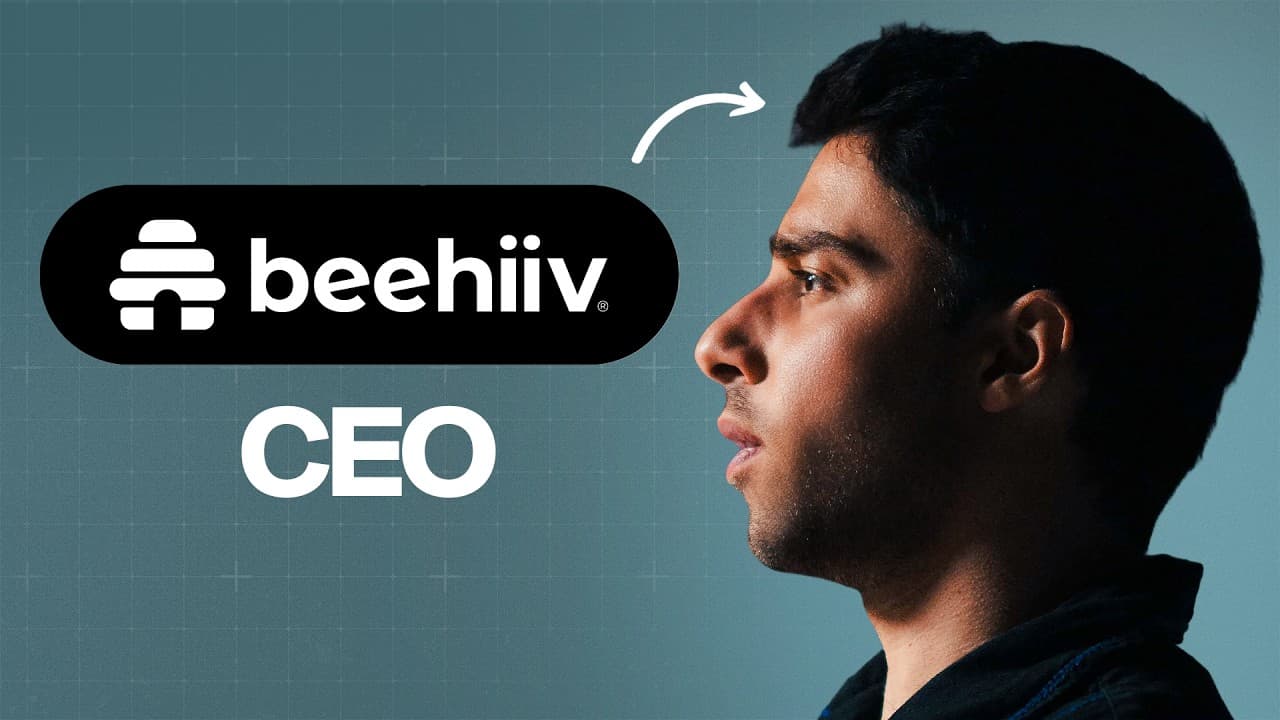
Everyone always asks, "How do I scale my newsletter faster?" [music] The shitty answer is, "It's a combination of doing five, six, seven things really well, consistently." That's Tyler Denk, co-founder and CEO of Beehive, the newsletter [music] platform powering some of the world's biggest creators, publishers, entrepreneurs, and media brands acros... Read More
Key Insights
- Newsletter growth is the cumulative result of executing five, six, or seven strategies consistently. No single tactic guarantees rapid expansion, but several reliable methods can increase acquisition from roughly 10 subscribers per day to 20 or 30 and eventually create meaningful momentum.
- Owned distribution is valuable because an email audience can be moved independently of a social platform. If creators cannot transfer their audience, content, and subscriptions elsewhere, they remain dependent on the rules and reach of the platform where those relationships originated.
- Founder-led content can establish demand before a product or newsletter launches. Denk began discussing beehiiv while it was still a side project, using X and LinkedIn to test positioning, explain market gaps, demonstrate experience, and discover whether people wanted what his team planned to build.
- Transparency is the central differentiator of Big Desk Energy. Its roughly 1,500-word essays examine fundraising, feature launches, board meetings, remote management, revenue, burnout, mistakes, and the daily experience of leading a quickly growing startup rather than presenting uninterrupted success.
- A pre-launch waitlist can validate demand and mobilize early supporters. Denk announced that Big Desk Energy would not launch until 1,000 people subscribed, promoted that condition repeatedly across his existing social channels, and reached the threshold after approximately three weeks.
- Existing social networks are free starting points for newsletter acquisition. Denk recommends emphasizing channels already available, including X, LinkedIn, and Instagram, while sharing enough useful previews to give prospective readers a clear reason to exchange their email addresses for deeper content.
- Referral programs can become major newsletter growth engines. Denk said the referral program used at Morning Brew contributed more than one million subscribers, which motivated him to make comparable referral capabilities accessible to newsletters using beehiiv.
- Personal and operational details can make founder content more relatable. Denk found that readers were especially interested in his routines, meetings, events, motivation struggles, company mistakes, and responsibilities as a chief executive, even though he had not originally considered himself a creator.
Install to Summarize YouTube Videos and Get Transcripts
Explore YouTube Video Summarizer or Get YouTube Transcript Extractor
Questions & Answers
Q: How do you grow an email newsletter from zero?
Start by building interest before publication through useful posts on social channels you already access, such as X, LinkedIn, and Instagram. Explain the newsletter's distinct value, provide previews of its content, and collect emails through a waitlist. After launch, combine referrals, email gates, lead magnets, the Boost network, and paid acquisition rather than depending on one growth tactic.
Q: How can a pre-launch waitlist help a newsletter grow?
A pre-launch waitlist tests whether the concept attracts genuine interest while creating anticipation around the first issue. Tyler Denk announced that Big Desk Energy would not launch until it collected 1,000 subscribers. Reaching that goal took approximately three weeks, and early subscribers promoted the offer to others, creating an organic sharing loop before publication began.
Q: Why is owned distribution important for creators?
Owned distribution gives creators a direct relationship with subscribers through email and reduces dependence on a single social platform. Denk argues that creators are stuck when they cannot move their audience, content, or subscriptions elsewhere. A portable subscriber list can continue directing attention toward advertisers, a community, events, products, or other destinations chosen by the publisher.
Q: What content does Big Desk Energy publish?
Big Desk Energy provides startup founders with a behind-the-scenes account of building beehiiv. Its roughly 1,500-word essays cover fundraising, product features, board meetings, remote company management, revenue, mistakes, burnout, and the chief executive's schedule. The content expands on shorter social posts by offering more detailed, personal explanations of business decisions and operating challenges.
Q: How does building in public create an audience?
Building in public creates an audience by turning business development into an ongoing story. Denk shared beehiiv's market thesis, planned features, revenue, successes, setbacks, and mistakes from the project's earliest stages. That openness helped him test messaging, establish credibility from his Morning Brew experience, and attract people interested in following an idea as it became a growing company.
Q: Why is there no single shortcut to newsletter growth?
Newsletter growth depends on several acquisition methods working together over time. Denk says there is no silver bullet that automatically produces rapid expansion. Pre-launch promotion, social distribution, referrals, email gates, lead magnets, network-based recommendations, and paid acquisition each contribute. Consistent execution can gradually raise daily subscriptions until the publication develops enough momentum to scale.
Q: How can referral programs increase newsletter subscribers?
Referral programs encourage current readers to recruit additional subscribers, turning the existing audience into a distribution channel. Denk identifies referrals as a major potential growth driver and says Morning Brew's program contributed more than one million subscribers. His experience with that system also influenced beehiiv's goal of making similar newsletter growth capabilities available to other publishers.
Q: What makes founder-led newsletter content compelling?
Founder-led content becomes compelling when it reveals useful details that business leaders usually keep private. Denk shares financial progress, operating decisions, mistakes, difficult periods, burnout, meetings, travel, and personal routines. This transparency gives readers practical insight into building a startup while making the founder more relatable than a polished narrative that presents every development as successful.
Summary & Key Takeaways
-
Tyler Denk built demand for Big Desk Energy by publicly documenting the process of building beehiiv. He shared revenue, product decisions, fundraising, operational challenges, and personal setbacks on X and LinkedIn, creating credibility and an audience interested in an unusually transparent account of startup leadership before the newsletter itself existed.
-
Big Desk Energy began as a branded Spotify work playlist, then developed into a newsletter for startup founders. Denk promoted a preview across X, Instagram, and LinkedIn and refused to publish until the waitlist reached 1,000 subscribers. Supporters shared the offer, producing an organic pre-launch growth loop before its January debut.
-
Sustainable newsletter growth requires several methods executed well and repeatedly. The playbook includes pre-launch waitlists, existing social channels, email gates, referral programs, the Boost network, lead magnets, and paid acquisition. The objective is to turn incremental daily subscriber gains into enough momentum for the publication to reach meaningful scale.
Read in Other Languages (beta)
Share This Summary 📚
Summarize YouTube Videos and Get Video Transcripts with 1-Click
Try YouTube Summary with ChatGPT & Claude or YouTube Transcript Generator
Explore More Summaries from Open Residency 📚

Summarize YouTube Videos and Get Video Transcripts with 1-Click
Try YouTube Summary with ChatGPT & Claude or YouTube Transcript Generator