How to Build Power Through Strategic Self-Control
TL;DR
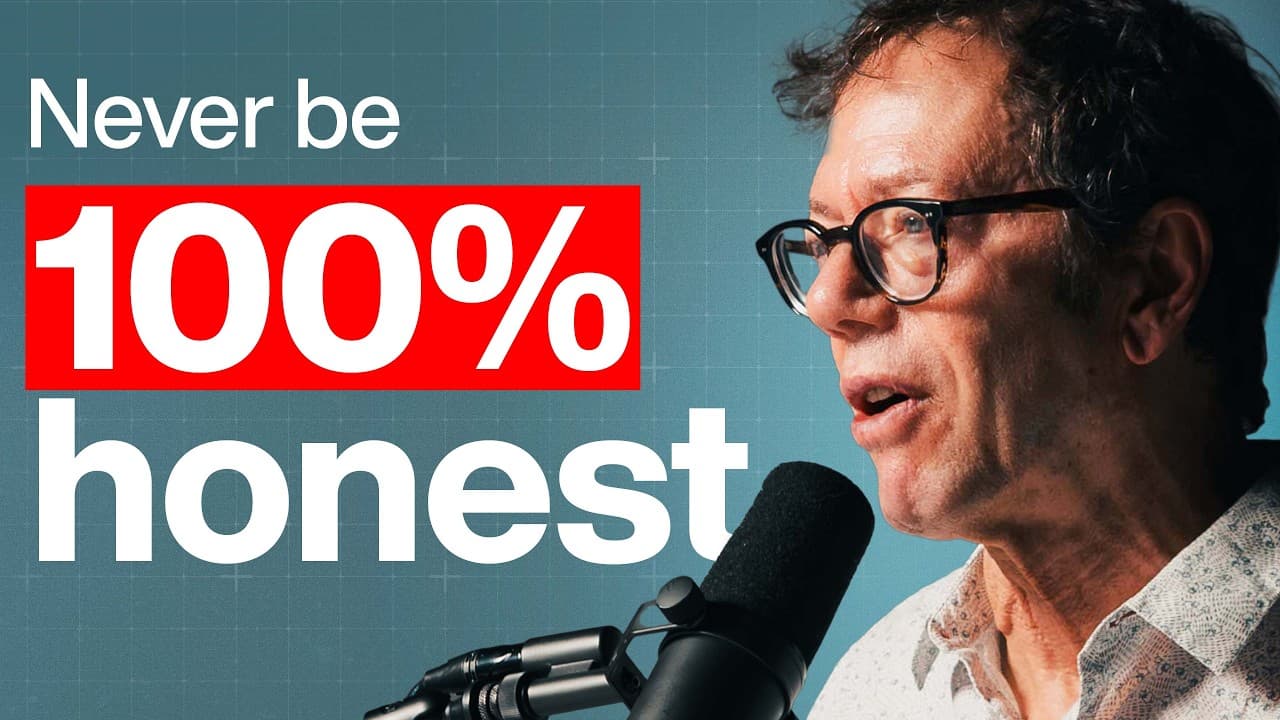
Power grows from disciplined communication, clear internal leadership, and deliberate uncertainty toward rivals. Leaders should communicate their vision honestly enough to align their teams, while protecting future moves from competitors. Speaking less, controlling emotional expression, adapting behavior to social context, and acting boldly at the right moment can strengthen authority and make strategic actions harder to predict.
Transcript
You have to understand that people don't naturally want to buy your product. They don't want to listen to your music. They don't want to read your books. They're not interested in how do you seduce them into doing that is the name of the game. Robert Green is the mastermind behind 48 laws of power. One of the most controversial and influential stra... Read More
Key Insights
- Honesty in leadership is contextual, not absolute. A leader should communicate the organization's vision directly and honestly enough for team members to understand the desired direction, while recognizing that complete transparency is neither necessary nor strategically useful in every interaction or decision.
- Concealing intentions is most valuable against rivals and opponents. When competing companies know exactly where a business is headed, they can imitate its actions, anticipate its strategy, and prepare a response, reducing the original company's ability to remain on the offensive.
- Strategic thinking requires planning several moves ahead. A leader must know the intended direction over the coming weeks or months, preserve uncertainty around those plans, and prevent outside observers from easily predicting what action will come next.
- Silence creates leverage by making other people wonder what someone is thinking. Robert Greene's account of meetings with 50 Cent illustrates how saying little can draw attention, create uncertainty, and place psychological pressure on others to interpret an unreadable reaction.
- Speaking less can project self-control and authority. A person who controls what they say is less likely to reveal emotions, expose intentions, or make careless statements, and their words can carry more weight when they eventually choose to speak.
- Excessive talking can signal weakness and insecurity. Greene argues that an inability to control one's mouth suggests difficulty controlling emotions and behavior, while disciplined speech contributes to an outward appearance of stability, mystery, and personal power.
- Social behavior naturally involves acting and adaptation. People learn from childhood to present themselves differently depending on what they want and whom they are addressing, because voicing every private judgment would offend others and damage relationships.
- Power depends partly on appearances and psychological interpretation. Even when someone feels insecure internally, controlled speech, body language, and emotional presentation can create an aura of authority that influences how other people respond to them.
Install to Summarize YouTube Videos and Get Transcripts
Explore YouTube Video Summarizer or Get YouTube Transcript Extractor
Questions & Answers
Q: How should leaders balance honesty and secrecy in business?
Leaders should be direct about the organization's vision, desired direction, and brand so their internal teams understand what they are working toward. Hiding every intention from employees can create chaos and weaken alignment. Secrecy becomes more useful when dealing with rivals, opponents, or outsiders who could imitate plans, predict future moves, or prepare a competitive response.
Q: Why should a business conceal its intentions from competitors?
A business should conceal future intentions because predictable plans give competitors an opportunity to copy the strategy, anticipate the next move, and shift the original company onto the defensive. Customers may understand the general brand, but rivals do not need advance knowledge of actions planned for the next week, month, or year. Strategic uncertainty preserves room to act first.
Q: How does silence become a source of leverage?
Silence becomes leverage by making other people focus on what the quiet person might be thinking. Greene describes watching 50 Cent say very little in meetings while everyone kept their eyes on him and worried about his reaction. When thoughts and judgments remain unreadable, others must interpret limited signals, while the silent person reveals less information and retains greater control.
Q: Why can speaking less create an aura of power?
Speaking less can create an aura of power because restraint suggests control over words, emotions, and behavior. Silence also adds mystery, since other people cannot easily determine whether their ideas are being accepted or rejected. The fewer unnecessary statements someone makes, the lower the risk of saying something careless, and the more weight their eventual contribution may carry.
Q: Why can excessive talking weaken a person's authority?
Excessive talking can weaken authority because it may appear driven by insecurity and can expose thoughts, emotions, or intentions that would be better kept private. Greene argues that someone who cannot control their own mouth may seem unable to control broader behavior. Frequent speech also makes a person easier to understand and disregard, while increasing the chance of saying something foolish.
Q: Is complete transparency always effective for business leaders?
Complete transparency is not presented as universally effective. Internal teams need enough honesty to understand the leader's vision and remain aligned, but they do not need access to every thought or tactical intention. Competitors need even less information. The appropriate level of openness depends on the relationship, the strategic context, and whether disclosure supports coordination or gives an opponent an advantage.
Q: How does planning ahead strengthen strategic power?
Planning ahead strengthens strategic power by allowing a leader to understand the intended destination and sequence actions before others can react. Greene connects concealing intentions with thinking two or three moves ahead. The strategist knows what may happen over the coming months while keeping rivals uncertain, making it harder for them to predict, imitate, or block the next move.
Q: Why does Robert Greene say people naturally act in social situations?
Greene says acting is part of human nature because people learn from childhood to adjust their presentation to obtain what they want and avoid offending others. A person does not behave identically with every parent, employee, authority figure, or admired individual. Social life requires control over speech and behavior, since expressing every private judgment would damage relationships and limit cooperation.
Summary & Key Takeaways
-
Effective leadership requires a clear vision of the company, its future, and its brand. That vision should be communicated directly enough for the internal team to understand the leader's goals and work from the same page. Constantly hiding intentions from employees can create organizational chaos instead of useful strategic uncertainty.
-
Concealing intentions is most useful when dealing with rivals, opponents, and others outside the team. If competitors can predict a company's direction, they can imitate its moves or prepare countermeasures. Strategic power therefore depends on planning several moves ahead, protecting future actions, and moving boldly when the time is right.
-
Silence can create leverage because it prevents others from knowing exactly what someone thinks or feels. Speaking less can project emotional control, mystery, and authority, while excessive talking can reveal insecurity or produce careless statements. Since social interaction always involves adjusting behavior, disciplined self-presentation is presented as a normal human skill.
Read in Other Languages (beta)
Share This Summary 📚
Summarize YouTube Videos and Get Video Transcripts with 1-Click
Try YouTube Summary with ChatGPT & Claude or YouTube Transcript Generator
Explore More Summaries from Open Residency 📚


Summarize YouTube Videos and Get Video Transcripts with 1-Click
Try YouTube Summary with ChatGPT & Claude or YouTube Transcript Generator