How is Congress Structured: Leadership and Committees Explained
TL;DR
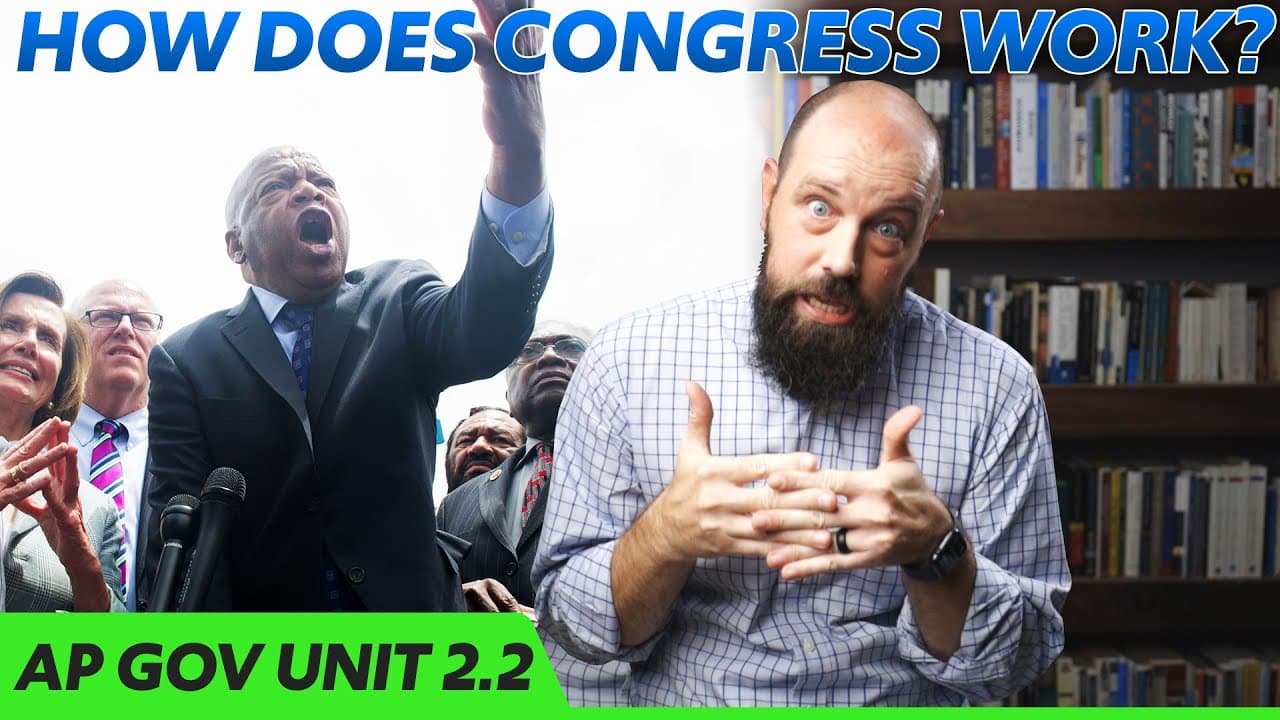
Congress features two houses with distinct leadership and a committee system that handles most work. The House uses powerful rules and the rules committee to gatekeep bills, while the Senate relies on flexible debate and mechanisms like cloture and unanimous consent. Committees come in four types and guide how legislation is drafted and debated.
Transcript
well hey there and welcome back to H history in the last video I began talking about unit 2 of the AP Government curriculum namely the structures powers and functions of Congress and in this video we're going to do it again but we're going deeper so if you're ready to get them brain cows milk then let's get to it so in this video here's what we're ... Read More
Key Insights
- The House leadership includes the Speaker, majority and minority leaders, and whips to maintain party discipline and steer policy.
- The Senate leadership includes the Vice President as President of the Senate, the president pro tempore, and the majority and minority leaders who set agendas.
- Committees are used by both Houses to draft and review legislation, with standing, joint, select, and conference committees serving different long-term and temporary purposes.
- Standing committees are persistent and handle ongoing issues like money and taxation in their respective chambers.
- Joint committees involve members from both houses and address cross-chamber issues like the Library of Congress and printing.
- Select committees are temporary and created for specific purposes, such as historic legislative events.
- Conference committees are formed to reconcile differences between House and Senate versions of a bill so it can be enacted into law.
- Filibusters and cloture in the Senate, along with unanimous consent, are key tools that influence how easily legislation can be stalled or advanced.
- More videos from this channel:
- More from this channel: Heimler's History
Install to Summarize YouTube Videos and Get Transcripts
Explore YouTube Video Summarizer or Get YouTube Transcript Extractor
Questions & Answers
Q: How does the Speaker of the House influence committee assignments and policy outcomes?
The Speaker is a member of the majority party, chosen by House members, and has substantial power under parliamentary procedure. This role includes making committee assignments and guiding which bills receive floor debate. The Speaker’s influence helps determine which members sit on desirable committees and how party members coordinate to achieve policy goals, making the Speaker a pivotal gatekeeper in the House.
Q: What leadership roles exist in the Senate and how do they differ from the House?
In the Senate, the Vice President serves as President of the Senate but is rarely present, so the majority and minority leaders, who are from the majority party, steer daily operations. The majority leader controls the legislative agenda, deciding which bills reach the floor and managing the calendar, a key difference from the House where the Speaker and rules committee have more direct control over debate and scheduling.
Q: What is the purpose of standing committees in Congress?
Standing committees are persistent from one congressional session to the next and handle ongoing policy areas. They are central to how Congress drafts and scrutinizes legislation. Examples include the Appropriations Committee in the Senate and the Ways and Means Committee in the House. These committees decide funding priorities and tax-related issues, shaping long-term policy outcomes.
Q: How do joint committees function differently from standing committees?
Joint committees include members from both the House and Senate and deal with issues requiring cross-chamber coordination. They are not always permanent, but some exist to oversee areas like the Library of Congress and printing. The combined membership facilitates shared oversight and information across chambers, enhancing consistency in certain bureaucratic functions.
Q: What is a select committee and when is it used?
A select committee is temporary and created for a specific purpose or investigation. It is formed to address particular issues or events and is disbanded once its objective is accomplished. This allows Congress to focus investigative or targeted legislative tasks without maintaining a standing structure for every issue.
Q: How does a conference committee help in the lawmaking process?
A conference committee is formed when the House and Senate pass different versions of the same bill. Members from both chambers collaborate to reconcile differences and produce a single, identical version to be sent for final passage. This step is essential to ensure bicameral agreement before a bill can become law.
Q: What mechanisms exist to prevent or end filibusters in the Senate?
The Senate can end a filibuster through cloture, which requires three-fifths of the Senate to agree. Additionally, unanimous consent allows Senators to waive certain procedures with broad agreement, speeding up proceedings. These tools reduce the impact of extended debate on legislation, though they require substantial cross-party agreement.
Q: How does a bill typically progress from sponsorship to floor debate in both houses?
A bill can be sponsored by a member of either House or Senate and moves through debate and amendment. Bills often gain or lose provisions not related to the main subject, and they must pass through respective committees before reaching the floor. Finally, identical versions from both Houses must be reconciled, usually by a conference committee, before final enactment.
Summary & Key Takeaways
-
The video explains how Congress is organized into two houses with different leadership roles and how leadership affects policymaking. It also covers the committee system, including standing, joint, select, and conference committees, and explains how these bodies influence bill drafting and passage.
-
The House uses rules and a committee of the whole to manage debate, while the Senate relies on unlimited debate and tools like cloture to limit it. These differences shape how quickly and which policies move forward.
-
The overall process of how a bill becomes law is touched on, including sponsorship, amendment, and the need for similar versions to go through conference committees before final passage.
Read in Other Languages (beta)
Share This Summary 📚
Summarize YouTube Videos and Get Video Transcripts with 1-Click
Try YouTube Summary with ChatGPT & Claude or YouTube Transcript Generator
Explore More Summaries from Heimler's History 📚





Summarize YouTube Videos and Get Video Transcripts with 1-Click
Try YouTube Summary with ChatGPT & Claude or YouTube Transcript Generator