How to profit from Facebook ads in 2025 step by step
TL;DR
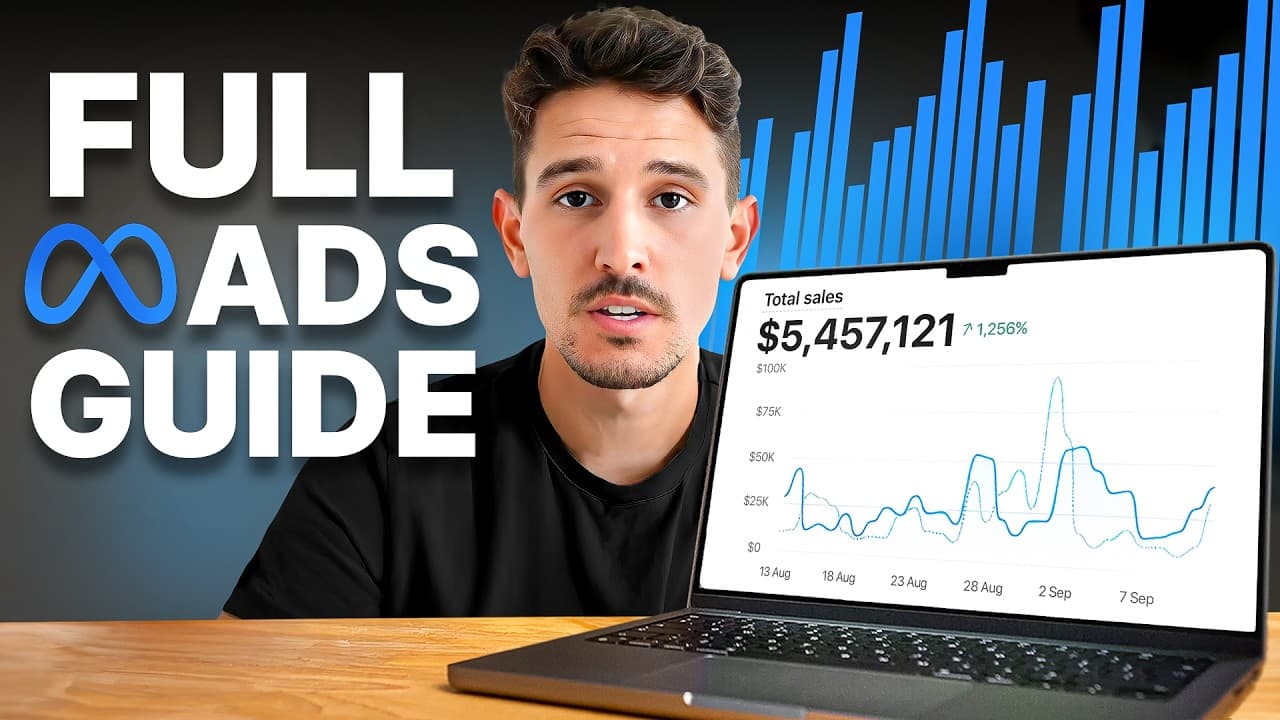
Facebook ads require precise setup and ongoing health checks. Start by validating the purchase event and ensuring pixel accuracy within 10 percent. Disable experimental features like Advantage Plus Creative to keep control of spend. Regular audits of campaigns, budgets, and columns help sustain profitable scaling.
Transcript
i'm willing to bet that you need to be running Facebook ads if you're serious about growing your business fast in 2025 learning to run Facebook ads profitably being able to throw a dollar in make 2 4 6 8 $10 back is one of the highest leveraged skills that you could possibly have as a business owner and if you don't have the proper skill and you do... Read More
Key Insights
- Pixel health matters because the purchase event must align between browser and server data within about a 10 percent discrepancy.
- Audit workflows should start with data sources and events, then verify against Shopify orders to confirm accuracy of reported metrics.
- Keep Advantage Plus Creative off to avoid experimental results that could waste impressions and reduce control over outcomes.
- A lean campaign structure with a few core campaigns is more scalable than sprawling across many campaigns.
- Column sets are foundational and should always include delivery, budget, purchases, ROAS, and cost per purchase among other key metrics.
- Regularly check for discrepancies between browser events and server conversions to catch tracking issues early.
- The most important metric is the purchase event; other events like add to cart or checkout can vary more due to blockers and privacy changes.
- Health checks should be quick but thorough, repeated in simple 20 second per event validations to maintain accuracy and optimize spend.
- More videos from this channel:
- More from this channel: Sam Piliero
Install to Summarize YouTube Videos and Get Transcripts
Explore YouTube Video Summarizer or Get YouTube Transcript Extractor
Questions & Answers
Q: How can I ensure my Facebook purchase event is accurately tracked for reliable ROAS?
To ensure accurate tracking, start by viewing the purchase event in the events manager and compare the browser and server events. Look for a close alignment between the two curves and a small discrepancy, ideally under 10 percent. Then cross-verify with Shopify orders to ensure the last 7 days orders align with server-reported purchases, adjusting if the gap widens beyond acceptable margins. This process helps maintain credible attribution and prevents over or under counting.
Q: Why should I disable Advantage Plus Creative in my ad account, and what is the risk of keeping it on?
Advantage Plus Creative should be off because it runs tests on a portion of impressions which you do not control. The risk of keeping it on is that Meta may deliver tests to a subset of viewers, reducing your control over creative exposure and potentially wasting impressions on unproven formats. By turning it off, you preserve consistency and maximize the ROI of proven creatives, especially when budgets are high and every impression matters.
Q: What is the recommended approach to campaign structure for high spend accounts?
For high spend accounts, start with a lean structure focused on two to three core products or campaigns rather than many campaigns. This minimizes fragmentation, allows easier budget control, and reduces wasted spend. By consolidating to a few primary campaigns, you can optimize creatives and audiences more efficiently, apply consistent bidding strategies, and scale with clearer data-driven decisions.
Q: What columns should I include in my Facebook ads manager for a useful audit trail?
A foundational column set should include delivery status, attribution settings, budget amount spent, purchase conversions, return on ad spend, number of purchases, and cost per purchase. Add secondary metrics such as add to cart cost per add to cart, checkouts initiated cost per checkout initiated, and frequency. This combination provides a quick pulse on performance and actionable insights during audits.
Q: How often should I perform a health check on my ad accounts and why?
Health checks should be done regularly, especially when you are spending large amounts. The process includes quick pulse checks for event consistency, pixel accuracy, and campaign structure. Performing these checks frequently helps detect discrepancies early, enabling timely corrections that can protect or improve profitability and prevent large-scale waste.
Q: What is the most important event to validate, and how should you validate it?
The most important event to validate is the purchase event. Validate by comparing browser and server data in the events manager, checking for similar totals and small, acceptable discrepancies. Follow with a corroborating check against Shopify order totals for the same period. Reconcile any significant gaps to ensure your attribution is trustworthy and your reported revenue is accurate.
Q: What should you do if browser and server events diverge significantly?
If browser and server events diverge significantly, investigate both sides for issues such as pixel fires, conversion API configuration, and data attribution. Recalculate totals over the last seven days, verify against Shopify orders, and look for patterns in which events misalign. Correcting misconfigurations and ensuring consistent data flow will restore accuracy and stabilize ROAS over time.
Q: Why is it important to audit data sources beyond the purchase event, such as add to cart and view content?
Auditing additional events like add to cart and view content helps identify tracking gaps and potential blockers that can affect attribution. While these events are more prone to discrepancies due to blocking or privacy changes, they provide useful context for funnel health and optimization opportunities. Consistent validation across events supports more robust decision making and better optimization.
Summary & Key Takeaways
-
A clear foundation for Facebook ads is built on accurate event tracking and pixel health checks, ensuring purchase data aligns with server data within a 10 percent margin.
-
Campaign structure should minimize the number of active campaigns and focus budgets on primary products to avoid waste and improve ROAS.
-
Ongoing account health requires habitually auditing data sources, column sets, and settings to identify and fix discrepancies that impact profitability.
Read in Other Languages (beta)
Share This Summary 📚
Summarize YouTube Videos and Get Video Transcripts with 1-Click
Try YouTube Summary with ChatGPT & Claude or YouTube Transcript Generator
Explore More Summaries from Sam Piliero 📚
Summarize YouTube Videos and Get Video Transcripts with 1-Click
Try YouTube Summary with ChatGPT & Claude or YouTube Transcript Generator