What is the flexible Facebook ad format and how to use it

TL;DR
Flexible ads extend the life of ad iterations by grouping up to 10 media pieces in one unit and automatically testing combinations. Use them to reduce ad fatigue, with separate media types and multiple texts; organize 2 to 10 media, 5 primary texts, 5 headlines, and 5 descriptions for best results.
Transcript
There's a new setting in Facebook ads that is specifically designed to attack the problems that Andromeda has created. What I'm going to do in this video is break it all down for you so you know exactly what flexible ads are, why they're so powerful, when to specifically use them, and then exactly how to set them up in your ad account. Essentially,... Read More
Key Insights
- Flexible ads support up to 10 media items in one ad unit, enabling automated optimization of what the audience sees.
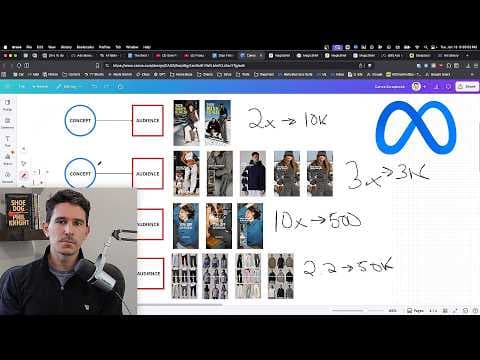
- Flexible formats extend the life of ad iterations by grouping similar creatives rather than testing dozens of individual ads.
- The system determines which media or media combination to show, not the advertiser, making interpretation of which asset drove results difficult.
- Only similar creatives should be grouped into one flexible ad; very different products or messages should use separate ads.
- Do not mix videos and images in the same flexible ad to avoid confusing performance signals.
- When using flexible ads, maximize multiple inputs by adding several primary texts, headlines, and descriptions per unit.
- Use a single website URL for the destination and consider whether to enable or disable advanced creative optimization on a case by case basis.
- Flexible ads help minimize ad fatigue and can perform well in prospecting campaigns, especially with a large library of assets.
- More videos from this channel:
- More from this channel: Sam Piliero
Install to Summarize YouTube Videos and Get Transcripts
Explore YouTube Video Summarizer or Get YouTube Transcript Extractor
Questions & Answers
Q: How do flexible ads differ from dynamic creative optimization and why would you use them?
Flexible ads differ from dynamic creative optimization in that they are designed to preserve creative individuality while extending the longevity of similar iterations, rather than automatically varying elements to the point of losing cohesion. You would use flexible ads to keep multiple close variations alive in your campaign, ensuring you don’t exhaust a single asset too quickly while still leveraging algorithmic optimization to allocate spend across similar creatives. This approach helps prevent ad fatigue by rotating among controlled variations rather than distributing spend across many unrelated assets.
Q: What is the maximum number of media items you can include in one flexible ad and how should you organize them?
In one flexible ad unit you can upload up to 10 media items. The best practice is to group media that are very similar in objective and creative so that the ad unit functions as a cohesive testing pool. For example, you might use several product images or several short videos that share the same product page and messaging, rather than mixing completely different products or themes within the same unit. This organization supports longevity and clearer testing signals within the flexible format.
Q: What should you avoid when constructing flexible ads to maintain performance reliability?
Avoid mixing different media types within the same flexible ad, such as combining videos and images in one unit, because this can create inconsistent delivery signals. Also, avoid using very different products or messages in the same unit, as that blurs the audience intent and reduces the clarity of performance insights. Maintain similarity in creative themes to maximize the efficiency of the flexible format.
Q: How many primary texts, headlines, and descriptions should you include when using flexible ads?
When using flexible ads you should consider adding multiple variants for each text field to maximize testing without creating too many separate ads. The recommended approach is to include several primary texts, headlines, and descriptions within the same unit, aiming for a balanced set that covers the core value proposition while allowing the algorithm to distribute impressions across similar variations. This strategy helps extend asset longevity without fragmenting targeting signals.
Q: What is a practical setup step when starting with flexible ads in a new account with no historic data?
A practical setup is to choose flexible as the ad format, leave multi-advertiser settings unchecked, and populate the ad creative with multiple media items (2 to 10). Include multiple text options for each field (texts, headlines, descriptions) and use a single website URL for the destination. Avoid enabling features that auto-optimize creative if you lack data, so you can observe how the flexible unit behaves with your current assets.
Q: Why is it important to treat a set of similar creatives as a single ad unit rather than as individual ads?
Treating similar creatives as a single ad unit helps preserve the performance signal of the overall grouping and prevents the algorithm from over-distributing budget to a single asset. This approach supports longevity by maintaining exposure across similar variations while reducing fatigue. It also clarifies attribution at the unit level, even though individual asset performance within the unit may be opaque to direct measurement.
Q: What role does ad fatigue play in the use of flexible ads according to the transcript?
Ad fatigue is a major concern when scaling on Facebook ads, and flexible ads are presented as a tool to minimize fatigue by extending the effective life of a set of similar creatives. By rotating through several media pieces and textual variations within one unit, the audience is less likely to become desensitized to a single asset, potentially improving sustained engagement and ROAS over time.
Q: Can flexible ads be used in prospecting campaigns and how should they be integrated?
Yes, flexible ads can be used in prospecting campaigns. They should be integrated as part of the general ad set structure, not as a stand-alone unit. Place the flexible ad within your existing prospecting campaigns, ensuring the media set is coherent and the destination URL remains constant. This integration allows the algorithm to optimize delivery across similar variations while maintaining a scalable approach to ad spend.
Summary & Key Takeaways
-
Flexible ads allow up to 10 media items in a single ad unit, enabling automatic media and format testing within one creative. This setup helps preserve ad longevity by cycling through similar variations instead of running many separate ads. It pairs media and text iterations to optimize delivery.
-
The approach emphasizes grouping highly similar creatives rather than mixing distinctly different ones. By avoiding cross-format mixing, you keep audience signals clearer and reduce fatigue while extending the effectiveness of a core product message across multiple visuals.
-
In practice, a manager should deploy flexible ads with a single destination URL and avoid mixing video and image media within the same unit. The strategy relies on understanding when to use flexible ads versus separate ad formats and tracking performance over time.
Read in Other Languages (beta)
Share This Summary 📚
Summarize YouTube Videos and Get Video Transcripts with 1-Click
Try YouTube Summary with ChatGPT & Claude or YouTube Transcript Generator
Explore More Summaries from Sam Piliero 📚




Summarize YouTube Videos and Get Video Transcripts with 1-Click
Try YouTube Summary with ChatGPT & Claude or YouTube Transcript Generator