How Can Meesho Compete Profitably Against Amazon?
TL;DR
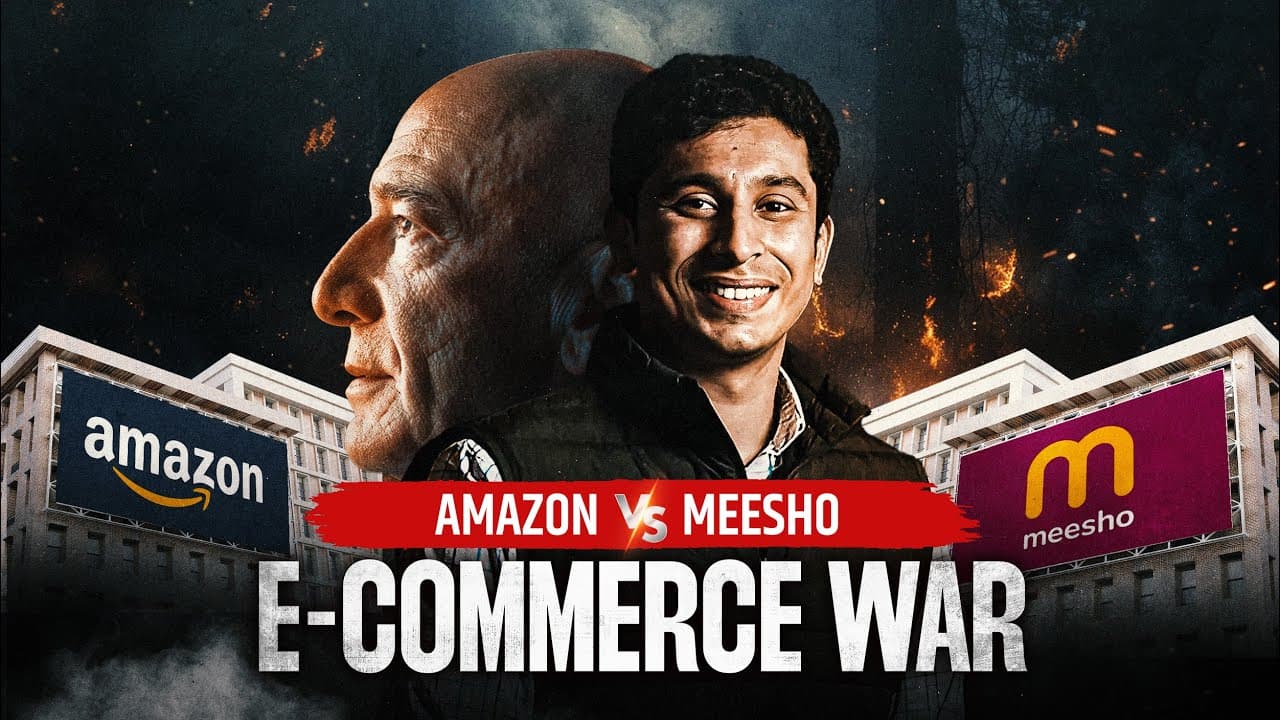
Meesho unlocked profitability by targeting underpenetrated tier 2 and tier 3 markets, slashing seller costs with zero commissions and a regional fulfillment fee, and speeding up cash flow for small businesses. The platform grew through WhatsApp origins, shifted to B2B2C then B2C, and leveraged cheaper pricing and strong seller enablement to outpace larger rivals.
Transcript
hi everybody misho is one of the most revolutionary startups of India and the reason why I call them revolutionary is because they have redefined the Playbook of e-commerce in India so much so that today millions of small sellers who never thought of selling online are now shipping products all across India Today a junga Wala from Rajasthan is able... Read More
Key Insights
- Meesho identified a gap in the Indian e commerce market by focusing on small sellers in tier 2 and tier 3 cities, where commissions were high and trust was low. This enabled a scalable, low friction path to profitability.
- The key to Meesho's advantage is cost structure; the platform charges 0% commission with a small fulfillment fee, improving what sellers keep from each sale compared to competitors.
- Meesho shows strong scale with over 1.8 million sellers and more than 120 million products, creating a wide catalog that drives consumer adoption and repeat purchases.
- Meesho’s model evolved from B2B2C to a direct B2C approach, enabling buyers to shop directly from Meesho while maintaining the same seller empowerment ethos.
- A critical driver is the reduction of cash flow friction; long payment cycles of 14 days plus 5 days were shortened, improving working capital for small businesses.
- Meesho’s pricing and supply chain efficiency enabled products to be 20–30% cheaper than competitors, translating into a compelling value proposition for price-sensitive customers.
- The platform’s growth outpaced competitors by expanding active users rapidly and maintaining high engagement, underscoring the importance of a lean, seller-friendly marketplace.
- Meesho’s profitability is sustained by a combination of lower costs, higher seller retention, and a broader, cheaper catalog that increases order value and frequency.
- More videos from this channel:
- More from this channel: Think School
Install to Summarize YouTube Videos and Get Transcripts
Explore YouTube Video Summarizer or Get YouTube Transcript Extractor
Questions & Answers
Q: How does Meesho's commission model differ from other marketplaces?
Meesho differentiates itself with a 0% commission model and a small regional fulfillment fee, meaning sellers retain more of their selling price. In contrast, competitors like Flipkart and Amazon charge significant commissions that cut into seller profitability. This structure reduces selling costs for small businesses and supports higher margins, making Meesho attractive to tier 2 and tier 3 sellers who previously faced prohibitive fees.
Q: Why did Meesho pivot from a B2B to a B2C model, and what effect did that have?
Meesho started as a B2B2C platform to empower shopkeepers to sell via WhatsApp and later a formal app. After Covid, buyers began shopping directly from Meesho, prompting a shift to a B2C model. This transition broadened the customer base, increased direct consumer transactions, and amplified scale, helping achieve profitability while maintaining the core mission to empower small sellers.
Q: What market gap did Meesho aim to fill in India’s e commerce landscape?
Meesho targeted the high commissions, low penetration in tier 2/3 cities, and lengthy payment cycles that constrained small businesses. By lowering costs, increasing accessibility, and shortening cash flows, it unlocked the latent potential of 60 million SMEs that dominated offline retail but were underserved online, creating a vast new marketplace.
Q: How does Meesho’s pricing translate into cheaper products for buyers?
With lower seller costs and minimal margins, Meesho can price a large portion of its catalog 20–30% cheaper than competitors. This price advantage is a direct result of the 0% commission model and the streamlined fulfillment fee, enabling buyers to see tangible savings across a wide product range.
Q: What role did cash flow improvements play in Meesho’s success?
Improved cash flow allowed small sellers to reinvest quickly in raw materials and production. By shortening the payment cycle from 19 days to faster settlements, sellers could scale operations without tying up excessive capital, boosting production continuity and profitability for MSMEs that would otherwise face liquidity constraints.
Q: How broad is Meesho’s seller base and product catalog?
Meesho reports over 1.8 million sellers and more than 120 million products, creating a large, diverse catalog that supports wide consumer demand. This breadth helps Meesho attract buyers seeking variety and low prices, and it provides sellers with an expansive reach beyond their local markets.
Q: What makes Meesho a compelling alternative to Amazon and Flipkart in India?
Meesho combines a low-cost seller model with strong market access for underpenetrated regions, delivering cheaper products and faster cash flows. These factors together enable profitability despite intense competition with Amazon and Flipkart, while supporting a large, price-conscious customer base that may not be served well by traditional marketplaces.
Q: How did Meesho achieve rapid user growth compared to rivals?
Meesho’s strategy leveraged a wide seller network, cheap prices, and easy access through mobile-first channels to attract buyers in tier 2 and 3 cities. The combination of cost advantage, catalog breadth, and direct consumer reach accelerated active user growth, outpacing some of the traditional platforms’ expansion during the period described.
Summary & Key Takeaways
-
Meesho addressed three core market gaps by reducing selling costs, improving access for smaller sellers, and shortening payment cycles, enabling faster cash flow and higher profitability for a wider merchant base.
-
The company shifted from a B2B2C model to direct-to-consumer selling, expanding its catalog and strengthening the value proposition for both buyers and sellers across India.
-
Meesho achieved competitive pricing and rapid growth by targeting price sensitive, underpenetrated markets while maintaining a scalable, low-commission model that attracted millions of sellers and hundreds of millions of products.
Read in Other Languages (beta)
Share This Summary 📚
Summarize YouTube Videos and Get Video Transcripts with 1-Click
Try YouTube Summary with ChatGPT & Claude or YouTube Transcript Generator
Explore More Summaries from Think School 📚






Summarize YouTube Videos and Get Video Transcripts with 1-Click
Try YouTube Summary with ChatGPT & Claude or YouTube Transcript Generator