What It Was Like To Hold Every German WW2 Rank Today
TL;DR
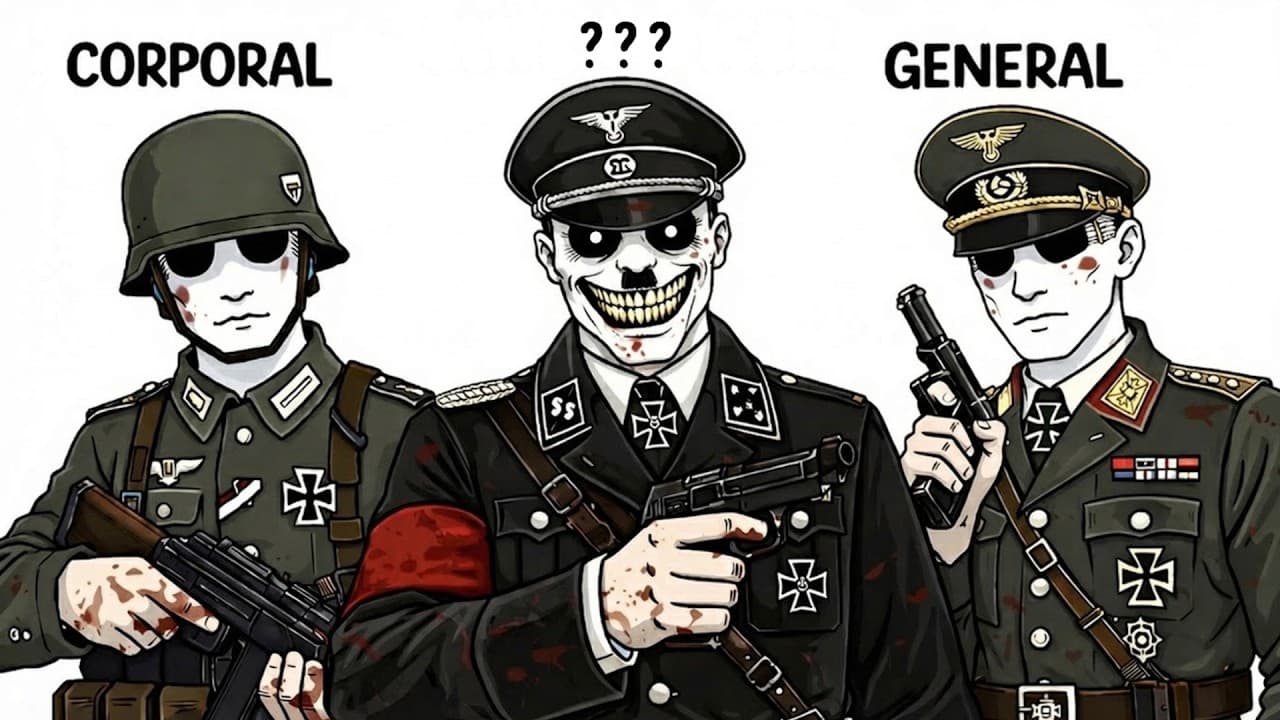
Ranks escalate from Grenadier to General with increasing responsibility and danger. The footage shows how pay, duties, and leadership change as you advance, while the front lines and casualty rates force brutal realities. The oath to Hitler hangs over every decision, mirroring the collapse of the regime.
Transcript
Level one, the Grenadier. You're 19. Three months ago, you were working in a factory in Stoutgart. Now you're standing in a trench somewhere in Bellarus with a car 98K rifle, 60 rounds of ammunition, and a mass-roduced uniform that's already falling apart. You make 30 Reichkes marks a month. That's less than a factory worker back home, but you get ... Read More
Key Insights
- The rank progression starts with Grenadier, a 19 year old factory worker turned front line soldier, earning 30 Reichmarks and facing extreme cold and deprivation.
- The system teaches you how to survive and follow orders, with emphasis on avoiding questions about atrocities and learning who might get you killed.
- Pay rises are modest but accompany promotions, from 30 to 33 to 45 Reichmarks, reflecting a systemic emphasis on loyalty and continuity over compensation.
- By the time you are a Feldwebel or Hauptmann, you handle training, discipline, and administration for dozens to hundreds of men, becoming the backbone of the unit.
- Repeated officer turnover is quantified as a 9.2 average replacement rate by 1944, illustrating the attrition of command and the reliance on seasoned NCOs.
- The Eastern Front delivers the most brutal experiences, with millions of German casualties and the reality that many soldiers never fully learn their comrades by name.
- As the war shifts west, the narrative emphasizes the transfer of loyalty and the sense of inevitability as generals follow orders even when strategic logic is lacking.
- The ultimate surrender on May 8 1945 marks the end of the Vermacht, but the oath to Hitler dies with him and the ranks themselves disappear.
Install to Summarize YouTube Videos and Get Transcripts
Explore YouTube Video Summarizer or Get YouTube Transcript Extractor
Questions & Answers
Q: A real search query question about the video (e.g. 'How to...', 'What is...', 'Why does...'). Question 1
How does the video describe progression in the German army during WW2 from Grenadier to general and what changes accompany each rank? It explains that progression brings more responsibility, more men under command, increased pay though modest, and a shift from individual survival to managing training, discipline, and administration. The narrative also notes the emotional and ethical burden of leadership, including executing a deserter and writing letters home.
Q: Question 2
What is said about the front line conditions and the daily realities faced by lower ranks? The video describes extreme cold, tight boots, freezing rifles, frostbite, and scarce soap, with soldiers sleeping with rifles to prevent freezing. It highlights how these conditions erode morale and structure the daily routine of following orders, staying alive, and keeping others alive.
Q: Question 3
How does the film portray the role of officers and the concept of replacement in 1944? It states the Vermacht replaced every officer position an average of 9.2 times by 1944, making many officers placeholders. This underscores the reliance on seasoned NCOs, rapid promotions, and a reliance on mission type tactics rather than autonomous leadership.
Q: Question 4
What does the video say about moral choices and the enforcement of orders? It notes that the oath to Hitler is repeatedly referenced, and officers who question orders face punishment or execution, with large-scale arrests after assassination attempts. The emphasis is on obedience and the machine of command continuing despite waning legitimacy.
Q: Question 5
What is described about the UK and Soviet fronts versus the Western front later in the war? The video mentions the Eastern Front carrying millions of casualties, with replacements often weaker due to nutrition and training gaps, and the West seeing late-in-the-war movement towards invasion and defensive strategies, all while the same unit number persists with new faces.
Q: Question 6
How does the video quantify casualties and the end of the war for German troops? It provides numbers like 4 million Germans killed on the Eastern Front, 5.3 million military deaths overall, with up to 10,000 per day at the end. It notes the surrender on May 8 1945 and the long aftermath of prisoners until 1956.
Q: Question 7
What is described about leadership dynamics and the personal connections within a unit? It explains a shift where two out of three platoons are led by NCOs, and a 180 man company shrinks to a face of new replacements, causing the men to stop learning each other’s names while staying loyal through shared hardship.
Q: Question 8
What is the overarching takeaway about what it was like to hold every rank in the German army according to the video? The takeaway is that survival hinges on following orders, managing scarce resources, and enduring constant loss, while the system of ranks and oaths disintegrates with the end of the war and the dissolution of the Vermacht.
Summary & Key Takeaways
-
The video traces a soldier from Grenadier to General, detailing rising duties, pay, and responsibility as units shrink and replacements arrive.
-
It highlights harsh front line conditions, frostbite, and the brutal discipline that sustains the war effort despite mounting losses.
-
The narrative culminates with surrender, the dissolution of the Vermacht, and the idea that oaths and ranks outlived the regime itself.
Read in Other Languages (beta)
Share This Summary 📚
Summarize YouTube Videos and Get Video Transcripts with 1-Click
Try YouTube Summary with ChatGPT & Claude or YouTube Transcript Generator
Explore More Summaries from Unknown Frequencies 📚
Summarize YouTube Videos and Get Video Transcripts with 1-Click
Try YouTube Summary with ChatGPT & Claude or YouTube Transcript Generator