What was life like under German occupation in France during WW2
TL;DR
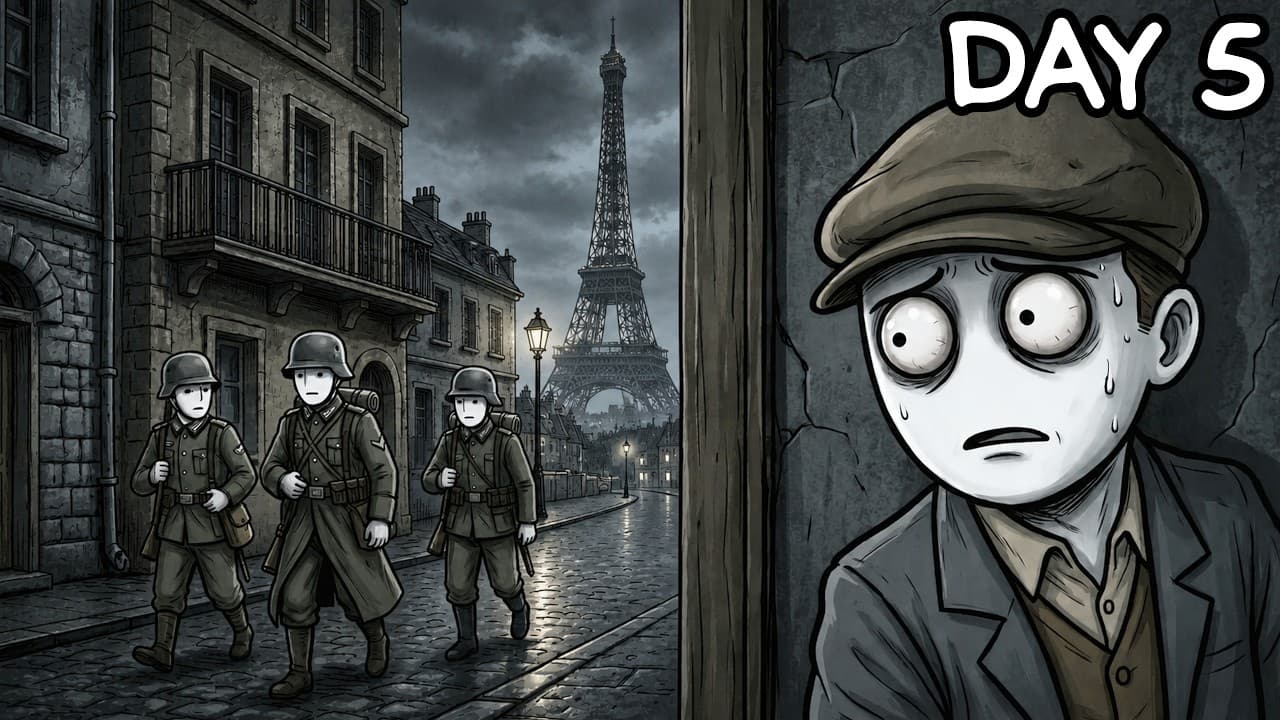
Occupation began in 1940 as German soldiers arrived and a curfew was imposed. Rationing followed, with meat, butter, and coffee scarce, and families trading for essentials. Sabotage and resistance grew as loved ones joined maquis, and liberation came after years of hardship and peril.
Transcript
It's 10:00 past 6:00 in the morning in June 1940. You hear the boots before you see the soldiers. You're standing inside your bakery holding the last warm loaf of the morning when your wife stops sweeping the front step. The street has gone quiet. Your daughter is upstairs getting dressed for school. Your son is still asleep. The Martins are suppos... Read More
Key Insights
- The occupation started in June 1940 with German troops and a curfew that restricted movement at night.
- Rationing and shortages defined daily life, forcing people to adapt with limited meat, butter, coffee, and even rutabaga for meals.
- Many civilians supported resistance efforts by hiding radios, passing information, and assisting maquis fighters.
- The maquis were hidden fighters in the countryside who received supplies and coordination from London via air drops and clandestine networks.
- British and Allied signals finally brought hope as invasion plans materialized and liberation began in 1944, though reprisals and danger persisted.
- The exchange system degraded local currency value, as Reichsmarks were forced upon French citizens at an inflated rate, impacting buying power.
- Families faced arrests and executions, and neighbors sometimes turned into informants, highlighting the complexity of living under occupation.
- The narrative emphasizes the resilience of ordinary people who balanced fear with small acts of defiance to survive.
Install to Summarize YouTube Videos and Get Transcripts
Explore YouTube Video Summarizer or Get YouTube Transcript Extractor
Questions & Answers
Q: A real search query question about the video (e.g. 'How to...', 'What is...', 'Why does...', 'When should...'). Question 1
What did daily life look like in German occupied France and how did families cope with shortages, curfews, and the constant threat of reprisals during the four years of occupation? The text describes long nights, a shift to scarce food items such as meat, butter, and coffee, and the use of rutabaga as a meal stand in. People traded items for essentials, ration cards governed access to basic goods, and bold acts like keeping a radio secretly running at night allowed contact with the outside world. This required careful balance between normalcy and risk, as Germans enforced strict rules and collaborators complicated trust within communities.
Q: Question 2
How did resistance efforts evolve in German occupied France according to the narrative, and what roles did ordinary citizens play in aiding the maquis? The account shows a progression from small acts to organized sabotage. Civilians provided bread drops, cut telephone lines, and helped with a clandestine network that included a maquis cell in the hills. A British agent stayed in a cellar, and operations ranged from supply drops to complex campaigns targeting German communications. The story emphasizes that ordinary people, even bakers, became active participants in resistance against the occupiers.
Q: Question 3
What were the key moments that signaled the turning point from occupation to liberation for the town described? The text marks August 1944 as pivotal, with Allied forces pushing through Normandy and a second invasion on the southern coast. The town’s liberation is described with church bells, American trucks, and people crying in the streets. Before this, the invaders threatened retaliation and destruction, including orders to burn bridges and monuments, but the resistance and Allied advances culminated in the town and its inhabitants regaining freedom.
Q: Question 4
How did the economic controls under occupation impact everyday life in the bakery and market scenes? The description notes a fixed exchange rate where Reichsmarks were set at 20 francs, inflated by about 50 percent, with the price paid for goods not even covering flour. This forced people to navigate a devalued currency, relying on rationing and bartering, while bakery workers faced the challenge of continuing to bake under the watchful eyes of German authorities who controlled commerce and movement.
Q: Question 5
What personal tragedies and social tensions are depicted during the occupation in the narrative? The account recounts arrests and mass detentions, the disappearance of a schoolteacher, and the looming threat of the Milice hunting French citizens. Families are forced to hide loved ones, navigate betrayals in their own neighborhoods, and carry out dangerous acts to protect one another while grappling with fear, uncertainty, and the moral complexities of staying safe.
Q: Question 6
How did the occupying forces enforce control over time and daily routines in the town? The narrative describes clocks being changed to Berlin time, causing daily life to proceed in darkened hours and altering the rhythm of work and school. When the clocks were later reset after liberation, it symbolized a return to normalcy. This manipulation of time reflects broader attempts to suppress French autonomy and integration into German wartime logistics.
Q: Question 7
What is the overall arc of the family in the bakery from occupation to liberation and beyond? The story follows a baker who becomes a saboteur, balancing bread production with clandestine resistance. The son is drafted into forced labor in Germany, and the family endures years of separation, danger, and hardship. Liberation brings relief as soldiers arrive and offerings of bread symbolize a return to normal life, though the family bears the lasting scars of the conflict.
Q: Question 8
What does the narrative reveal about the costs of occupation in terms of human life and memory? The text states approximately 580,000 French people died during the occupation, underscoring the heavy human toll. It also highlights the emotional costs: lost childhoods, separation of families, and the lasting impact on daily routines, relationships, and the sense of safety. The ending notes that while liberation arrived, the era left enduring memories and a changed society.
Summary & Key Takeaways
-
Occupation began with a swift German presence, a curfew, and suspicion as the town watched a swastika rise over the town hall. Everyday life shifted to survival through rationing and black markets, while the population waited for relief that did not come for years.
-
Resistance grew from small acts to organized sabotage, with maquis fighters operating across rural France and civilians aiding them through bread drops and coded radio messages.
-
Liberation arrived gradually after D-Day and a renewed Allied push, ending the occupation and allowing families to reunite, though scars from four years of war lingered in their memories and daily routines.
Read in Other Languages (beta)
Share This Summary 📚
Summarize YouTube Videos and Get Video Transcripts with 1-Click
Try YouTube Summary with ChatGPT & Claude or YouTube Transcript Generator
Explore More Summaries from Unknown Frequencies 📚

Summarize YouTube Videos and Get Video Transcripts with 1-Click
Try YouTube Summary with ChatGPT & Claude or YouTube Transcript Generator