What Caused World War II? Versailles to Pearl Harbor
TL;DR
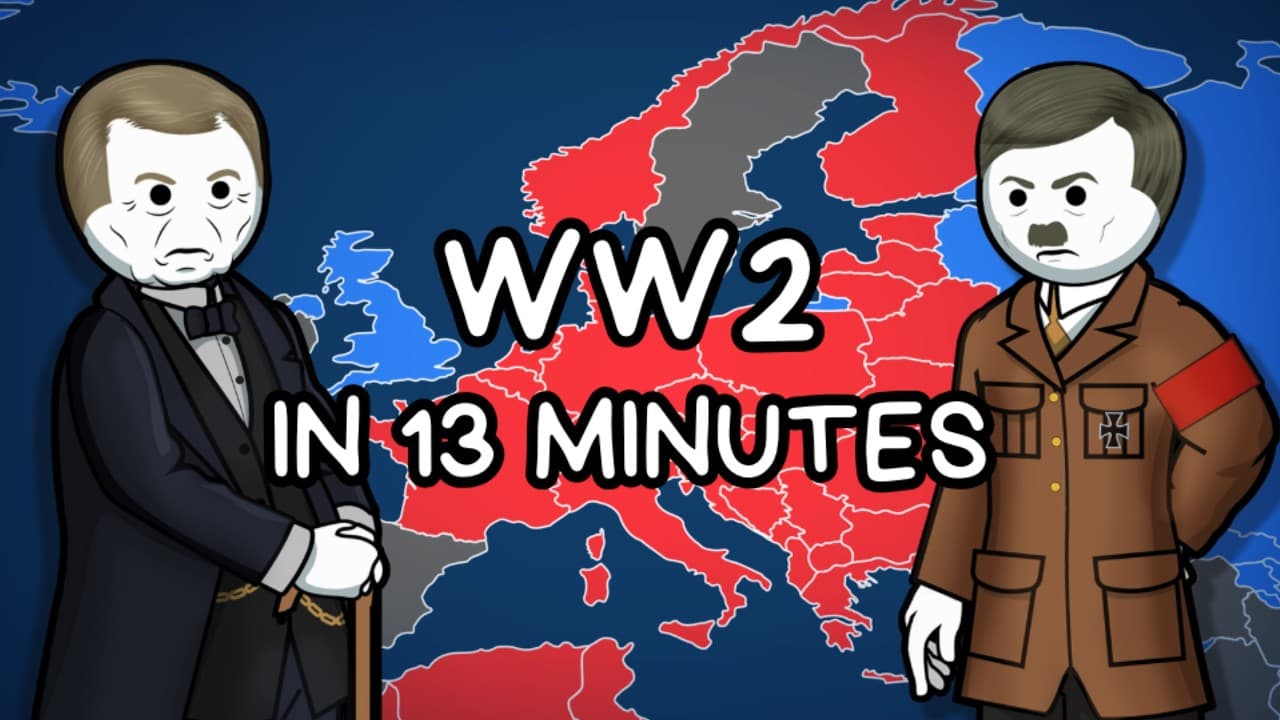
The war stemmed from the harsh terms of the Treaty of Versailles and the Great Depression that followed, which helped Hitler rise to power. Aggressive actions by Germany, Italy, and Japan, and weak responses by Britain and France, ultimately drew all major powers into a global conflict. The turning points include Stalingrad, Midway, and D-Day, which shifted momentum to the Allies.
Transcript
World War II killed roughly 70 million people. It was the deadliest conflict in human history, but the whole thing happened because the countries that won World War I punished Germany so badly that a failed Austrian art student was able to talk an entire nation into trying again. Yeah, a guy who couldn't get into art school nearly took over the wor... Read More
Key Insights
- The Treaty of Versailles severely weakened Germany and set the stage for future conflict.
- The Great Depression deepened economic despair, enabling extremist solutions to gain traction.
- Germany, Italy, and Japan pursued aggressive expansion while democracies failed to stop them early.
- Hitler broke the Versailles terms to rebuild military and national pride.
- Britain and France initially responded with appeasement and missed opportunities to deter aggression.
- Stalingrad became a decisive turning point that shattered Germanys war machine.
- Midway shifted the balance in the Pacific by destroying key Japanese carriers.
- D Day marked the beginning of the end for Nazi Germany as Allied forces opened a Western front.
Install to Summarize YouTube Videos and Get Transcripts
Explore YouTube Video Summarizer or Get YouTube Transcript Extractor
Questions & Answers
Q: What caused World War II according to the video
The war grew out of the harsh Versailles settlement that punished Germany and the Great Depression that followed, which helped extremist movements rise to power. Aggressive actions by Germany, Italy, and Japan went unchecked for years, allowing expansion and conflict to escalate into a global war.
Q: How did Hitler come to power in Germany
Hitler rose after the Great Depression and the Treaty of Versailles left Germany humiliated and broke. In January 1933 he was appointed Chancellor, and within two months a vote gave him near absolute power. This enabled him to dismantle democracy and pursue aggressive territorial expansion.
Q: What was a major turning point in Europe
Stalingrad was a major turning point where the Soviets encircled and defeated the German Sixth Army, causing massive casualties and signaling the shift of momentum in the European theater away from Axis dominance.
Q: What role did the Allies play in the Pacific turning point
American code breakers identified Japan's plans at Midway, leading to a decisive victory that destroyed four Japanese carriers. This halted Japan’s expansion and shifted momentum to the Allies for the rest of the Pacific campaign.
Q: How did the D Day invasion influence the war
D Day involved a massive amphibious assault at Normandy with extensive air and naval support. It opened a Western front, liberated Paris by late August, and forced Germany to divide its defenses, accelerating the collapse of Nazi control in Western Europe.
Q: What happened in the Battle of the Bulge
The Battle of the Bulge was the last major German offensive in the West. It drained German resources and manpower and marked the collapse of Axis strength, contributing to the rapid push toward Berlin by Allied forces.
Q: Why did the Axis powers ultimately fail
Axis failure resulted from overextension in multiple theaters, failed strategic promises, and resistance from Allied advances in the East and West. Key defeats at Stalingrad, Midway, and Normandy broke their ability to sustain the war, leading to the surrender of Axis forces.
Q: What lessons does the video emphasize about early World War II decisions
Early decisions to appease and delay, combined with economic desperation and totalitarian expansion, fueled the conflict. Strong, timely deterrence and unified Allied response could have altered the course, but weakness and miscalculation allowed the war to escalate into a global catastrophe.
Summary & Key Takeaways
-
Germany and its allies exploited postwar humiliation and economic collapse to pursue expansion and power. The Munich betrayal and rapid invasions showcased the failure of appeasement and the fragility of European stability. The entry of the United States and decisive battles abroad marked the turning of the war.
-
Allied strategy combined European offensives and Pacific island hopping. Key moments included the Soviet defense at Moscow and Stalingrad, Allied victories at Midway and Normandy, and the eventual collapse of Axis forces in 1945. The war ended with the defeat of the Axis powers and widespread human suffering.
-
The narrative links the Versailles system, economic distress, and aggressive dictatorship to a cascade of invasions and battles. It emphasizes the importance of intelligence, industrial capacity, and coalition warfare in turning the tide of the war and preventing further全球 catastrophe.
Read in Other Languages (beta)
Share This Summary 📚
Summarize YouTube Videos and Get Video Transcripts with 1-Click
Try YouTube Summary with ChatGPT & Claude or YouTube Transcript Generator
Explore More Summaries from Unknown Frequencies 📚
Summarize YouTube Videos and Get Video Transcripts with 1-Click
Try YouTube Summary with ChatGPT & Claude or YouTube Transcript Generator