What Was D Day Like From a German Soldier’s View
TL;DR
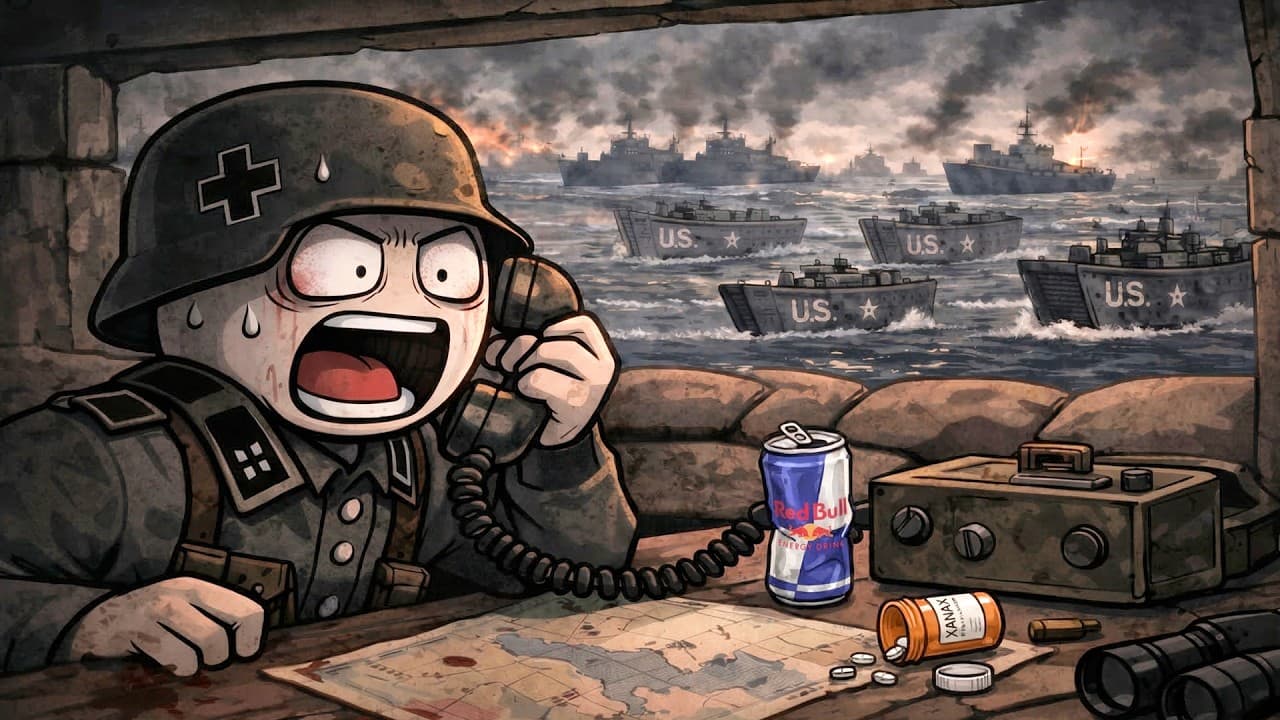
A young German conscript endures the Atlantic Wall, the failed Luftwaffe, and a brutal Omaha Beach assault. He witnesses searing bombardments, massed Allied landings, and scarce ammunition, then endures capture and postwar anonymity while his identity is erased for decades. The narrative emphasizes personal loss, mass death, and the long shadow of war.
Transcript
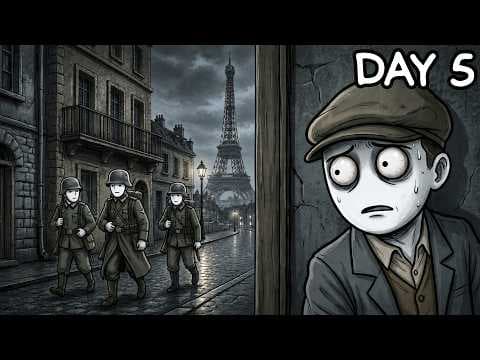
You're 18 years old. The letter arrives in March 1943. Your mother cries. Your father says nothing. He fought in the first war. He knows what the letter means. You report to the induction center in Hamburgg. They give you a uniform two sizes too big and a rifle older than you are. The drill sergeant says you're going to defend the fatherland. He do... Read More
Key Insights
- The Atlantic Wall was designed to block invasion with heavy fortifications and netted mass targets.
- Germans relied on bunker fortifications and firearms like the MG42 to deliver sustained firepower.
- The Luftwaffe failed to provide air support on D-Day despite expectations.
- Omaha Beach saw overwhelming Allied troops and ships that stretched across the horizon.
- The soldier’s unit faced shortages of ammunition and no organized relief after initial defense.
- Capture led to a life of concealment and name changes across multiple countries.
- Postwar investigations revealed that individuals helped disappear others, complicating accountability.
- The story underlines how individuals can be erased or renamed yet remain connected to a larger historical trauma.
Install to Summarize YouTube Videos and Get Transcripts
Explore YouTube Video Summarizer or Get YouTube Transcript Extractor
Questions & Answers
Q: How did the Atlantic Wall influence German defense on D-Day
The Atlantic Wall shaped German defense by creating fortified positions with concrete casemates, machine gun nests, and beach obstacles designed to slow and funnel landing craft toward kill zones. It defined a static, defensive approach rather than flexible retreat, and it dictated heavy, methodical firing patterns that aimed to maximize casualties with limited mobility for defenders.
Q: What role did ammunition and supply shortages play on Omaha Beach
Ammunition shortages left the German defenders unable to sustain prolonged fire as the battle wore on. The radio operator begged for resupply, but none came. As the hours passed, the gunners exhausted belts and swapped barrels repeatedly, illustrating how logistic failure can undermine even well-constructed fortifications under direct assault.
Q: What happened to the German soldiers after the initial defense
After the initial defense failed, the soldiers tried to retreat to a secondary position that did not exist, were scattered or captured, and faced brutal treatment. Some were taken prisoner and sent to camps elsewhere, while others disappeared into societies after the war, living under false identities in different countries.
Q: How is the personal experience of conscription depicted in the narrative
The narrative follows an 18-year-old who receives a conscription letter, endures training and relocation, and is thrown into the most fortified coastline in history. It emphasizes family tension, uncertainty, and the brutal reality of marching toward a war that he does not fully understand, highlighting the human cost of conscription.
Q: What does the text imply about air support on June 6, 1944
The account notes that thousands of planes were promised, but none appeared over Normandy that day. The Luftwaffe had already been diminished by past dogfights, leaving the German position largely without air cover while Allied ships and troops carried the invasion forward, markedly impacting the defender’s prospects.
Q: What is the fate of the narrator after the war
The narrator goes through a long period of evasion and identity changes, becoming someone else to avoid exposure. He processes documents, helps others disappear to maintain safety, and eventually dies in obscurity, with a coroner’s report masking the grim truth beneath a quiet, anonymous end.
Q: How does the story portray the scale of the invasion
The invasion is depicted as the largest naval operation in history, with ships stretching to the horizon and landings that overwhelm the beach. This scale contrasts with the German defense, which collapses as Allied troops pour ashore, changing the course of the war and leaving a generation haunted by the events.
Q: What moral questions does the narrative raise about accountability
The narrative questions the idea of accountability when individuals are compelled to follow orders under a legal framework that later seeks to erase their identities. It suggests that even those who performed brutal acts can escape recognition, while the broader horrors remain unresolved in memory and history.
Summary & Key Takeaways
-
A German soldier joins the Atlantic Wall near Normandy and endures months of fortification, drills, and the looming invasion. He experiences the failed air support, massive Allied landings, and relentless firing that defines Omaha Beach. His unit collapses and he is captured, beginning a long, anonymous postwar life.
-
He reflects on the toll of war, the numbness of combat, and the consequences of following orders within a system that denies accountability. His later life involves identity changes and evasion as he disappears into multiple countries and legal names.
-
The piece closes on the idea that the war did not truly end for him, as he becomes a number on a coroner’s report, a haunting reminder of individual human cost surrounded by a vast historical machine.
Read in Other Languages (beta)
Share This Summary 📚
Summarize YouTube Videos and Get Video Transcripts with 1-Click
Try YouTube Summary with ChatGPT & Claude or YouTube Transcript Generator
Explore More Summaries from Unknown Frequencies 📚


Summarize YouTube Videos and Get Video Transcripts with 1-Click
Try YouTube Summary with ChatGPT & Claude or YouTube Transcript Generator