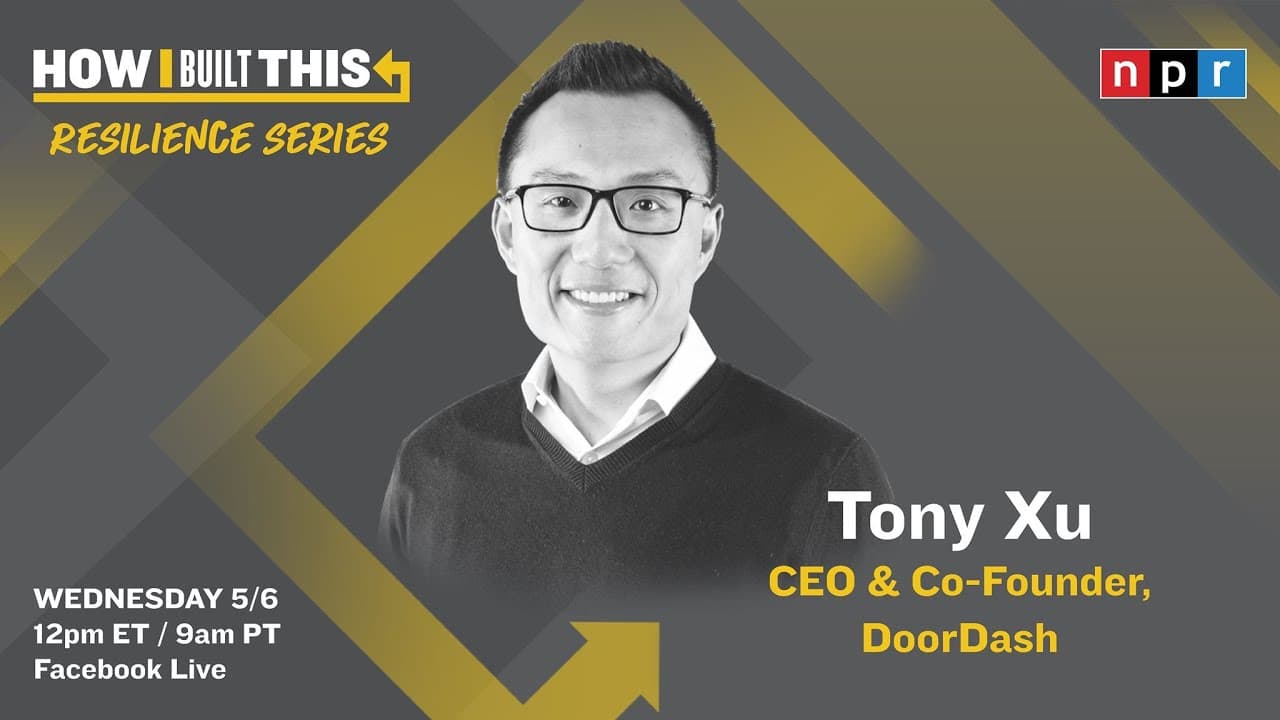
Tony Xu Talks Protecting DoorDash Workers with Guy Raz | How I Built This | NPR
Transcript
hello everyone and welcome to how i built this resilience edition how are you all doing on this wednesday don't forget to spray your hands with sanitizer if you don't have a sink in your studio we are here to talk about how businesses are building resilience during this time and we are taking your questions live on facebook on twitter and on youtub... Read More
Install to Summarize YouTube Videos and Get Transcripts
Explore YouTube Video Summarizer or Get YouTube Transcript Extractor
Summary
In this video, Guy Raz interviews Tony Hsu, the co-founder of DoorDash, the largest restaurant delivery service in the world. They discuss the impact of the COVID-19 pandemic on the restaurant industry and how DoorDash is working to support businesses and keep their drivers safe. They also talk about issues such as commission limits, tips, and the surge in demand for delivery services. Tony emphasizes the importance of serving the community and supporting local economies during these challenging times.
Questions & Answers
Q: How has the COVID-19 pandemic affected the restaurant industry and DoorDash?
Tony explains that the restaurant industry has been hit hard, with many businesses having to close or lay off employees. DoorDash has experienced a surge in demand for delivery services, but also a drop in options due to restaurant closures. However, some restaurants that were already invested in delivery and takeout have been able to survive and even thrive during this time.
Q: What kinds of restaurants are doing well during the pandemic?
Tony mentions that restaurants that had already focused on their off-premise business, such as takeout and delivery, are doing better. They have been able to maintain sales and pay their expenses. Some high-end restaurants have also adapted by offering more approachable and affordable menu options for delivery.
Q: With many businesses struggling, how does it feel for DoorDash to be doing well?
Tony acknowledges that DoorDash is fortunate to be in a position where they can support local businesses and serve the community. He emphasizes the company's responsibility to be a true partner, investing in reducing commissions, providing marketing support, and implementing safety measures for drivers. DoorDash is also focused on delivering essential services to vulnerable populations, such as healthcare workers and school children.
Q: What is DoorDash's response to the commission limits imposed by cities like San Francisco and Washington, DC?
Tony agrees with the intention of helping restaurants and has already reduced commissions by 50% during the pandemic. He explains that capping one source of income for drivers, such as fees paid by restaurants, can lead to unintended consequences. It may result in increased prices for consumers, lower sales for restaurants, and less work for drivers. Tony believes that more voluntary actions, like the initiatives DoorDash has taken, can achieve the desired goals without negative impacts.
Q: Are people being more generous with tips during this time?
Tony mentions that there has been a slight increase in tipping, but it varies. He highlights the importance of both tips and other forms of giving, such as thank you notes and positive experiences. While he understands that times are tough for everyone, he encourages people to give when they can.
Q: How is DoorDash keeping its drivers safe during the pandemic?
Tony explains that DoorDash has been working on driver safety even before the pandemic. They have implemented measures such as tamper-proof packaging, providing PPE (personal protective equipment) like masks and gloves, and access to affordable telemedicine for diagnosis. DoorDash also offers financial assistance, sick leave, and childcare coverage for drivers impacted by COVID-19.
Q: How many people are signing up to become DoorDash drivers?
Tony states that the community of DoorDash drivers is diverse, including those who do it full-time and those who only do it for a few hours a week. Since the pandemic, there has been an influx of people, especially those who have experienced pay cuts or temporary reductions in work, including former Uber and Lyft drivers.
Q: Are the drivers making enough money?
Tony clarifies that drivers earn an average of $22 per hour, including tips, which is more than the suggested $3 per delivery. While pay may vary by market, drivers are making a substantial amount of money, especially considering the flexible nature of the gig economy.
Q: How does DoorDash plan to build resilience and align with its values in the future?
Tony expresses that DoorDash's mission to empower local economies remains unchanged. They will continue to support restaurants and other merchants, provide protections and flexibility for drivers, and serve consumers by delivering essential services. DoorDash aims to be a partner to cities and communities, delivering positive experiences and helping those in need.
Q: What does Tony want to achieve in five years that will demonstrate DoorDash's resilience and alignment with their values?
Tony emphasizes that DoorDash will continue to be a true partner to cities, restaurants, drivers, and consumers. They are committed to making a positive impact and adapting to the changing world to ensure the success of their mission. In five years, he hopes that the actions DoorDash takes now will be seen as the right choices that align with their values and positively affected the communities they serve.
Takeaways
DoorDash has experienced a surge in demand for delivery services during the COVID-19 pandemic, while the restaurant industry has been severely impacted. However, DoorDash is focused on supporting local businesses, keeping drivers safe, and serving the community. They have reduced commissions, provided marketing support, and implemented safety measures for drivers. DoorDash has also delivered essential services to healthcare workers and vulnerable populations. They believe that voluntary actions can achieve the goal of helping restaurants without negative consequences. DoorDash is committed to being a true partner and building resilience aligned with their values in the face of uncertainty.
Read in Other Languages (beta)
Share This Summary 📚
Summarize YouTube Videos and Get Video Transcripts with 1-Click
Try YouTube Summary with ChatGPT & Claude or YouTube Transcript Generator
Explore More Summaries from NPR 📚


Summarize YouTube Videos and Get Video Transcripts with 1-Click
Try YouTube Summary with ChatGPT & Claude or YouTube Transcript Generator