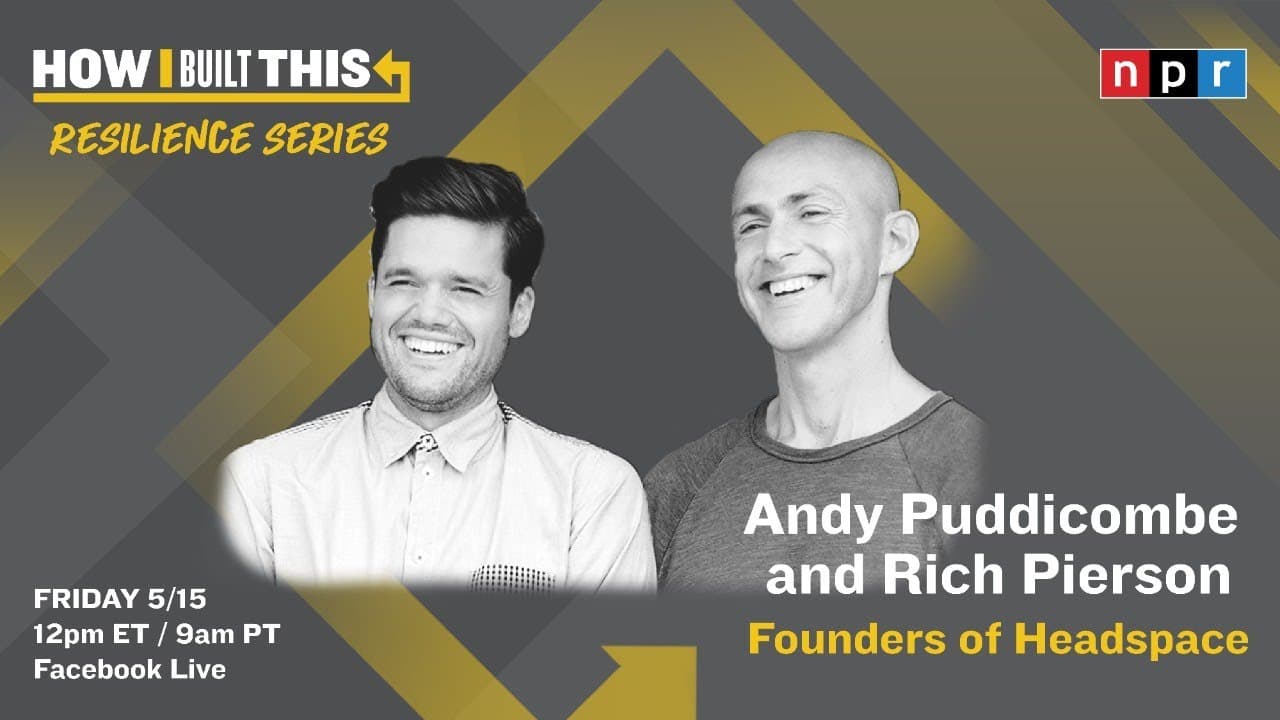
Andy Puddicombe & Rich Pierson of Headspace with Guy Raz | How I Built This | NPR
TL;DR
Meditation reduces anxiety by creating space between a trigger and your reaction, allowing you to choose whether to engage rather than respond immediately. Headspace cofounder Andy Puddicombe demonstrates a two-minute practice centered on physical sensations and the breath, while Rich Pierson explains how returning to the present lowers his worry. Read on for the exact meditation steps and practical advice for handling uncertainty.
Transcript
hello everyone and welcome to how I built this resilience Edition how are you doing today I'm guy Roz and I am so excited about today's episode I want to remind you that we're taking your questions right now on Facebook on Twitter and on YouTube for Andy Puddicombe and rich Pierson the cofounders of headspace before we get started I just want to th... Read More
Key Insights
- Meditation only feels strange because the rest of modern life is built on distraction and overstimulation, according to Andy Puddicombe. Once you move past the discomfort of not doing anything, most people report a greater sense of calm and mental clarity.
- The core benefit of meditation is space, not fixing. Puddicombe frames it as the ability to notice something arising, internally as a thought or externally as a news headline, and then choose whether to engage with it rather than reacting immediately.
- Meditation does not change your external circumstances. Whether you are employed, recently laid off, in good health or poor health, the practice changes your relationship with those conditions so you can live more peacefully through the ups and downs.
- Anxiety registers physically before it registers mentally. Rich Pierson describes feeling churn in his chest when he is caught up in worry, and notices that in that state there is very little room left to actually interact with anyone around him.
- Resting in uncertainty is the specific thing people struggle with most, Pierson observes. His own practice is aimed at not over-planning the future and not worrying about what he imagines might happen, and instead returning to what he is doing right now.
- Andy's short practice follows a fixed sequence: soft open gaze, one deep breath in through the nose, eyes closing on the out-breath, body sinking into the seat, a body scan for heaviness or restlessness, then attention on the breath.
- If you cannot feel your breath during meditation, place a hand on your stomach and follow the rising and falling. Puddicombe offers this as the fallback when the sensation is not obvious in the chest or the stomach.
- Crisis drives people toward tools they think will help, Puddicombe notes, and Headspace saw a very large spike in both consumer sign-ups and inbound requests from organizations trying to figure out how to support teams shifting to remote work.
Install to Summarize YouTube Videos and Get Transcripts
Explore YouTube Video Summarizer or Get YouTube Transcript Extractor
Questions & Answers
Q: How does meditation reduce anxiety during a crisis?
Andy Puddicombe says meditation creates space between a stimulus, such as a news headline, and your reaction. It helps you notice what is arising and choose whether to engage with it instead of reacting immediately, bringing greater calm, clarity, and less reactivity.
Q: What is Andy Puddicombe's two-minute meditation technique?
Begin sitting or lying down with your eyes open and a soft focus on the space ahead. Breathe deeply through your nose, exhale through your mouth while closing your eyes, let your body sink into the seat or floor, notice whether it feels restless or still and heavy or light, and then rest your attention on the breath.
Q: What should you do when thoughts arise during meditation?
Allow thoughts to come and go without chasing or fighting them. Gently return your attention to the breath whenever you become distracted.
Q: What should you do if you cannot feel your breath while meditating?
The breath may be noticeable in your chest or stomach. If you cannot feel it, Puddicombe recommends gently placing a hand on your stomach and following its rising and falling movement.
Q: Can meditation fix the circumstances causing stress?
No. Puddicombe says meditation does not change circumstances such as employment or health; it changes your relationship with them, helping you live more peacefully through life's ups and downs.
Q: How does Rich Pierson use meditation to handle uncertainty?
Pierson uses meditation to stop over-planning the future and worrying about what he imagines might happen. Returning his attention to what he is doing in the present lowers his anxiety and worry and makes him nicer to be around.
Q: Why can meditation feel strange at first?
Puddicombe says it feels strange because daily life is built around distraction and overstimulation. Simply sitting without doing anything can therefore feel unfamiliar, but people who move beyond that discomfort often report more calm and mental clarity.
Q: How did Headspace respond to the crisis?
Headspace made its app free for frontline health workers and people who had lost their jobs. It also created special content for people in New York and Michigan while seeing a very large spike in sign-ups and requests from organizations supporting teams moving to remote work.
Summary
In this video, NPR's Guy Raz interviews Andy Puddicombe and Rich Pierson, the cofounders of the meditation app Headspace. They discuss the benefits of meditation, how it can reduce anxiety, and how it can provide a sense of calm and clarity in stressful times like these. They also talk about the spike in users during the pandemic and the free access they are providing to healthcare workers and people who have lost their jobs. The interview ends with the cofounders answering questions from viewers about meditation and offering tips on maintaining a consistent meditation practice.
Questions & Answers
Q: How does meditation help to reduce anxiety and stress?
Meditation provides a sense of calm and clarity to the mind, allowing us to have more space to observe our thoughts and emotions. By developing this awareness, we can choose how we want to engage with them and avoid reactiveness. While meditation doesn't solve all our problems, it changes our relationship with them and helps us navigate through difficult times with more peace of mind.
Q: Which meditation topics would be helpful for someone who just lost their job and is planning to switch careers?
For someone dealing with the anxiety and stress of losing a job and the uncertainty of starting a new career, the anxiety, change, and self-esteem meditation packs on the Headspace app can be beneficial. These topics can help individuals manage their anxiety, embrace change, and build confidence during this transition period.
Q: When is the best time of day to meditate?
While there is no definitive answer, many people find it helpful to meditate first thing in the morning. Doing it early ensures that it gets done and sets a positive tone for the rest of the day. It also helps to emphasize the importance of mindfulness throughout the day, rather than just during the meditation session itself.
Q: Does meditation help with frustration and the feeling of things being out of our control?
Yes, meditation can help with frustration and feelings of a lack of control. By cultivating mindfulness, we learn to accept our thoughts and emotions without judgment and observe them with curiosity. This allows us to let go of the need for control and find peace even in the face of uncertain circumstances.
Q: How can one stick with a consistent meditation practice?
To stick with a consistent meditation practice, it is essential to set clear intentions and establish a routine. Linking meditation to an existing habit or daily activity can help make it a natural part of one's day. Additionally, it is important not to be too hard on oneself for missing a day or two. Showing self-compassion and getting back on track when necessary is key to maintaining a consistent practice.
Q: In five years' time, what do the cofounders hope to learn from this moment?
The cofounders hope that, in the future, this moment will be seen as a turning point in how mental health is prioritized and discussed globally. They believe that this crisis has accelerated the conversation around mental health and its importance, and they hope that mental health will be integrated into schools, businesses, and communities. They also hope that people will reassess their priorities and focus on what truly matters in life, such as health and happiness.
Summary & Key Takeaways
-
Guy Raz hosts Andy Puddicombe and Rich Pierson of Headspace for a live resilience episode of NPR's How I Built This, taking audience questions from Facebook, Twitter and YouTube. Both founders describe feeling privileged: they still have work, and their families and friends are well, while sharing the ordinary domestic stress of the moment.
-
Andy leads a short guided meditation on the spot. He starts with the eyes softly open, takes a deep breath in through the nose, closes the eyes on the out-breath, lets the body sink into the seat, checks in with physical sensations, then rests attention on the rise and fall of the breath, letting thoughts come and go without chasing them.
-
The founders discuss the business side. Andy reports a very large spike in app sign-ups and in inbound requests from companies asking how to support teams moving to remote work. Headspace made the app free for frontline health workers and people who lost their jobs, and created dedicated content for New York and Michigan.
Read in Other Languages (beta)
Share This Summary 📚
Summarize YouTube Videos and Get Video Transcripts with 1-Click
Try YouTube Summary with ChatGPT & Claude or YouTube Transcript Generator
Explore More Summaries from NPR 📚




Summarize YouTube Videos and Get Video Transcripts with 1-Click
Try YouTube Summary with ChatGPT & Claude or YouTube Transcript Generator