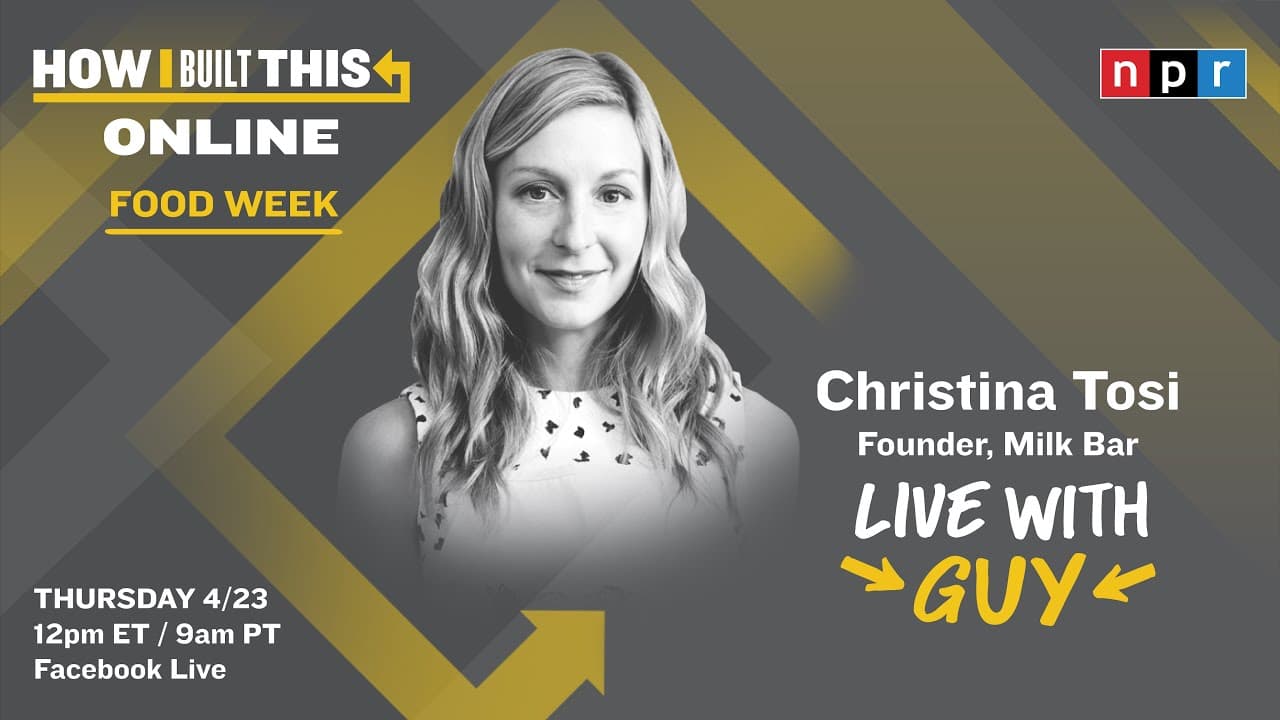
Christina Tosi Talks Donating Food During Crisis with Guy Raz | How I Built This | NPR
TL;DR
Milk Bar adapted by furloughing half its team, keeping five stores open for delivery and pickup, and shifting demand toward e-commerce. Christina Tosi put employee comfort and safety first while the company baked cookies for health care professionals, remote teams, birthdays, and graduations. Read on for the operational decisions, kitchen precautions, and leadership principles that helped Milk Bar keep serving people.
Transcript
um we are here of course talk about how business businesses are building resilience and we're taking your questions right now on Facebook on YouTube and on Twitter so please ask away this is food week we're talking some to some incredible chefs and restaurant tours all this week about some of the amazing things that they're doing and before I'm joi... Read More
Key Insights
- Milk Bar furloughed half of its team after developing a decision process that considered employee illness, comfort with working, dependence on wages and benefits, and government policies concerning unemployment and sick pay.
- Five Milk Bar stores remained open for delivery and pickup in New York City, Boston, and Los Angeles, while the Williamsburg and Los Angeles production kitchens continued baking as long as team members felt comfortable reporting to work.
- E-commerce became an important source of demand as customers sent cookies to health care professionals, loved ones celebrating birthdays or graduations, and remote employees being thanked for continuing to work through difficult personal circumstances.
- Employee safety began with self-selection, allowing people who felt unwell or uncomfortable to step away from work. Existing kitchen practices already included gloves, hair nets, large equipment, and natural spacing, while face masks became an additional requirement.
- Homemade face masks helped preserve Milk Bar's personality during a difficult period. Tosi's mother and aunt produced masks based on team members' names and color preferences, combining a necessary safety measure with personal care and lightness.
- Baked goods functioned as a simple form of connection when people could not gather for important occasions. Milk Bar treated the ability to bake and deliver cookies as an opportunity to support customers experiencing separate realities of isolation and disruption.
- Furlough decisions were framed as actions needed to protect the company's future. Tosi believed that delaying hard choices could make it impossible to guarantee that employees would eventually have meaningful jobs at a company committed to a clear purpose.
- Mental health required deliberate time for grief and solitude. Tosi used long walks, sometimes accompanied by tears and heaviness, to mourn deaths, process painful employee conversations, and recognize that strong leadership does not eliminate genuine human emotion.
Install to Summarize YouTube Videos and Get Transcripts
Explore YouTube Video Summarizer or Get YouTube Transcript Extractor
Questions & Answers
Q: How did Milk Bar adapt its business during the crisis?
Milk Bar furloughed half its team and kept five stores open for delivery and pickup in New York City, Boston, and Los Angeles. Its Williamsburg and Los Angeles kitchens continued producing baked goods, while e-commerce helped the company serve customers who could no longer gather normally.
Q: Why did Milk Bar furlough half of its team?
The crisis forced Milk Bar to reduce its operations and make difficult decisions about the company’s survival. Tosi believed prompt action was necessary to preserve the business, its mission, and the possibility of meaningful jobs in the future.
Q: How did Christina Tosi decide who could continue working?
Milk Bar first considered who felt unwell or uncomfortable reporting to work and allowed team members to self-select out. The company also considered who depended on wages and benefits, along with government policies concerning unemployment and sick pay.
Q: How many Milk Bar stores remained open, and where?
Five Milk Bar stores remained open for delivery and pickup. They were located across New York City, Boston, and Los Angeles.
Q: What safety measures did Milk Bar use in its kitchens?
Milk Bar relied on the spacing created by large production equipment and continued using gloves and hair nets. Face masks were added, and Tosi’s mother and aunt made personalized masks based on team members’ names and color preferences.
Q: Why did e-commerce become important to Milk Bar?
E-commerce provided demand when storefront and local delivery opportunities were limited. Customers sent cookies to health care professionals, remote employees, and loved ones celebrating birthdays or graduations from a distance.
Q: How did Milk Bar use baked goods to support people?
Milk Bar fulfilled orders and donated cookies to provide comfort and connection during isolation. Its baked goods helped people thank health care professionals and remote teams, recognize milestones, and reach loved ones they could not visit.
Q: How did Christina Tosi handle the emotional strain of leadership?
Tosi protected time to mourn and process painful employee conversations and personal losses. She took long solitary walks, sometimes with tears and heaviness, rather than pretending leadership made her immune to grief.
Summary
In this video, Christina Tosi, founder of Milk Bar, discusses how her business is coping with the current crisis. She talks about the challenges of furloughing employees and the emotional impact it has on both the employees and the employer. Tosi also shares the ways in which the company is pivoting and finding new opportunities online and in grocery stores. She mentions the importance of community and connection, and how her daily baking club on Instagram has brought people together. Tosi addresses questions from the audience about her favorite cookies, new dessert combos, and how to support Milk Bar during this time. She ends by discussing her hope for resilience and personal growth during this challenging period.
Questions & Answers
Q: How has the COVID-19 pandemic affected Milk Bar and its employees?
The pandemic has had a significant impact on Milk Bar, forcing them to furlough half of their team. However, they made sure to prioritize the well-being and comfort of their employees, taking into account their health concerns and the availability of government support. Tosi also emphasizes that Milk Bar sees itself as a team-first business, not solely focused on profits.
Q: How is Milk Bar adapting its operations during this crisis?
Milk Bar has closed most of its store locations, but is still operating its commissaries in New York City and Los Angeles. Tosi explains that they have seen an increase in online orders, especially from healthcare professionals and individuals wanting to send treats to loved ones. They have also pivoted to selling their products in grocery stores, which has helped offset some of the loss in store traffic.
Q: How is Milk Bar ensuring the safety of its staff in the commissaries?
In the commissaries, Milk Bar is implementing safety measures such as maintaining physical distance between employees, wearing gloves and face masks, and increasing hygiene practices. Tosi mentions that they have always followed these practices, but have added face masks to their routine. She also talks about the importance of reading people's eyes and gestures to effectively communicate in a masked environment.
Q: How can customers support Milk Bar and send cookies to healthcare professionals?
Customers can support Milk Bar by ordering cookies and other treats directly from their website. Additionally, the company is working on a program that will allow customers to send cookies to hospitals and healthcare professionals. Tosi encourages customers to include notes with their orders, expressing gratitude and support for the recipients.
Q: What are some challenges faced by businesses like Milk Bar during this crisis?
Tosi emphasizes the perishable nature of food products, which can lead to challenges in managing inventory and cash flow. She also mentions the uncertainty surrounding lease agreements and rent payments. Additionally, she talks about the unknown changes in consumer behavior and new norms that will emerge in the coming months.
Q: How is Milk Bar finding new opportunities during this challenging time?
Despite the difficulties, Milk Bar is focusing on the opportunities available to them. They have recently launched their products in Whole Foods and are seeing great engagement online. Tosi mentions that they are exploring new flavor combinations and experimenting with alternative ingredients. She also highlights the importance of staying one step ahead and continuously thinking about how to bring joy to people's lives.
Q: Can Christina Tosi recommend a treat for individuals living alone who are hesitant to bake a whole batch?
Tosi suggests ordering a tin of cookies, a slice of Milk Bar pie, and a pack of truffles from their website. This way, customers can have a variety of treats without having to bake a whole batch. She also encourages individuals to share their baked goods with others by leaving them in mailboxes or giving them to neighbors and essential workers.
Q: How is Tosi taking care of her own mental health during this challenging time?
Tosi acknowledges the emotional toll of furloughing employees and the loss of friends due to COVID-19. She shares that she needs alone time for mourning and reflection. Tosi emphasizes the importance of making difficult decisions now to secure the future of the business. She also prioritizes self-care through activities like morning walks and expressing her creativity through baking.
Q: How is Tosi building resilience and growth during this crisis?
Tosi sees this crisis as an opportunity to reflect, learn, and grow. She wants to make the most of this difficult time and not waste it. Tosi talks about the importance of gratitude, connection, and finding meaning in everyday actions. She mentions the value of looking forward instead of dwelling on the past, and embracing the challenges as opportunities for personal and professional development.
Q: What does Tosi hope will come out of this crisis for Milk Bar and herself personally?
Tosi hopes to build resilience in her business and personal life. She wants to come out of this crisis stronger and to not waste the lessons learned during this time. Tosi wants to continue finding joy in baking, supporting her team, and creating connections with people. She believes that being resourceful, caring, and adaptable are key qualities to develop during this challenging period.
Takeaways
The COVID-19 pandemic has presented numerous challenges for businesses like Milk Bar. Furloughing employees has been emotionally challenging for both the employees and the employer. However, Milk Bar is finding new opportunities by pivoting their operations and focusing on online orders and grocery store sales. Tosi emphasizes the importance of resilience, gratitude, and connection during this time. Through her daily baking club on Instagram, she brings joy to others and fosters a sense of community. Tosi hopes to emerge stronger from this crisis, not wasting the lessons learned and continuing to show up for her team and customers in meaningful ways.
Summary & Key Takeaways
-
Christina Tosi describes a New York City marked by empty streets, ambulance sirens, and nightly cheering for health care workers. That contrast captures both the isolation of the crisis and the belief that people must endure it together, even while individuals and businesses face fear, loss, and uncertainty.
-
Milk Bar furloughed half its team and kept five stores open for delivery and pickup across New York City, Boston, and Los Angeles. Its decisions began with employee health, comfort, financial needs, benefits, and government policies. The company then evaluated how its remaining operations could continue serving customers safely.
-
Demand moved toward e-commerce as customers sent cookies for birthdays, graduations, health care workers, and remote employees. Kitchens in Williamsburg and Los Angeles continued baking with spacing, gloves, hair nets, and face masks. Tosi viewed these orders and donations as ways for Milk Bar to keep showing up for people.
-
Tosi acknowledges the emotional weight of furloughing employees and losing friends during the crisis. She protects time to mourn, takes long solitary walks, and allows herself to experience sadness. She believes difficult decisions made promptly are necessary to preserve future jobs and sustain a company with a meaningful mission.
Read in Other Languages (beta)
Share This Summary 📚
Summarize YouTube Videos and Get Video Transcripts with 1-Click
Try YouTube Summary with ChatGPT & Claude or YouTube Transcript Generator
Explore More Summaries from NPR 📚

Summarize YouTube Videos and Get Video Transcripts with 1-Click
Try YouTube Summary with ChatGPT & Claude or YouTube Transcript Generator