Slack Founder Stewart Butterfield Talks WFH with Guy Raz | How I Built This | NPR
TL;DR
Slack adapted to remote work by closing its San Francisco offices early, relying on its existing communication tools, and emphasizing clear, supportive leadership for 2,100 employees worldwide. Stewart Butterfield explains why the company closed the office on March 6, how Slack’s origins in a failed video game shaped its adaptability, and why communication matters during a crisis. Read on for practical lessons in resilience.
Transcript
hello everyone and welcome to how I built this resilience edition it is Friday which doesn't feel all that different from the other days really but how are you doing how is everyone doing today how's your week going it's week seven for a lot of us and as you know we are talking resilience in business and we are taking your questions on Facebook on ... Read More
Key Insights
- Slack saw a surge in demand as remote work increased due to the pandemic.
- The company's origins were in a failed video game project, leading to the creation of Slack.
- Effective communication and collaboration are crucial for remote work success.
- Slack's pre-existing investment in communication tools made the transition to remote work easier.
- The pandemic has prompted businesses to rethink traditional work models and embrace remote work.
- There are opportunities for businesses to innovate and adapt in response to the crisis.
- The economic impact of the pandemic is significant, affecting both small and large businesses.
- Leadership during a crisis requires clear communication, reassurance, and adaptability.
Install to Summarize YouTube Videos and Get Transcripts
Explore YouTube Video Summarizer or Get YouTube Transcript Extractor
Questions & Answers
Q: How did Slack adapt to working from home during the pandemic?
Slack closed its San Francisco offices on March 6 and shifted employees to remote work as evidence of the health risk accumulated. Its existing investment in communication tools helped employees continue collaborating, while leaders focused on keeping a worldwide workforce of 2,100 people informed and supported.
Q: Why did Slack close its San Francisco offices on March 6?
Slack initially planned to close the office for a deep cleaning after an employee reported possible exposure through a person who tested positive. By Friday afternoon, the accumulating evidence made a complete shutdown seem inevitable, so employees did not return after Thursday.
Q: Why did Stewart Butterfield believe Slack should close its offices quickly?
Butterfield concluded that delaying the closure by a week offered no meaningful benefit. Because Slack could operate remotely, he viewed acting quickly as a way to protect employees and behave as a good corporate citizen and steward.
Q: How did Slack respond to a possible employee exposure?
After the employee said the CDC had notified them of a potential exposure, Slack decided to close the office on Friday, March 6. The company planned a deep cleaning, but the broader situation soon led it to shut the office completely.
Q: What event did Slack cancel before closing its offices?
Slack canceled a global sales event that was expected to bring about 800 people together in Phoenix. The decision came with roughly four days’ notice as large gatherings and other companies’ events were being canceled.
Q: How was Slack originally created?
Slack emerged from a failed video game company founded by Stewart Butterfield. After the game failed, the team recognized that the internal messaging system they had built for developing the game was the more compelling product and turned it into Slack.
Q: What remote-work challenges were Slack’s employees experiencing?
Butterfield said some employees were stressed or anxious about economic fallout and the health of friends, family, and communities. Others were balancing work with teaching or caring for young children, while people living alone in small apartments faced social isolation.
Q: What leadership lessons does Slack’s experience offer for a crisis?
The experience highlights the need for clear communication, reassurance, and adaptability. Leaders must keep teams informed and supported while responding quickly as conditions change.
Summary
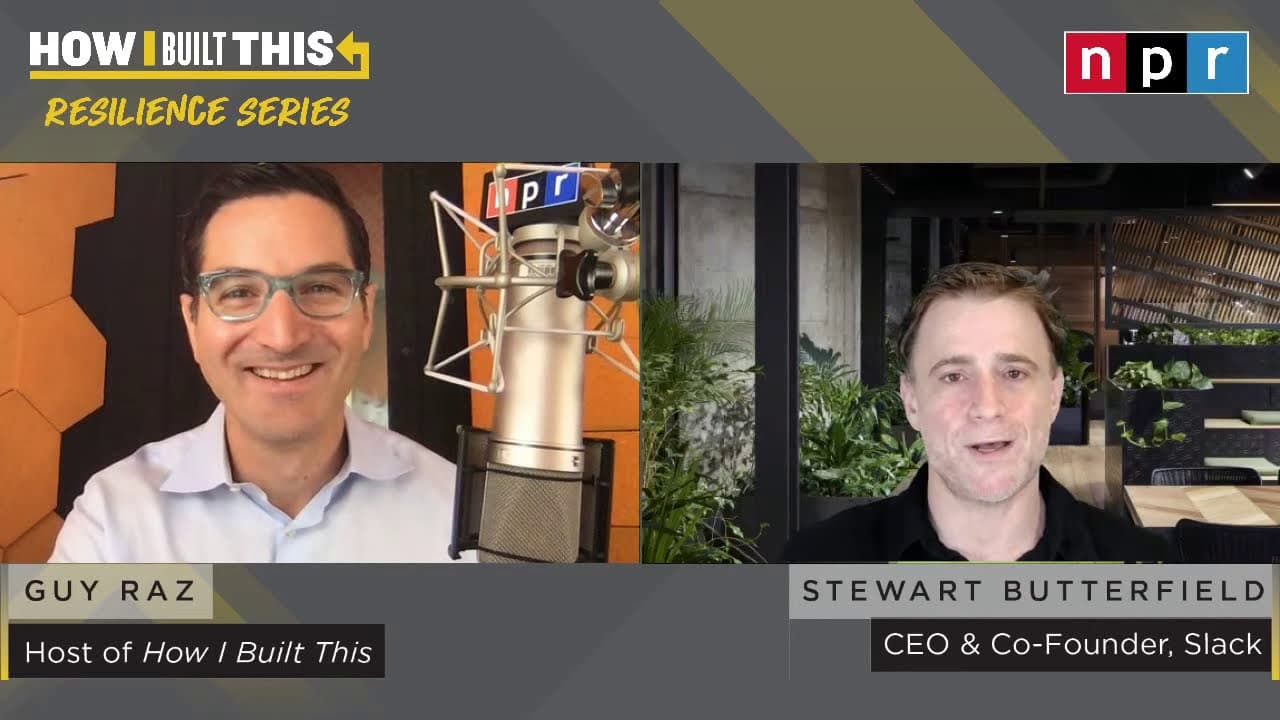
In this video, Guy Raz interviews Stewart Butterfield, the CEO of Slack, about how the company is handling the current crisis and the future of work. They discuss topics such as remote work, collaboration, entrepreneurship, and resilience in business.
Questions & Answers
Q: Where is Stewart Butterfield right now?
Stewart Butterfield is in the attic of his house with a green screen that makes it look like he's in the office in Melbourne.
Q: How did Slack decide to shut down their offices early?
Slack shut down their offices in San Francisco on March 6th due to the increasing number of cancelled events and the orders against large gatherings. The decision was solidified when an employee was potentially exposed to COVID-19 and the CDC recommended closing the office.
Q: How did Slack ensure collaboration among its teams during the remote work period?
Slack has always emphasized written communication and built a disciplined culture around it. They encourage team members to use their own product for communication and coordination. While the transition to remote work was relatively easy for Slack due to their existing communication practices, they recognized the challenges for new hires and the need to address them.
Q: How has the increased demand for Slack during the crisis impacted the company?
The demand for Slack has surged since more people are working remotely. They have seen an increase in new teams being created and existing customers increasing their usage. However, the long-term effects on the company's revenue and growth are uncertain, as they anticipate both positive and negative impacts.
Q: How can small businesses build resilience during this crisis?
Small businesses heavily dependent on physical presence should explore alternate means of distribution such as online platforms and delivery services. They can also rethink their business models and consider new opportunities arising from the current situation.
Q: How has the crisis changed Stewart Butterfield's leadership approach?
Stewart Butterfield believes it's essential to provide reassurance, clarity, and reminders of what's important to employees, especially during uncertain times. He recognizes the need to adapt and communicate effectively to address employees' needs and concerns.
Q: Did Slack always plan to have an app ecosystem?
Yes, the integration with outside services has always been a core part of Slack's approach. They recognized the value of interoperability and connecting different applications and services to deliver more value to customers.
Q: How early on did Slack decide on its revenue model?
Slack decided on its revenue model before or during the early stages of development. They initially set the monthly cost at $8, which they believed would be profitable, but adjusted it to $9 for superstitious reasons. The revenue model has remained the same since then.
Q: How does Stewart Butterfield see the future of work?
Stewart Butterfield believes the crisis has the potential to reshape the future of work, with more acceptance of technology and remote work. He anticipates that remote work will become more prevalent even after the crisis, opening up new possibilities and opportunities for both businesses and individuals.
Q: How can entrepreneurs navigate the current environment and build successful businesses?
Starting a business during this time will require adaptability and creativity. While raising capital may be more challenging, there will also be opportunities due to changes in the business landscape. Entrepreneurs should focus on finding alternate modes of distribution, embracing technology, and being scrappy in their approach.
Takeaways
The current crisis has accelerated the adoption of remote work and the use of technology in the workplace. Companies like Slack have seen increased demand during this time, but the long-term effects on businesses are still uncertain. Small businesses should explore alternative means of distribution and rethink their models to build resilience. The crisis also presents opportunities for entrepreneurs who are adaptable and creative. The future of work may involve a shift towards remote work and the acceptance of technology as essential tools for collaboration. Overall, this period of change provides a chance to reimagine traditional systems and embrace new possibilities.
Summary & Key Takeaways
-
Slack experienced a significant increase in usage as remote work became widespread due to the pandemic. The company's history as a pivot from a failed video game project to a successful communication tool highlights its adaptability. Effective communication and collaboration are emphasized as key components for successful remote work.
-
Stewart Butterfield discusses the challenges and opportunities presented by the pandemic, including the need for businesses to rethink traditional work models. Slack's pre-existing investment in communication tools facilitated an easier transition to remote work, offering insights into the future of work.
-
Leadership during a crisis requires clear communication and adaptability. The pandemic has prompted businesses to innovate and adapt, with Slack playing a crucial role in facilitating remote work. The economic impact is significant, affecting businesses of all sizes, and highlighting the need for resilience.
Read in Other Languages (beta)
Share This Summary 📚
Summarize YouTube Videos and Get Video Transcripts with 1-Click
Try YouTube Summary with ChatGPT & Claude or YouTube Transcript Generator
Explore More Summaries from NPR 📚






Summarize YouTube Videos and Get Video Transcripts with 1-Click
Try YouTube Summary with ChatGPT & Claude or YouTube Transcript Generator