How to Truly Innovate with the Founders of ClassPass, Kickstarter and Walker & Company Brands | NPR
TL;DR
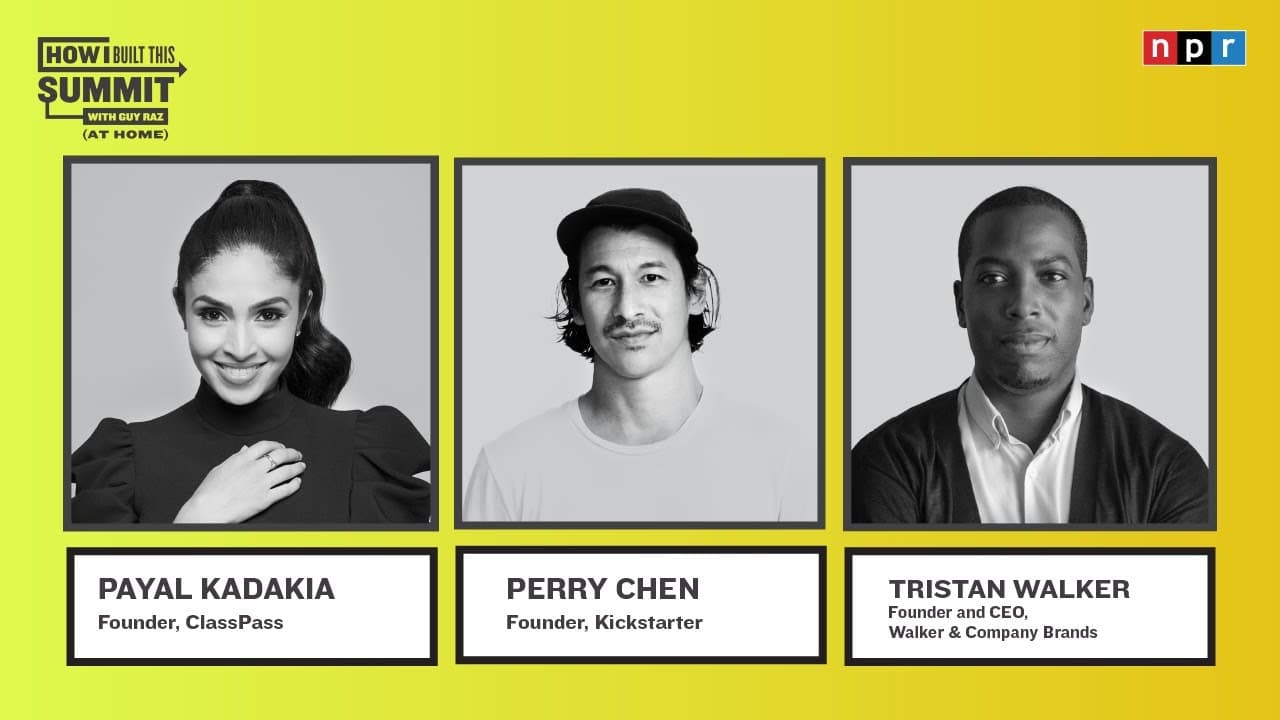
Truly innovative ideas begin with recurring problems that founders understand firsthand, then develop by adapting existing models, older products, or clearer formats. ClassPass emerged from Payal Kadakia’s search for dance classes, Walker & Company Brands revisited the single-blade razor, and Kickstarter established a recognizable funding format. Read on to see how personal frustration, early failure, and thoughtful adaptation shaped each solution.
Transcript
hello everyone it is great to be back and i am so thrilled to be sharing the same screen i would have said stage but it's sort of the stage stage stage and screen with three awesome people um all of whom have been on how i built this palkadakia founder of classpass i'm sure you heard her incredible episode tristan walker founder of walker company a... Read More
Key Insights
- Innovation is often a modification of an existing idea rather than an invention created entirely from scratch. ClassPass drew inspiration from services that moved offline appointments online, while its distinct value emerged when that borrowed model had to be adapted to fit the fitness class market.
- A successful model in one industry is not guaranteed to work in another. Payal Kadakia initially expected approaches used by Zocdoc, OpenTable, and Seamless Web to transfer to fitness, but early failures showed that industry-specific behavior and requirements demanded a different blueprint.
- Personal frustration is a reliable source of meaningful business problems. Kadakia needed dance classes that fit her schedule, Walker needed a shaving method that avoided irritation, and Chen repeatedly needed funding for creative projects, giving each founder direct knowledge of the need being addressed.
- Older solutions can become sources of modern innovation. Tristan Walker found that a single-blade razor worked better for his shaving needs than products with multiple blades, showing that progress can come from recognizing the continuing efficacy of a longstanding design.
- Format is a major driver of innovation on the social web. Perry Chen identified Kickstarter's arrangement of video, funding information, and rewards, along with terms such as backers, as the structure that helped make online project funding understandable and repeatable.
- Persistent problems can reveal that a missing product should exist. Chen kept returning to the challenge of financing his own projects and those of friends, and his inability to identify a fatal flaw in the crowdfunding idea prevented him from abandoning it.
- Respect for underserved consumers can define both a product and a company mission. Walker's dissatisfaction involved product efficacy, the retail experience, brand representation, and employment, so his response addressed a broader sense of consumer respect rather than shaving performance alone.
- Authentic problem ownership helps founders judge whether a solution works. Because the founders were addressing needs they personally experienced, they could evaluate products through direct use and understanding instead of depending entirely on focus groups or pursuing a market only because it appeared attractive.
Install to Summarize YouTube Videos and Get Transcripts
Explore YouTube Video Summarizer or Get YouTube Transcript Extractor
Questions & Answers
Q: How do entrepreneurs find innovative ideas worth pursuing?
Entrepreneurs can start with recurring problems in their own lives. Payal Kadakia struggled to find dance classes that fit her schedule, Tristan Walker experienced razor bumps and irritation, and Perry Chen repeatedly encountered difficulty funding creative projects. These firsthand experiences helped them recognize meaningful needs and evaluate possible solutions.
Q: How can existing business models inspire innovation?
Existing models can supply a useful starting mechanism without providing the complete solution. Kadakia drew inspiration from Zocdoc, OpenTable, and Seamless Web, which used technology to connect people with offline services. She then explored how a similar approach could help people discover and book fitness classes.
Q: Why can copying a successful model fail in a new industry?
A model that works in one market may not fit another market’s specific behavior and requirements. Kadakia initially expected established offline-to-online models to transfer to fitness, but the approach did not work directly in her industry. That mismatch contributed to ClassPass’s early failure and became part of its eventual innovation.
Q: How did an older razor design inspire Walker & Company Brands?
Tristan Walker discovered that a single-blade razor was more effective for his shaving needs than razors with multiple blades. After 15 years of being unable to shave without problems, he tried the single-blade approach and said he experienced neither razor bumps nor skin irritation. The experience showed him that innovation could revive something built 100 years earlier.
Q: What was Kickstarter’s main innovation in crowdfunding?
Perry Chen identified Kickstarter’s innovation as the online format it created, rather than the underlying act of people funding one another. The platform consistently organized elements such as the video, funding information, and rewards while using recognizable terms such as “backers.” Chen said that this format became ubiquitous across funding platforms.
Q: Why did Perry Chen continue pursuing the Kickstarter idea?
Chen repeatedly faced the problem of financing his own creative projects and saw friends encounter it as well. He also could not identify a fatal flaw that justified abandoning the proposed solution. The persistent need reinforced his belief that a project-funding platform should exist.
Q: How can frustration with an underserved market lead to innovation?
Personal frustration can expose failures in product efficacy, retail experience, representation, and consumer respect. Walker felt that existing shaving products and brands did not adequately serve him as a Black man. He used that frustration to shape both the products and the broader mission of Walker & Company Brands.
Q: Why does firsthand experience help founders build better solutions?
Firsthand experience gives founders direct knowledge of the problem they are trying to solve. Kadakia’s passion for dance, Walker’s shaving difficulties, and Chen’s project-funding challenges allowed them to judge proposed solutions through personal use and understanding. Their ideas remained connected to authentic needs instead of merely attractive opportunities.
Summary
In this video, three successful entrepreneurs - Pyle Kadakia (founder of ClassPass), Tristan Walker (founder of Walker & Company), and Perry Chen (co-founder of Kickstarter) - discuss the theme of innovation in their businesses. They share insights into the inspiration behind their ideas, the importance of solving a problem, the role of failure and iteration, and the need for authenticity and passion in entrepreneurship.
Questions & Answers
Q: What was the inspiration behind ClassPass and how did you apply the offline to online model to the health and fitness industry?
Pyle Kadakia was passionate about dance and struggled to find classes that fit her busy schedule. Inspired by companies like Zocdoc and Opentable, she realized that technology could solve this problem by connecting people with fitness classes. However, she had to adapt the model to fit the unique needs of the class space.
Q: How did Tristan Walker re-imagine the traditional razor for people of color?
Tristan Walker recognized the issues faced by people of color, such as razor bumps, caused by existing razors. He discovered the efficacy of a single-blade razor and aimed to bring authenticity and respect to the shaving experience. By making continuous improvements and focusing on the service and experience, he revolutionized the traditional razor market.
Q: Did Perry Chen set out to improve crowdfunding when he founded Kickstarter?
No, Perry Chen did not have the intention of improving crowdfunding. He noticed a gap in the market where few sites had gained traction and realized that the key was to create a unique format that unlocked the potential of crowdfunding on the web. This format included elements like video, rewards, and a clear explanation of the concept, which eventually became the standard for crowdfunding platforms.
Q: How did Perry Chen's lack of experience and connections impact the development of Kickstarter?
Perry Chen had never worked at a company or in business before, which presented many challenges. He had to learn everything from scratch and faced obstacles such as not knowing anyone to talk to or seek advice from. However, his passion and inclination for the idea kept him going, and he eventually found the right people to help bring his vision to life.
Q: How did Pyle Kadakia's experience of failure shape her approach to innovation?
Pyle Kadakia faced initial challenges and failures with ClassPass, including launching a product that no one used and struggling to find the right business model. However, these failures made her more resilient and taught her the importance of focusing on a leading metric that indicates the success of the product, in her case, the number of reservations. She shifted her focus from revenue and profit to the mission of getting people to class.
Q: Did Tristan Walker face uncertainty and doubts during the early stages of Walker & Company?
Triston Walker felt disrespected by existing products in the retail market and was frustrated with the lack of efficacious products for people of color. He knew that his innovation was the solution, but he was uncertain about the future of the company. He focused on the next 12 months and the long-term goal of inspiring people of color for the next 150 years, knowing that the journey would be messy and filled with uncertainty.
Q: How did Perry Chen deal with uncertainty and doubts during the development of Kickstarter?
Perry Chen had to navigate the uncertainties of starting a business without prior experience. He faced doubts about whether the idea would work and went through various iterations and mistakes. However, he had deep belief in the concept and knew that he had to launch the product, even if it meant scrapping previous work. He embraced the delusion and courage required to bring his idea to life.
Q: How did Pyle Kadakia know she was on the right track with ClassPass as she iterated and changed the business model?
Pyle Kadakia realized that the metric that mattered most was getting people to class. This became the leading indicator of success and engagement. By focusing on this metric and constantly improving the model, she stayed true to the mission of making fitness classes accessible. She learned the importance of being mission-obsessed rather than product-obsessed.
Q: How did Perry Chen know that Kickstarter was the right idea despite facing challenges and mistakes?
Perry Chen didn't have any other specific ideas for businesses but was drawn to the concept of Kickstarter. He recognized the importance of the idea and the emotional connection he felt towards it. He had deep belief in the potential impact of the platform and was willing to persevere through all the trials to bring it to life. He realized that a genuine connection to the idea is essential for personal perseverance.
Q: Is it necessary for an idea to be completely new and innovative, or can it be a slight tweak of an existing concept?
The entrepreneurs in the video agree that newness or innovation is not a requirement for entrepreneurship. The focus should be on solving a problem and having authenticity and soul in the business. Ideas can be adaptations or improvements of existing concepts. What matters most is aligning the idea with one's passion, values, and the desire to make a positive impact. The size and scale of the idea can also vary, as not every business needs to be groundbreaking.
Takeaways
Innovation in entrepreneurship does not always mean creating something completely new or innovative. It can also involve solving existing problems with authenticity, passion, and a deep connection to the idea. Failure and iteration are common on the entrepreneurial journey, and having the courage to persevere through challenges is vital. It is crucial to identify the leading metric that indicates success and stay mission-focused rather than becoming too attached to a specific product. Newness is not essential; what matters most is the soul, values, and positive impact the business can bring.
Summary & Key Takeaways
-
Innovation often begins when founders confront problems in their own lives. Payal Kadakia struggled to fit dance classes into her schedule, Tristan Walker experienced shaving irritation and felt underserved as a consumer, and Perry Chen repeatedly encountered the difficulty of funding creative projects. Their direct experiences helped them recognize needs that deserved practical solutions.
-
Existing ideas can provide useful starting points, but they cannot always be transferred unchanged. Kadakia drew inspiration from online services that connected people with offline appointments, yet discovered that their models did not work directly in the fitness class market. The necessary adaptation became part of ClassPass's eventual innovation after early setbacks.
-
Innovation can involve recovering an effective older product, establishing a recognizable digital format, or responding constructively to frustration. Walker returned to the single-blade razor for efficacy, while Chen emphasized Kickstarter's consistent presentation, rewards, and vocabulary. Across these examples, authentic connection to a problem helped guide product decisions without relying entirely on external validation.
Read in Other Languages (beta)
Share This Summary 📚
Summarize YouTube Videos and Get Video Transcripts with 1-Click
Try YouTube Summary with ChatGPT & Claude or YouTube Transcript Generator
Explore More Summaries from NPR 📚




Summarize YouTube Videos and Get Video Transcripts with 1-Click
Try YouTube Summary with ChatGPT & Claude or YouTube Transcript Generator