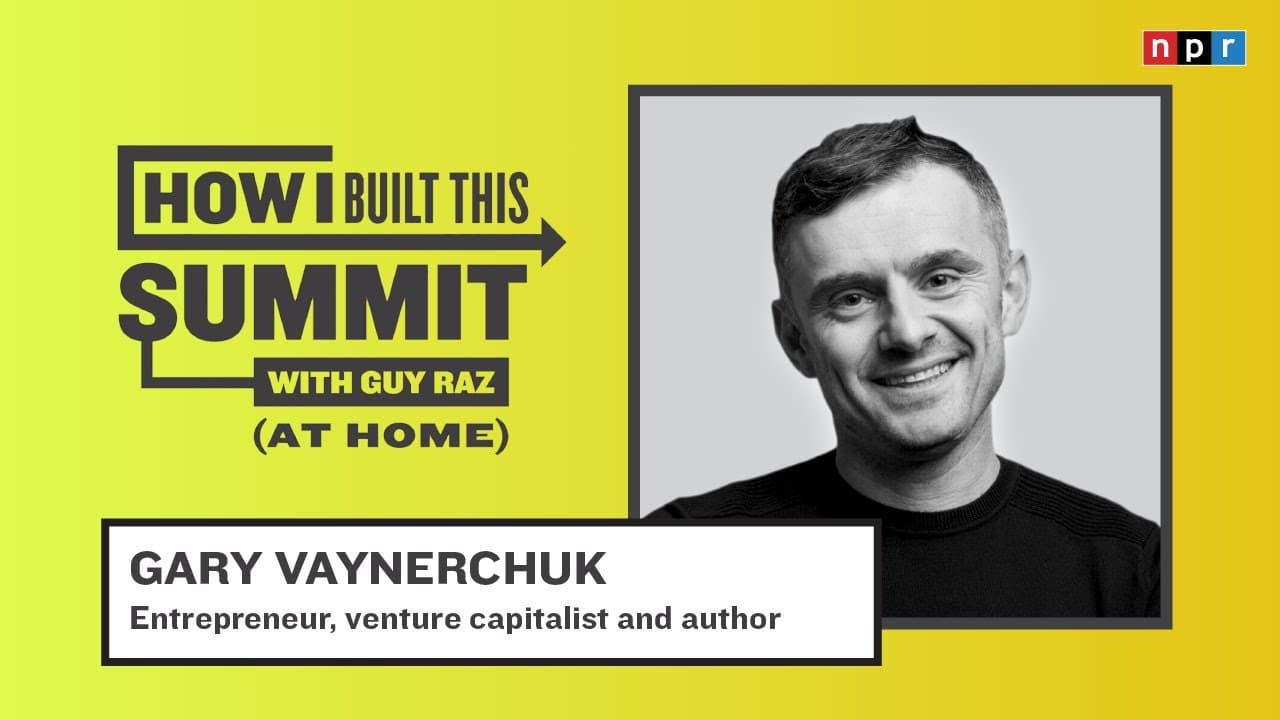
Gary Vaynerchuk Talks Content Marketing and Finding Your Niche | How I Built This with Guy Raz | NPR
TL;DR
Almost anything can become a viable content business if you are genuinely passionate and put in the reps, because interest-driven work naturally fuels the practice that builds skill. Niches run far longer than people assume, but their earning ceiling scales with the size of the audience's macro-intrigue, so pick a passion you will keep serving.
Transcript
okay we're back i think we're back right every everybody is here um welcome back sorry for the day we are so excited to be back i am so excited to be here with gary vaynerchuk garyvee um and i'm not i'm probably the the first person to describe gary as a content making machine so many years ago gary saw the early potential of youtube and he launche... Read More
Key Insights
- Talent alone rarely explains success. Gary attributes his edge to years of repetition at baseball card shows and his family's liquor store, arguing that reps, like shooting baskets over and over, turn a natural instinct into a refined professional skill.
- Passion is the engine of skill because people who genuinely enjoy something willingly put in the reps. Gary says focusing on what intrigues you, rather than what pays fastest, is what makes deep practice sustainable over a multi-year window.
- Selflessness drives selfishness in content. Gary argues you cannot sustain community time or make content that hits unless you first bring so much value that the audience wants to buy from you and collaborate with you.
- Niches are a much longer tail than people think. Gary believes almost any interest, even frisbee golf or collecting, can be monetized, but not every niche has the macro-intrigue that makes it a large, lucrative opportunity.
- Earning potential scales with the audience size behind an interest. Wine can support a multi-million dollar business, professional basketball a seven-figure one, while an ultra-narrow niche caps out much lower even when fully monetized at scale.
- Democratized distribution changed everything. Gary says content consumption is no longer relegated to television, print, and radio, so anyone who finds their communication medium (video, audio, or written word) now has opportunity on the other side.
- Lifestyle can outweigh salary. Gary frames the core argument as whether someone would rather earn less doing what they love full-time than earn more as a director at a company that makes them miserable.
- Content strategy is a top-three priority for growth-minded businesses. While many companies chug along fine without content, Gary sees creating a content strategy as central for any business that genuinely wants to scale and grow.
Install to Summarize YouTube Videos and Get Transcripts
Explore YouTube Video Summarizer or Get YouTube Transcript Extractor
Questions & Answers
Q: Can almost anything be turned into a content business?
Gary Vaynerchuk believes almost any interest can be monetized because niches are a much longer tail than most people assume. He points to examples like frisbee golf or collecting, saying passionate creators can amass large communities and earn a living. However, he cautions that not every niche has the macro-intrigue needed to make it a genuinely lucrative, large-scale opportunity, so earning potential varies widely by subject.
Q: How important is passion for building a content business?
Passion is essential in Gary's view because genuine interest is what makes people willingly put in the reps required to improve. He argues you cannot cultivate lifetime value or sustain community time unless you are deeply interested in the topic and its community. Without that foundation, content will not hit, and the money layer of content only works when it flows from bringing real value to your audience.
Q: Why does Gary Vaynerchuk emphasize reps over natural talent?
Gary uses a sports analogy: some people are born with better hand-eye coordination, but anyone who shoots ten thousand baskets will be better than someone who does not. He explains that by age fifteen, when he advised his dad on selling wine, he had already worked many baseball card shows. That accumulated repetition, not talent alone, gave him a head start and refined his instincts.
Q: How does audience size affect how much money a niche can make?
Gary ties earning potential directly to the size of the audience interested in a topic. He explains that wine can support a multi-million dollar company because interest is broad enough, professional basketball can build a seven-figure business, while an ultra-narrow niche might cap out at a lower figure even when fully monetized at scale. Bigger macro-intrigue means a higher ceiling for revenue.
Q: What does Gary mean by selflessness driving selfishness in content?
Gary describes content as a game where giving value first ultimately serves your own interests. He says you must bring so much value to your audience that people want to collaborate with you and buy from you. This selflessness of consistently serving a community is what eventually drives selfish outcomes like sales and partnerships, but the value must come genuinely before the monetization can happen.
Q: How did Gary Vaynerchuk franchise his lemonade stand as a kid?
Gary explains he franchised his childhood lemonade stand not through bribery or money but through likeability. By being nice to his friends every other day of the week, they felt compelled or guilted into letting him stand behind their tables when he asked. He signed up multiple kids in the neighborhood as locations and rode around on a big wheels to visit his stands, comparing himself to a young Tony Soprano.
Q: How important is a content strategy for a business that wants to scale?
Gary calls creating a content strategy one of his top three priorities for a business focused on growth. He acknowledges that many businesses run along just fine without content, but argues that for any company genuinely wanting to scale and grow, content is central. He frames it around growth, suggesting owners who understood its power would prioritize it far more heavily than they currently do.
Q: How has democratized distribution changed content opportunities?
Gary explains that content consumption is no longer regulated or relegated to television, print, radio, and traditional outlets. He says the internet became the distribution channel, opening opportunity to anyone. If you find your way of communicating, whether through video, audio, or the written word, there is opportunity waiting on the other side. This shift is why passionate individuals can now build audiences and businesses that were previously impossible.
Summary
This video features an interview with Gary Vaynerchuk, a successful entrepreneur and marketer. The conversation focuses on topics like Gary's early experiences in business, the importance of creating compelling content, and the role of marketing in scaling a business. Gary emphasizes the value of passion, expertise, and escapism in content creation, and discusses the potential for niche markets to be lucrative. He also highlights the significance of curiosity, legacy, and the thrill of the hunt in driving his own motivations. The video concludes with a discussion about brands that excel in marketing and the importance of breaking patterns in marketing strategies.
Questions & Answers
Q: How did Gary franchise his lemonade stand as a kid?
Gary franchised his lemonade stand by cultivating strong relationships with his friends and community. Instead of using bribery or money, he focused on being nice and building friendships. This led to his friends feeling compelled or guilted into helping him with his stand. Gary also put in the work to create multiple stands and establish specific locations, even using a big wheels bike to visit each one. He believes that natural talent combined with hard work and refinement played a role in his success from an early age.
Q: Do you think everyone has the potential to turn their passion into compelling content?
While Gary believes that niches have more potential than people realize, he doesn't think every passion can necessarily be turned into a highly profitable content strategy. He uses the example of frisbee golf to illustrate this point. While it is possible to amass a significant following and monetize a niche like frisbee golf, the size of the market may not be large enough to make it a highly lucrative opportunity. However, Gary maintains that many interests and niches can still be developed into successful ventures if approached strategically and with a focus on delivering value to the audience.
Q: How important is creating a content strategy for scaling a business?
According to Gary, creating a content strategy is one of the top three things that businesses should prioritize in 2021 if they want to achieve growth. While he acknowledges that many businesses can function without investing in content marketing, he believes that leaving growth opportunities on the table is a missed opportunity. Gary draws attention to the fact that the cost of creative and advertising on various social media platforms is currently low, providing a land grab of opportunities for businesses to build their brand and reach a wider audience. He suggests that businesses should not delay investing in a content strategy, as the potential returns can be significant.
Q: How should someone with limited resources and time start creating content?
Gary recommends a step-by-step approach for individuals with limited resources and time to start creating content. The first step is to audit their daily routine to identify any time wasted that could be repurposed for content creation. Many people unknowingly spend an excessive amount of time on unnecessary tasks. The second step is to allocate a specific amount of time for education. This can involve watching YouTube videos, reading tutorials, and researching best practices for content creation in their chosen field. The third step is to dedicate a set amount of time each day or week to actually create content. This can involve writing, recording audio clips, or producing videos. By breaking down the process and committing to regular content creation, individuals can gradually develop their skills and produce meaningful content.
Q: What motivates Gary in his work and life?
Gary identifies three main sources of motivation for him: curiosity, legacy, and the thrill of the hunt. He describes himself as being wildly curious about his standing in his profession and constantly seeking to improve and innovate. He finds satisfaction in exploring new ideas and pushing the boundaries of what he can accomplish. Legacy is also important to Gary, as he aims to leave a lasting impact on the business and entrepreneurial world. Finally, he enjoys the thrill of the hunt, which is evident in his passion for garage sales. The excitement of finding hidden treasures and unique items fuels his motivation in both business and personal endeavors.
Q: Which brand do you believe is excelling in marketing right now?
Gary mentions a few brands that he believes are doing well in marketing. He highlights TikTok and the work of their CMO, Nick Tran. TikTok's approach to using content from their platform in television commercials showcases their ability to catch people's attention and generate buzz. Gary also mentions Facebook's success in building awareness around groups, particularly among younger users. He finds it impressive how many under 30-year-olds are joining and engaging with Facebook groups. Additionally, Gary mentions Elf Cosmetics as another brand that has effectively utilized TikTok to reach their target demographic.
Q: What are your thoughts on unusual approaches to content marketing?
Gary is a strong advocate for breaking patterns and embracing unusual approaches to content marketing. He appreciates when brands like Steak 'n Shake, Wendy's, and Popeyes challenge norms with their marketing strategies. Unconventional tactics can capture attention and create a memorable experience for audiences. Gary believes in delivering value through unexpected and delightful content, rather than disrupting or annoying consumers. He mentions the example of interrupting a podcast interview with a spontaneous song to promote a brand. The goal is to surprise and entertain, while still respecting the audience's time.
Summary & Key Takeaways
-
Gary Vaynerchuk recounts franchising his childhood lemonade stand not through bribery but by being so likeable that friends felt compelled to help. He credits an early, natural instinct for business, comparing it to the innate gifts athletes and musicians display, refined through youthful practice.
-
Guy Raz pushes back that most people lack natural gifts and must build them. Gary agrees, emphasizing reps: by the time he advised his dad on selling wine, he had already worked countless card shows, learning locations and salesmanship through relentless repetition rather than talent alone.
-
On niches, Gary argues almost any passion can be monetized but earning ceilings depend on audience size. He stresses passion sustains the reps, selfless value creation drives audience loyalty, and content strategy is a top priority for any business aiming to scale in 2021.
Read in Other Languages (beta)
Share This Summary 📚
Summarize YouTube Videos and Get Video Transcripts with 1-Click
Try YouTube Summary with ChatGPT & Claude or YouTube Transcript Generator
Explore More Summaries from NPR 📚





Summarize YouTube Videos and Get Video Transcripts with 1-Click
Try YouTube Summary with ChatGPT & Claude or YouTube Transcript Generator