Tobi Lütke on Shopify and Starting Small with Guy Raz | How I Built This | NPR
TL;DR
Starting small can uncover a larger opportunity when entrepreneurs pay close attention to what customers actually need. Shopify emerged after Tobi Lütke built software for his own online snowboard store, and its experience during difficult economic periods suggests that adaptability, digital sales channels, and direct customer relationships can help businesses survive disruption and discover new paths to growth.
Transcript
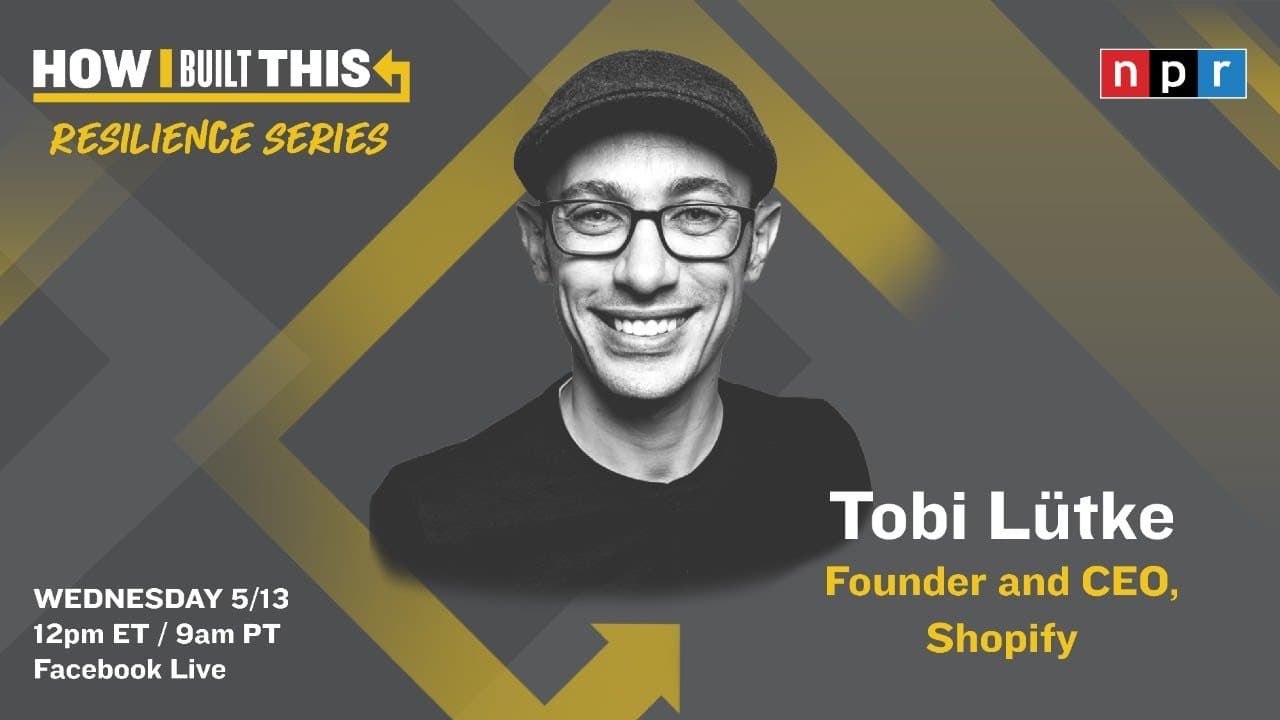
hello everyone and welcome to how I built this resilience edition I'm guy Roz I'm here with Toby Lukey of Shopify we are taking your questions right now on Facebook Twitter and YouTube so please start submitting those questions if you are a regular listener to how I built this you may have heard Toby's story it originally aired in August of 2019 it... Read More
Key Insights
- Shopify began as a solution to a specific merchant problem. Tobi Lütke wanted to sell snowboards online but could not find suitable off-the-shelf software, so he built his own system and discovered that other business owners wanted to use it.
- Starting small can expose a much larger opportunity. The original business centered on selling snowboards, but the software created to support that store proved more valuable because it addressed a common difficulty faced by merchants trying to conduct commerce online.
- Economic crises can prompt people to pursue delayed business ideas. Lütke observed that job losses encouraged some people to treat entrepreneurship as a fallback plan and open online stores, contributing to Shopify's growth during a period the company initially feared might destroy it.
- Digital sales channels can provide resilience when physical stores become inaccessible. Businesses with online stores and additional channels such as Instagram or Pinterest were able to replace most of their lost retail sales, while store-dependent companies had to establish new connections with customers quickly.
- Disruption accelerates trends that were already developing. Lütke describes the crisis as pulling future digitalization forward, forcing companies that never expected to sell directly over the internet to reconsider their assumptions and rapidly build online operations.
- Entrepreneurship requires continual adaptability under uncertainty. Business owners may need to rethink payroll, working relationships, customer access, operating practices, and what their brands represent when familiar conditions suddenly become invalid.
- Leadership includes recurring confidence and self-doubt. Lütke says entrepreneurs can alternate between believing a decision will make the company unbeatable and fearing the company is finished, with those emotional shifts becoming faster as the organization grows.
- Recovery creates opportunities because commerce will move forward into different conditions rather than simply returning to its previous state. Entrepreneurs can build businesses around both the improvements and the difficulties that emerge as customers develop new expectations and purchasing habits.
Install to Summarize YouTube Videos and Get Transcripts
Explore YouTube Video Summarizer or Get YouTube Transcript Extractor
Questions & Answers
Q: How did Tobi Lütke turn a snowboard store into Shopify?
Tobi Lütke wanted to create an online store for selling snowboards, but he could not find off-the-shelf e-commerce software that met his needs. He built his own software instead. Other merchants wanted access to the system, revealing that the tool solved a broader problem. That demand shifted the opportunity from operating one snowboard shop to providing commerce infrastructure for many businesses.
Q: Why can starting with a small problem lead to a larger business?
A small, concrete problem can reveal demand shared by many potential customers. Lütke initially needed software only for his own snowboard business, which gave him direct knowledge of the merchant experience and the limitations of existing options. When other sellers wanted the same solution, he had evidence that the problem extended beyond his store and could support a broader platform.
Q: Why did Shopify grow during an economic crisis?
Shopify benefited when people who had lost jobs began pursuing business ideas they had previously postponed. Opening an online store offered a possible alternative to traditional employment and avoided the need to lease a physical location. Although Shopify initially feared the crisis could wipe it out, the demand from new entrepreneurs helped the company find a useful role in supporting small businesses.
Q: How can businesses adapt when physical stores lose customers?
Businesses can establish direct online sales and use multiple digital channels to maintain access to customers. Lütke notes that companies with websites and channels such as Instagram or Pinterest replaced most of the sales they lost from retail. Traditional businesses that relied exclusively on stores had to build online operations quickly because their usual connection to commerce had suddenly become unavailable.
Q: What does digitalization mean for traditional businesses?
Digitalization means creating ways to sell and communicate with customers beyond a physical store. During the disruption discussed, companies that had never expected to sell directly online began doing so because their established retail channels were inaccessible. Lütke cites Heinz ketchup as an example of a long-established company rapidly launching a direct online site when circumstances required a new route to customers.
Q: Is an economic downturn a good time to start a company?
A downturn can offer entrepreneurial opportunities, although it also creates serious hardship and uncertainty. Lütke observes that many strong companies were launched during recessions, often when others believed the timing was terrible. Changing customer behavior can leave gaps in the market, especially as spending moves toward online channels and products needed at home. Entrepreneurs can build around those newly visible needs.
Q: How does Tobi Lütke describe the emotional experience of entrepreneurship?
Lütke describes entrepreneurship as oscillating between strong confidence and complete dread. At one moment, a founder may believe a decision will make the company exceptionally powerful, and at another, fear that the business is finished. He says these shifts continue even as a company becomes large, and the movement between emotional states can become faster rather than disappearing.
Q: What should entrepreneurs focus on during major disruption?
Entrepreneurs should focus on adaptability and on solving urgent customer problems. For Shopify, the central priority was helping more small businesses survive. Business owners also need to reconsider assumptions about sales channels, payroll, working relationships, operations, and brand meaning. Lütke argues that recovery will produce different conditions, creating opportunities around both beneficial changes and new difficulties.
Summary
In this video, Guy Raz interviews Toby Lukey, the CEO of Shopify, and discusses how the company is adapting to the COVID-19 pandemic. They also explore the current trends in e-commerce and the opportunities that entrepreneurs may have during this time.
Questions & Answers
Q: How has the current situation changed the way people are working at Shopify?
People at Shopify, like in many other technology companies, are now working remotely. They are using tools like Slack and Google Meet for communication and meetings. However, there is a sense of missing the camaraderie and close proximity that comes from working together in an office.
Q: How has the current crisis affected the e-commerce industry?
The current crisis has accelerated the digitalization of businesses. Many companies that never imagined selling directly online have now started doing so. Traditional businesses with physical stores have realized the importance of having an online presence. As a result, Shopify has seen an increase in the number of people signing up for their platform and launching online stores.
Q: Can you give examples of new trends in the types of stores people are launching?
During this time, people have been launching various types of stores. One interesting trend is the creation of masks and other protective gear. Some sneaker factories have started producing masks, and people are buying decorative tapestries to use as backdrops for video conferencing. Additionally, there has been a strong community effort to bring local businesses online, enabling them to offer curbside pickup and deliveries in the neighborhood.
Q: Is now a good time to launch a product or service?
Yes, now is a good time to launch a product or service, especially if it fits into the emerging trends and needs of the current situation. There is still a demand for products, but the way people spend their money has shifted more towards online and essential items. This creates opportunities for entrepreneurs to bring new options to the market and cater to the changing needs of consumers.
Q: How has the current situation affected Shopify's operations and culture?
The current situation has caused a shift in the way Shopify operates and communicates. Office-centricity is changing, and there is a need to find new ways to work together digitally. The culture is evolving as well, and adaptability is seen as an important trait. The company is learning to reproduce the situations and interactions that were valued before through digital means, such as video discussions. The way of leading as a CEO has also changed, with increased communication and transparency becoming essential.
Q: How does Shopify address concerns about certain websites selling products that may promote racism or other negative behaviors?
Shopify has an acceptable use policy that every store must comply with. If anyone notices a site violating this policy, they can submit it for review. Shopify takes these concerns seriously and has automated systems in place to monitor and address any violations.
Q: Does Shopify have plans to allow stores to run on local hosts for debugging and testing purposes?
Currently, there are no plans to allow stores to run on local hosts. However, Shopify is continuously working to improve development tools and make them more efficient.
Q: Are there any plans for Shopify to get involved in package delivery to address delays in deliveries?
Shopify is planning to get more involved in fulfillment networks and building infrastructure for delivery. However, it may take time to scale up this aspect of operations as compared to software development.
Q: How has this crisis changed Toby Lukey's leadership style?
Toby Lukey has learned a lot during this crisis and had to adapt his leadership style. He has increased communication with the team, hosting town hall meetings more frequently. He has also embraced video discussions as a substitute for in-person interactions. The current situation has made him more open-minded and willing to explore new ways of working together.
Q: What opportunities do entrepreneurs have during this time?
Entrepreneurs have opportunities to create and launch products or services that cater to the changing needs and trends. The mix of how people spend their money has shifted, creating opportunities in online sales and essential items. There is also a new understanding of what the world could be like after the crisis, which opens up possibilities for innovation and entrepreneurship.
Takeaways
This video interview with Toby Lukey, CEO of Shopify, provides insights into how Shopify is adapting to the COVID-19 pandemic and the opportunities available for entrepreneurs during this time. The e-commerce industry has seen an acceleration in digitalization, with many traditional businesses now entering the online market. Shopify has experienced an increase in sign-ups and is focusing on supporting small businesses and entrepreneurs. The crisis has also brought changes to the way people work, communicate, and lead. Despite the challenges, there are still opportunities for entrepreneurs to launch products or services that fit the current trends and needs. Overall, the ability to adapt and innovate is crucial in these uncertain times.
Summary & Key Takeaways
-
Tobi Lütke created e-commerce software because available products did not meet the needs of his snowboard store. Other merchants wanted the software, turning a practical solution into Shopify. The story demonstrates how solving a specific problem for yourself can reveal a broader market when many people face the same obstacle.
-
Economic disruption can damage established sales channels while accelerating alternatives. During the crisis discussed, physical stores lost customer access, prompting traditional companies to sell directly online. Businesses already operating through websites and social platforms proved better positioned to replace much of the revenue lost when their retail locations became inaccessible.
-
Lütke describes entrepreneurship as a constant movement between confidence and dread. Leaders may believe their strategy will make the company exceptionally strong, then fear that everything is failing. Instead of eliminating uncertainty, entrepreneurs must adapt, reconsider assumptions, and focus on useful work, especially helping small businesses survive rapidly changing conditions.
Read in Other Languages (beta)
Share This Summary 📚
Summarize YouTube Videos and Get Video Transcripts with 1-Click
Try YouTube Summary with ChatGPT & Claude or YouTube Transcript Generator
Explore More Summaries from NPR 📚






Summarize YouTube Videos and Get Video Transcripts with 1-Click
Try YouTube Summary with ChatGPT & Claude or YouTube Transcript Generator