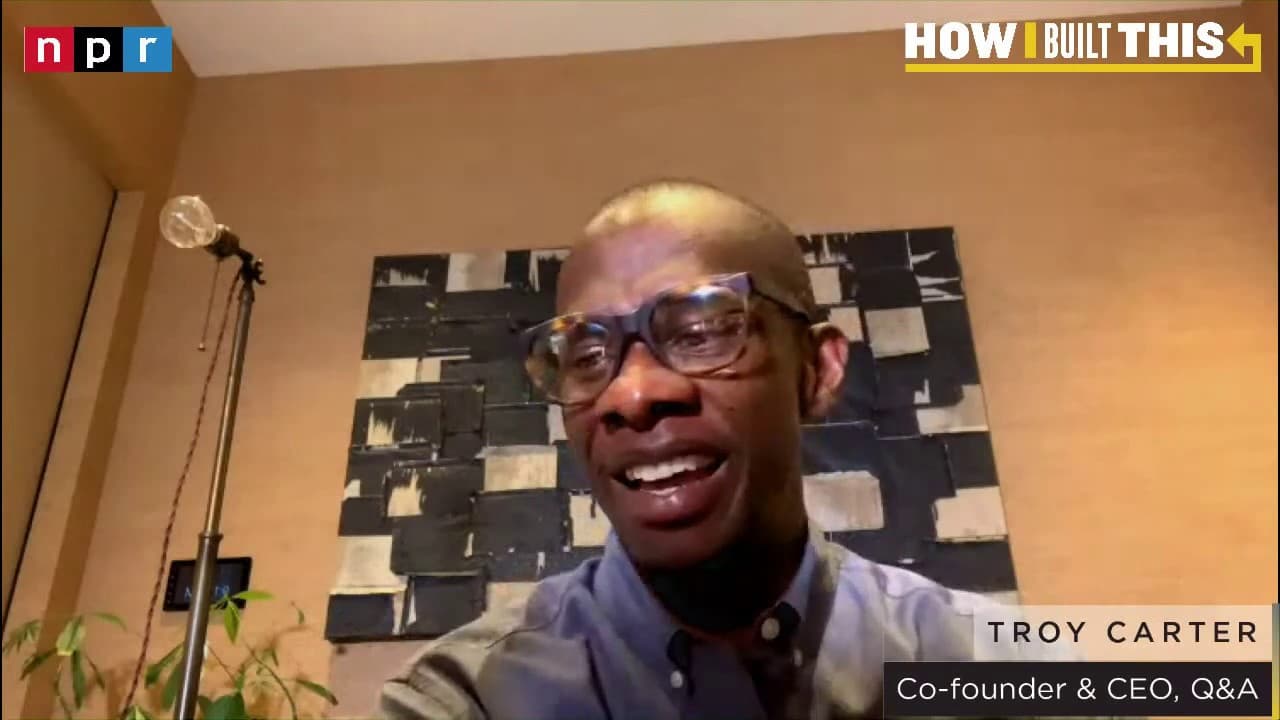
Troy Carter on Q&A and Blackout Tuesday with Guy Raz | How I Built This | NPR
TL;DR
Racial injustice cannot be separated from everyday life for Black Americans, and neither money nor influence removes the risks created by ingrained bias. Troy Carter argues that widely shared recordings have made discrimination and privilege visible in unusually direct ways, while pandemic isolation and economic frustration have brought many excluded groups together in protest. He hopes the response becomes a catalyst for lasting change rather than a temporary moment.
Transcript
hello and welcome to how about this resilience edition excuse me how is everybody doing as many of you know we launched this series several months ago right after pandemic to talk about how businesses are building resilience during this really challenging time and since then we've done a week on the food industry we did a whole week on the fashion ... Read More
Key Insights
- Racial injustice is an everyday reality for many Black Americans, not merely a subject raised after a widely reported incident. Carter says parents must balance supporting their children’s rights with persistent concern about their physical safety while protesting, traveling, or moving through ordinary public spaces.
- Money and power do not eliminate racial bias, according to Carter. His professional success did not prevent hotel security from physically confronting him during a trip to Mexico City, an incident witnessed by colleagues who had previously heard him discuss discrimination but had not seen it happen directly.
- Technology is making discriminatory behavior visible by capturing both incidents and the processes behind them. Carter contrasts earlier camcorder footage with recent recordings that show how privilege can be deliberately weaponized through changes in voice, claims of fear, and accusations against an innocent person.
- An innocent person should not need elite credentials or respectable affiliations to receive fair treatment. Carter criticizes reports that emphasized a falsely accused birdwatcher’s Harvard degree and organizational role because those details should not determine whether the public recognizes that the accusation was dangerous and unjust.
- The protests represent a merger of people who feel left behind, in Carter’s interpretation. He connects participation across racial groups with student debt, unequal economic conditions, frustration about blocked opportunity, and a belief that many people cannot pursue the American dream or receive a fair chance.
- Pandemic isolation intensified existing frustration by separating people from friends, disrupting lives, and creating serious mental strain. Carter suggests that repeated recorded incidents of racial bias arrived during this compressed period, when many people were already under pressure and ready to express accumulated anger publicly.
- America has repeatedly begun conversations about racial injustice without producing sufficient change. Guy Raz points to cases discussed throughout the previous decade, while Carter says the central question is whether the current response will become a lasting catalyst or disappear as another brief historical moment.
- A national reckoning requires sustained attention to historical wrongdoing. Raz compares America’s failure to confront four centuries of racial injustice with Germany’s decades-long effort to teach its history, honor victims, and acknowledge past crimes, while also recognizing that Germany remains imperfect.
Install to Summarize YouTube Videos and Get Transcripts
Explore YouTube Video Summarizer or Get YouTube Transcript Extractor
Questions & Answers
Q: How does racial injustice affect Black families in America?
Racial injustice creates recurring safety concerns around ordinary choices, including protesting, traveling, and driving across the country. Troy Carter supported his 17-year-old daughter’s right to join a protest but feared for her physical safety. He also checked on his 24-year-old son during neighborhood protests and described parents worrying about a 19-year-old driving from Los Angeles to North Carolina.
Q: Why does Troy Carter say money cannot overcome racial bias?
Troy Carter says wealth and power do not prevent others from seeing and treating a Black person through ingrained racial assumptions. He illustrates this with a trip to Mexico City, where hotel security physically confronted him as he went to retrieve his bag. His position and professional success did not protect him, even while traveling with a group of company presidents.
Q: How has technology changed conversations about racial injustice?
Technology allows people to witness discriminatory incidents and observe how privilege operates during them. Carter references the camcorder recording associated with Rodney King and more recent phone footage from Central Park. He argues that newer recordings can reveal an entire process, including changes in tone, manufactured fear, accusations, and the immediate danger directed toward an innocent Black person.
Q: Why did Carter criticize coverage of the Central Park incident?
Carter objected to reports that highlighted the accused man’s Harvard degree, birdwatching, and board membership as reasons to recognize his innocence. He argues that none of those credentials should be necessary. A person without an elite education or respected affiliation would still deserve protection from a false accusation that could lead to arrest or death.
Q: What does Carter mean by a merger of the left behind?
Carter uses the phrase to describe protesters from different racial backgrounds whose frustrations extend beyond one recorded act of injustice. He points to white, Black, Asian, and Hispanic people burdened by student debt, unequal economic conditions, and limited access to the American dream. In his view, these shared pressures combined with anger about George Floyd’s death.
Q: How did the pandemic contribute to the intensity of the protests?
The global health crisis forced people to readjust their personal lives and businesses while dealing with mental strain, isolation, and separation from friends. Carter believes several recorded incidents of racial bias then appeared within a short period. That concentration of events reached people already carrying substantial frustration, contributing to a feeling that the public was bursting at the seams.
Q: What would make the protests a catalyst for lasting change?
Carter says the protests must become more than a temporary burst of attention on the historical radar. The conversation needs to address bias embedded within American life and the country’s long failure to reckon with racial injustice. Although he does not provide a detailed policy program in the supplied discussion, he stresses sustained work rather than allowing public concern to fade.
Q: Why does Guy Raz compare America with Germany’s historical reckoning?
Guy Raz describes Germany as an imperfect country that nevertheless undertook a decades-long effort to confront its past. He notes that schoolchildren visit a death camp and that the government honors victims. He contrasts this with America’s failure to conduct a comparable national reckoning, arguing that the United States continues to face consequences from not confronting four centuries of racial injustice.
Summary
In this video, Troy Carter discusses the current events happening in the world, including the health crisis, political crisis, economic crisis, and the racial injustice crisis. He talks about the impact these crises have had on people's lives and the need for individuals and businesses to address these issues. He also touches on topics such as how to talk to children about these events, the role of music in times of crisis, the future of the entertainment industry, and the importance of authenticity in contributing to the conversation through art.
Questions & Answers
Q: How are the current global crises impacting people's lives?
The global health crisis, political crisis, economic crisis, and racial injustice crisis have had a significant impact on people's lives. The mental and emotional toll of these events is immense, and people are struggling to readjust their lives and businesses. The recent events and protests surrounding racial injustice have highlighted the long-standing crisis of racial inequality in America. African Americans, in particular, face everyday challenges due to systemic racism.
Q: How are parents discussing the current events with their children?
Parents are having difficult conversations with their children about the current events. Troy Carter shares his personal experience of his daughter attending protests and his son being in a neighborhood with protests. He emphasizes the importance of allowing their children to express their feelings and exercise their rights as American citizens. He also acknowledges the fear and concerns that come with being black in America and the need to ensure their physical safety.
Q: How did Troy Carter experience racism during a trip to Mexico City?
During a trip a few months ago, Troy Carter experienced racism when he was physically attacked by security at a hotel in Mexico City. He was the only black person in his group, and this incident highlighted the biases and discrimination that still exist in society.
Q: How is Troy Carter dealing with the current crises as an entrepreneur?
Troy Carter discusses his experience as an entrepreneur during these challenging times. He mentions that he has started several companies during crises and that there are opportunities for those willing to take risks. He talks about his latest venture, a music and technology company called QA, and how they are building workflow systems for the music industry. He also mentions the challenges faced by the music industry, particularly in the live event sector.
Q: How is the music industry coping with the COVID-19 pandemic?
The music industry is facing challenges due to the pandemic, primarily in the live event sector. Concerts, tours, and live performances are significantly impacted. However, the record side of the industry, which is mostly digital, is less affected. The industry is exploring alternative options such as live streaming and virtual concerts to adapt to the new normal.
Q: How can content creators contribute to the conversation on racial injustice through their art?
Content creators have the opportunity to contribute to the conversation on racial injustice through their art. Troy Carter emphasizes the importance of authenticity and honesty in expressing one's thoughts and feelings. He cites an example of Billie Eilish's message to her fans, which was authentic and resonated with many people. It is crucial not to be silent and use one's platform to address these issues, even if one is unsure of what to say.
Q: How is Troy Carter communicating with his team during the pandemic?
Troy Carter's team was already accustomed to remote work, so the transition to remote communication was relatively smooth. They utilize video conferencing tools like Google Meet for regular meetings and maintain open lines of communication. However, Troy mentions being a little tired of video calls and hopes for a reinvention of the video conferencing format in the future.
Q: Is the music industry suffering due to the current crises?
Yes, the music industry is facing challenges due to the current crises. The pandemic has impacted the live event sector, including concerts and tours. On the other hand, the racial crisis has highlighted the biases and imbalance of power within the industry. It is crucial to address these issues and strive for equal opportunities for all musicians, regardless of their background.
Q: Can this moment of crisis bring about significant change?
Troy Carter expresses optimism that this moment can bring about significant change, particularly for the younger generation. He believes that the economic divide, which impacts people across race, gender, religion, etc., can unite individuals in seeking change. Empathy and awareness are crucial in understanding and addressing the issues at hand. He hopes that this moment is not just a blip in history but a catalyst for lasting change.
Q: How can individuals contribute to the conversation on racial injustice through their art?
Individuals can contribute to the conversation on racial injustice through their art by being authentic and true to their emotions. Troy Carter emphasizes the importance of artists expressing what is in their hearts and not being afraid to alienate certain fan groups. Art is about being a voice for the voiceless and addressing the issues of the moment. It is crucial to speak up and not be silent, even if one does not have all the answers.
Q: How can businesses contribute to addressing racial injustice and inequality?
Businesses can contribute to addressing racial injustice and inequality by acknowledging the biases and imbalances within their own structures. Troy Carter mentions the lack of black executives in the music industry and the need for change. Providing equal opportunities and access to resources and support for all individuals, regardless of their background, can make a significant impact. It is essential for businesses to be aware of their role in perpetuating systemic racism and take steps to rectify it.
Takeaways
The current global crises, including the health crisis, political crisis, economic crisis, and racial injustice crisis, have had a profound impact on people's lives. It is a challenging moment, but also an opportunity for individuals and businesses to address these issues and work towards lasting change. Troy Carter emphasizes the importance of empathy, authenticity, and open dialogue in addressing racial injustice and inequality. He believes that technology and virtual experiences can provide new avenues for connection and creativity in the entertainment industry.
Summary & Key Takeaways
-
Troy Carter describes the combined emotional weight of the global health crisis, business disruption, and nationwide protests over racial injustice. He is processing these events personally while also considering strategic action, and he frames the unrest as part of a much older American failure to confront its history and embedded racial bias.
-
Carter explains that racial inequality shapes ordinary family decisions. He supported his daughter’s right to protest while fearing for her safety, worried about his son traveling through the country, and recalled being physically confronted by hotel security during a trip when he was the only Black member of his group.
-
Carter argues that recordings have made patterns of discrimination and privilege visible to people who might otherwise overlook them. He connects the protests to racial injustice, pandemic isolation, student debt, and blocked economic opportunity, describing the movement as a merger of people who feel excluded from the American dream.
Read in Other Languages (beta)
Share This Summary 📚
Summarize YouTube Videos and Get Video Transcripts with 1-Click
Try YouTube Summary with ChatGPT & Claude or YouTube Transcript Generator
Explore More Summaries from NPR 📚

Summarize YouTube Videos and Get Video Transcripts with 1-Click
Try YouTube Summary with ChatGPT & Claude or YouTube Transcript Generator