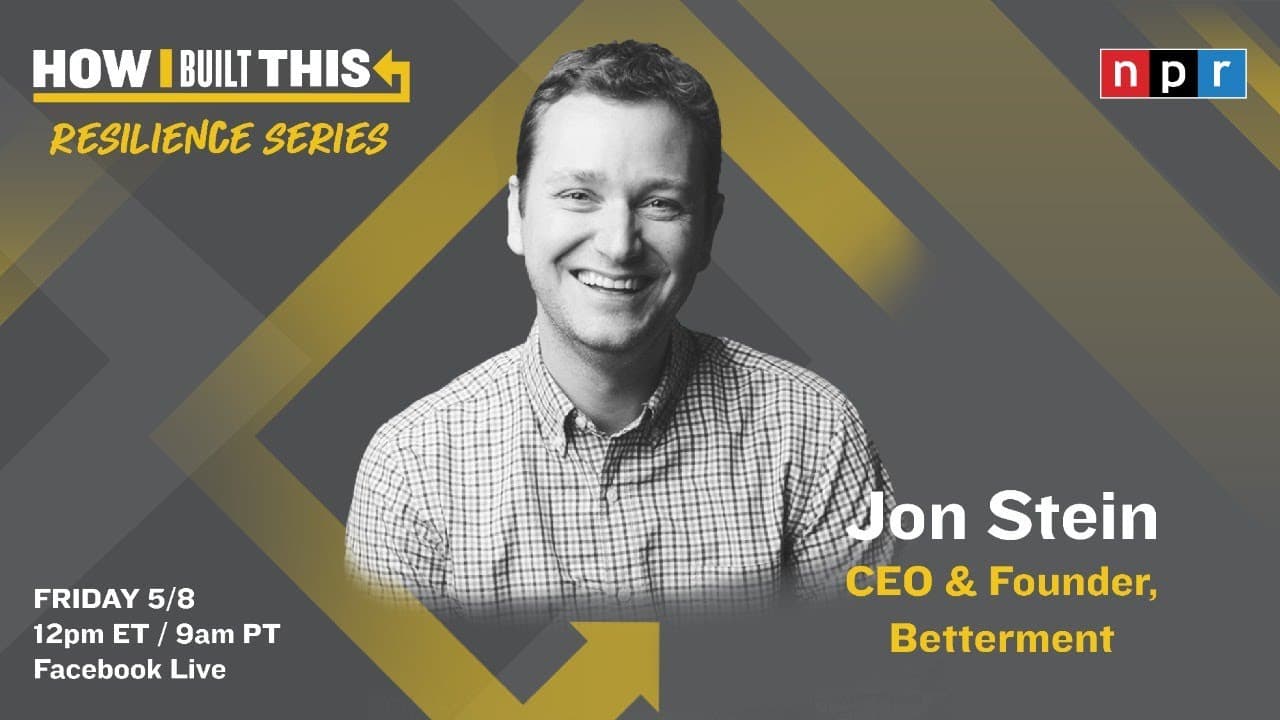
Jon Stein Talks About Founding Betterment with Guy Raz | How I Built This | NPR
TL;DR
Starting a business during a crisis can be advantageous, as seen with Betterment, founded in 2008. Jon Stein emphasizes the importance of resilience, adapting to market needs, and leveraging technology for financial services. With the right timing and approach, economic downturns can present unique opportunities for entrepreneurs.
Transcript
hello everyone and welcome to how I built this resilience Edition how how's everybody doing today this week end of the week hope you are doing ok and staying healthy and safe as you know this is the place where we are exploring how businesses are building resilience in the midst of this crisis we're taking your questions for our guest today John St... Read More
Key Insights
- Betterment was founded during the 2008 recession, highlighting that crises can be opportune times to start a business.
- Digital financial services like Betterment are resilient during economic downturns due to their online nature.
- Young investors are more likely to stay the course during market volatility, possibly due to previous experiences with economic swings.
- The COVID-19 pandemic has led to increased savings rates, with many people saving their stimulus checks.
- Remote work is becoming more accepted, with companies like Betterment adapting to a more distributed workforce.
- Jon Stein suggests financial services, healthcare, and education are ripe for technological disruption.
- Betterment's automated investing service offers lower fees by using ETFs rather than individual stocks.
- The company has seen increased sign-ups despite market volatility, indicating a shift in investor behavior.
Install to Summarize YouTube Videos and Get Transcripts
Explore YouTube Video Summarizer or Get YouTube Transcript Extractor
Questions & Answers
Q: How can I start a business during an economic crisis?
Starting a business during an economic crisis can be beneficial if you focus on solving current problems and leveraging technology. Jon Stein, who founded Betterment during the 2008 recession, suggests that crises can present unique opportunities due to fewer competitors and the potential to address emerging needs. Key areas ripe for disruption include financial services, healthcare, and education.
Q: What are the benefits of digital financial services during a downturn?
Digital financial services like Betterment offer resilience during economic downturns due to their online nature, which allows them to operate without physical constraints. They provide lower fees and more accessible services to customers, making them attractive options during times when people are more conscious of financial management. This has led to increased sign-ups and interest in automated investing.
Q: How do young investors differ in their response to market volatility?
Young investors tend to stay the course during market volatility, possibly due to their familiarity with economic swings from past crises like the 2008 recession. Betterment's data shows that Millennials and Gen Z are more likely to view downturns as buying opportunities, contributing to a higher rate of deposits compared to withdrawals during volatile times.
Q: What impact has the COVID-19 pandemic had on savings behavior?
The COVID-19 pandemic has led to increased savings rates, as many people have chosen to save their stimulus checks rather than spend them. This behavior is partly due to uncertainty and limited spending opportunities. Betterment has observed that a significant portion of their customers are directing these funds into short-term savings or long-term retirement accounts.
Q: How is remote work changing the way companies operate?
Remote work is becoming more accepted, with companies like Betterment adapting to a distributed workforce. This shift allows for greater flexibility in hiring and could lead to a more geographically diverse talent pool. Companies must balance maintaining a sense of community with the benefits of remote work, such as reduced overhead and increased employee satisfaction.
Q: What areas are ripe for technological disruption according to Jon Stein?
Jon Stein identifies financial services, healthcare, and education as areas ripe for technological disruption. Each sector can benefit from innovative solutions that improve efficiency, accessibility, and user experience. For example, telemedicine in healthcare and online learning in education have gained traction during the pandemic, highlighting the potential for lasting change.
Q: How does Betterment's investment strategy differ from traditional methods?
Betterment's investment strategy focuses on using exchange-traded funds (ETFs) to create diversified portfolios rather than investing in individual stocks. This approach allows for lower fees and reduced risk through diversification. The company automates processes like tax-loss harvesting and rebalancing, offering a more cost-effective and efficient service compared to traditional financial advisors.
Q: What opportunities does the current economic climate present for entrepreneurs?
The current economic climate presents opportunities for entrepreneurs to address emerging needs and leverage technology to create innovative solutions. With fewer competitors and a focus on digital transformation, areas like financial services, healthcare, and education offer significant potential for growth. Entrepreneurs can capitalize on these opportunities by focusing on solving problems exacerbated by the crisis.
Summary
In this video, John Stein, co-founder of Betterment, discusses how the current crisis has impacted the investment industry and provides advice on investing during this time. He also talks about the resilience of his own business and the future of remote work.
Questions & Answers
Q: How has the current crisis affected the investment industry?
John explains that the market volatility has led to a decline in customers' portfolios, which has impacted revenue for companies like Betterment. However, they have also seen a surge in sign-ups and deposit volumes, as more people are looking for better money management options in the midst of the crisis.
Q: Have a lot of people been withdrawing money from their investment accounts?
John shares that some customers have been withdrawing money, especially those who are more emotionally reactive to market fluctuations. However, he explains that the percentage of customers withdrawing during this crisis is not significantly higher than normal, and there are actually more customers depositing money right now.
Q: Are experienced investors less stressed than new investors during this crisis?
Surprisingly, John shares that experienced investors are not less stressed than new investors. He hypothesizes that this may be due to the immediate need for money if their time horizon is short, as well as the familiarity of younger investors with market volatility.
Q: What is John's advice for investing the $1,200 stimulus check?
John advises considering your current financial situation before deciding how to invest the stimulus check. If you have immediate bills or high-interest debt, use the money for those first. If you are debt-free and have a comfortable emergency fund, you can consider putting it into a long-term savings vehicle like an IRA or 401(k).
Q: Will Betterment implement budgeting tools?
Yes, Betterment plans to incorporate budgeting tools into their platform. They are aware of the demand for such features and are working on enhancing their offerings to help customers with budgeting and tracking their financial goals.
Q: How has the crisis affected the operations and culture of Betterment?
Betterment, being a digital company with remote offices, has transitioned smoothly to working remotely during the crisis. They have seen the benefits of remote work and are considering hiring more remote workers even after things return to normal. However, they also recognize the importance of a physical hub for building community and team connection.
Q: How has this crisis influenced John as an entrepreneur?
John reflects on the positive changes the crisis has brought to his work-life balance. He has been able to have dinner with his family every night, something that was not possible before. He hopes to maintain this change in the future and prioritize spending time with his family.
Q: What advice does John have for someone who wants to start a business during this crisis?
John believes that a downturn is a great time to start a business as people may have more free time and there are plenty of problems to solve. He highlights financial services, healthcare, and education as areas ripe for disruption and technological advancements.
Q: How has Betterment been affected by the crisis?
Betterment has been impacted by the market volatility and the decline in customers' portfolios. However, they have also experienced record sign-ups and are adapting well to the changing landscape. The crisis has highlighted the value of digital financial services and the need for better money management options.
Q: What does John hope to take away from this crisis regarding his business and its mission?
John hopes to maintain the positive changes the crisis has brought, such as remote work and a better work-life balance. He also hopes to continue building a resilient and innovative company that can navigate future challenges. He sees this crisis as an opportunity to reshape the way businesses operate and create opportunities in new and different locations.
Takeaways
John Stein discusses the impact of the current crisis on the investment industry and offers insights into investing during this time. He highlights the need for better money management options and the surge in sign-ups that businesses like Betterment are experiencing. John also shares advice for investing the stimulus check and talks about the future of remote work. Overall, the crisis has revealed opportunities for innovation and reshaping business operations, and John hopes to maintain positive changes in work-life balance and company culture.
Summary & Key Takeaways
-
Jon Stein founded Betterment during the 2008 recession, demonstrating that economic crises can be advantageous for starting new ventures. He emphasizes the value of resilience and adapting to market needs. Despite current market volatility, Betterment has seen increased sign-ups, particularly among younger investors, indicating a shift in behavior.
-
Digital financial services like Betterment are proving resilient during the COVID-19 pandemic due to their online nature. With record sign-ups and increased savings rates, the crisis has highlighted the importance of technology in financial services. Stein notes that healthcare and education are also ripe for technological disruption.
-
Remote work is becoming more normalized, with companies like Betterment adapting to a distributed workforce. This shift might lead to a broader geographic distribution of talent and businesses, potentially revitalizing smaller cities and towns. Stein acknowledges the importance of maintaining a sense of community in a remote work environment.
Read in Other Languages (beta)
Share This Summary 📚
Summarize YouTube Videos and Get Video Transcripts with 1-Click
Try YouTube Summary with ChatGPT & Claude or YouTube Transcript Generator
Explore More Summaries from NPR 📚


Summarize YouTube Videos and Get Video Transcripts with 1-Click
Try YouTube Summary with ChatGPT & Claude or YouTube Transcript Generator