Marketing Secrets from Founders of Jeni's Ice Creams, Briogeo and Q&A | How I Built This | NPR
TL;DR
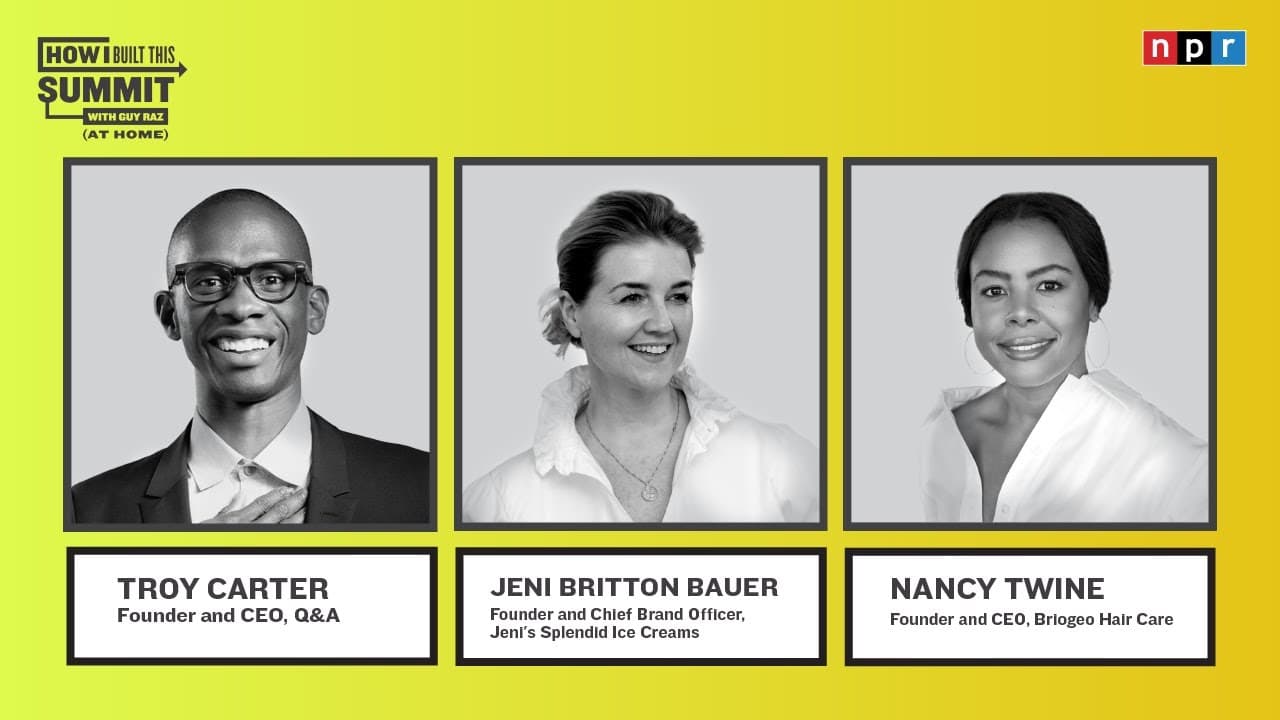
Strong marketing begins with a high-quality product, genuine passion, and a clear founder story that helps customers or investors believe in the vision. Jeni Britton Bauer, Nancy Twine, and Troy Carter emphasize creativity, consistency, reputation, direct customer feedback, and authentic word of mouth over costly collaborations or influencer campaigns.
Transcript
welcome back everyone um you know if you listen regularly to how i built this right you know there's there's always gonna come a point in the story where after months or years of sweat and worry and incredibly hard work a founder is finally ready to put their idea or product out into the world which is great right but now comes a whole new challeng... Read More
Key Insights
- Passion can make unfamiliar sales work feel natural. Nancy Twine had never sold shampoo or conditioner before Briogeo, but her enthusiasm for the subject helped her communicate confidently and develop what she described as a sixth sense for work she had not previously done.
- A founder is part of the early product proposition. When Briogeo existed only as drawings on paper, Twine needed to sell her credibility, vision, passion, story, and reason for being so that potential supporters could believe in something that did not yet physically exist.
- Creating value can connect making with marketing. Jeni Britton Bauer identifies first as a maker, but she became energized when she realized that producing something valuable for other people could unite her creative instincts with the practical work of selling.
- Professional reputation can grow through dependable conduct. Troy Carter says a manager’s brand develops naturally through doing good business, keeping promises, following up, and producing consistent results, especially within the relatively small music industry, where behavior becomes visible over time.
- A manager’s primary role is to elevate the artist. Carter explains that music managers generally build careers and platforms for clients while remaining in the background, and some avoid personal visibility because they do not want their public profile to become larger than the client’s.
- Direct customer interaction can refine an entrepreneurial message. Bauer spent years making and serving ice cream at an indoor public market, where real-time reactions created a two-way conversation that helped her understand customers, clarify her contribution, and discover where she felt most comfortable.
- Product quality and creativity can drive organic discovery. Bauer argues that businesses can still grow one customer at a time by continuously improving what they make, producing fresh ideas, understanding customers intimately, and giving people experiences worth discussing with others.
- Large promotional spending is not required by Jeni’s approach. Bauer says the company uses a marketing budget under one million dollars, does not pay for collaborations or influencer marketing, and instead emphasizes creativity, quality, values, customer understanding, and consistent improvement.
Install to Summarize YouTube Videos and Get Transcripts
Explore YouTube Video Summarizer or Get YouTube Transcript Extractor
Questions & Answers
Q: How can founders market a product before it exists?
Founders can market an unfinished product by making their credibility and vision understandable. Nancy Twine says Briogeo initially existed only as drawings on paper, so she had to communicate her passion, story, reason for being, and intended direction. Without a physical product to demonstrate, her ability to help others believe in her and the concept became central to attracting early support.
Q: Why does passion make selling easier for founders?
Passion gives founders a natural reason to discuss their work repeatedly and persuasively. Nancy Twine says enthusiasm for Briogeo helped her sell shampoo and conditioner despite having no previous experience selling those products. Troy Carter similarly says that when he becomes excited about music or an idea, he wants to share it with everyone he can find, making promotion feel less forced.
Q: How can a founder's personal story support marketing?
A founder’s story can explain why the brand exists and why its vision deserves attention. Twine says that both during Briogeo’s early days and later, telling her story, reason for being, passion, and vision remained a major part of her work. This personal context was particularly important when prospective supporters could not yet inspect a finished physical product.
Q: How did Jeni Britton Bauer use customer feedback?
Jeni Britton Bauer spent years making ice cream, serving it across the counter, and listening to customers at an indoor public market. That environment gave her immediate feedback and created a two-way conversation. Through repeated interaction, she refined her message, understood what customers responded to, clarified what she was contributing, and found the entrepreneurial role in which she felt most comfortable.
Q: Can a great product still grow through word of mouth?
Bauer argues that organic, customer-by-customer growth remains possible and necessary. Her approach centers on making the best product possible, improving continuously, developing creative new ideas, and knowing customers intimately. She believes quality, creativity, and values help a brand cut through a crowded marketplace because customers encounter something distinctive and worthwhile enough to discuss and share with other people.
Q: Does effective marketing require paid influencers?
Paid influencers are not required by the approach Bauer describes. She says Jeni’s does not pay for influencer marketing or collaborations and operates with a marketing budget under one million dollars for the entire company. Instead, the company relies on product quality, creativity, values, customer knowledge, continuous improvement, and new ideas to attract attention and encourage organic interest.
Q: How do music managers build a strong reputation?
Troy Carter says a music manager’s reputation develops through sustained professional behavior rather than deliberate self-promotion. Doing good business, keeping one’s word, following up, and achieving consistent success with artists gradually builds trust. Because he characterizes the music industry as a small business, dependable actions over a long period naturally contribute to the manager’s own recognizable professional brand.
Q: Should founders make themselves the center of their brand?
The discussion presents different answers depending on the role and stage of the business. Twine needed to market herself when Briogeo was still only a vision, while Bauer deliberately shifted attention from her personal style toward the ice cream and customers. Carter says managers typically remain behind the scenes so they can build platforms for artists without becoming more prominent than their clients.
Summary
In this video, Guy Raz interviews three guests, Nancy Twine, Jenny Britton Bauer, and Troy Carter, about the challenges of getting noticed and the different approaches they took to market their products. They discuss the role of storytelling, organic growth, branding, and creating remarkable products. The guests share their personal experiences and insights on effective marketing strategies.
Questions & Answers
Q: Did marketing come naturally to the guests or did they have to develop the skill?
Nancy shares that while she didn't have prior experience selling shampoo, her passion for her brand made it easy for her to naturally market her products. She believes that being driven by passion can develop a sort of superpower for doing something new. Jenny reflects on her upbringing and how she discovered her love for making things and selling them. She considers herself a maker first, but marketing came alive for her when she realized the power of creating value for others. Troy also emphasizes the importance of being passionate about something and being excited to share it with others, which comes naturally to him.
Q: Did the guests have to market themselves as founders before marketing their products?
Nancy talks about the importance of selling herself and her vision during the early stages of her brand. She shares how she gained investors' trust by pitching not just her product, but also her passion and vision. Troy, as a music manager, explains that managers usually stay in the background but build their own brand through good business and consistent success with their clients. While not intentional, his reputation naturally grew as he focused on managing successful careers for his clients. Jenny discusses how she transitioned from focusing on herself to highlighting her products and customers when starting her ice cream business. She believes that building relationships with customers played a significant role in marketing herself and her brand.
Q: How did the guests approach organic growth through word-of-mouth and influencer marketing?
Nancy reveals that one of their biggest marketing initiatives early on was sampling their hair care products. They invested in sampling boxes and partnered with influencers who already talked organically about Briogeo. By focusing on authenticity and finding influencers who aligned with their brand, they saw a significant increase in organic growth. Jenny, on the other hand, emphasizes the importance of creativity, quality, and knowing their customers intimately. While they have a small marketing budget, they prioritize creating value for their customers and rely on their creativity to cut through the noise. Troy highlights the personal connection that stories create and the emotional attachment people have to them. By sharing artists' stories and consistently putting their music out there, it increases the chances of reaching a wider audience.
Q: Can marketing methods like guerrilla marketing or hiring a PR agency be effective?
Jenny believes that if you have a product like ice cream, getting out there, meeting people, and standing out in the physical world can be effective. She encourages entrepreneurs to be creative and find ways to engage with potential customers. Nancy emphasizes that authenticity and passion should be the foundation of any marketing strategy. She shares her experience of attending trade shows, personal meetings with editors, and investing in PR to authentically tell her story. Troy discusses the importance of persistence, strategy, and building connections. He mentions how being strategic while providing as many touchpoints as possible can help cut through the noise and connect with the target market.
Q: How important is storytelling in marketing?
Nancy believes that stories are often the inspiration for innovation, and the best stories come from being authentic and passionate. By sharing truthful and vulnerable stories, brands can create deeper connections with their audience. Jenny shares her approach of telling customers what she would personally say to them in order to create a moment of connection and enrich their experience. Troy agrees that stories are crucial because they provide context and elicit emotional attachment. He explains that personal stories of artists or founders can pull people in and create a stronger connection compared to just presenting a product on a shelf.
Q: Can a product itself be an effective marketing tool?
Jenny shares that some products can naturally market themselves through their uniqueness. She mentions limited edition flavors like Dolly Parton-inspired ice cream and the White House chocolate chip ice cream, which generated attention and interest. However, she emphasizes that remarkable products should still live up to the brand's values and provide a quality experience. Nancy also shares her experience of launching a smoothie-inspired shampoo and conditioner, which initially felt risky but turned out to be a successful and transformative move for the brand. Both guests agree that creating remarkable products can be a powerful marketing strategy.
Q: How important is branding in marketing efforts?
Branding plays a significant role in marketing as it helps differentiate a product or service from competitors. Nancy mentions the importance of validating her brand by showcasing her passion and vision, along with strategic PR activities. She also emphasizes the importance of authenticity and creating memorable moments to build relationships with customers. Jenny believes that branding should accurately represent a brand's values and resonate with customers. She mentions that branding can be flexible, depending on the product or service being offered. Troy highlights the need for consistent branding and building a reputation through good business practices and fulfilling promises.
Q: Is it possible to use organic growth and word-of-mouth as effective marketing strategies in a crowded market?
Nancy shares that their early focus on sampling their products and identifying influencers who were already organically talking about Briogeo helped drive organic growth. They focused on authenticity and partnering with influencers who aligned with their brand values. Jenny believes that word-of-mouth and organic growth can still be effective today by prioritizing quality, creativity, and understanding one's customers. Her advice is to start small, build meaningful connections with customers, and constantly improve. Troy highlights the importance of persistence, strategy, and leveraging multiple touchpoints to increase the chances of connecting with potential customers.
Q: How can storytelling help attract attention to a product or brand?
Nancy suggests that stories should come from a place of truth, passion, and vulnerability. Authentic storytelling, with raw and real experiences, can be more impactful and create a deeper connection with the audience. Jenny believes that sharing stories and connecting customers to the origins and values of a brand can enhance their experience and create a memorable moment. Troy emphasizes that stories pull fans and customers into an artist's or brand's journey, fostering personal and emotional connections. Authentic storytelling can be an effective way to engage and attract attention in marketing efforts.
Q: What advice does Nancy give to someone who doesn't know how to craft a story about their product?
Nancy advises entrepreneurs to start by being truthful and authentic. The story should come from a place of passion and be rooted in the originality of the storyteller. Rather than focusing on how to craft a story to appeal to consumers, Nancy emphasizes the power of sharing one's own passion, vulnerability, and experiences. By being raw and genuine, the story becomes more powerful and real, resonating with others.
Q: Can extraordinary or remarkable products effectively market themselves?
Jenny agrees that remarkable products can create marketing opportunities. However, she stresses that the product should still align with the brand's values and offer a high-quality experience. Highlighting unique or extraordinary aspects of a product can generate attention and interest. Nancy also shares her experience of launching creative and out-of-the-box products, which were successful due to their authenticity and alignment with the brand's vision. Extraordinary products have the potential to capture attention and stand out in a competitive market.
Summary & Key Takeaways
-
Nancy Twine says passion can make selling feel natural, even without previous experience marketing a particular product category. During Briogeo’s early development, she had only product drawings, so attracting support required her to communicate her personal credibility, vision, reason for being, and commitment before anyone could evaluate a finished physical product.
-
Jeni Britton Bauer describes marketing as creating value through craft, quality, and creativity. Her years serving customers at an indoor public market provided immediate feedback that helped refine both her message and entrepreneurial identity. She believes excellent products, close customer knowledge, strong values, and fresh ideas can still generate organic growth.
-
Troy Carter says a music manager should primarily build platforms for artists and generally remain behind the scenes. His professional brand developed indirectly through good business, keeping promises, following up, and achieving consistent success. Across the discussion, reputation emerges as a result of dependable work rather than constant personal promotion or deliberate visibility.
-
Key Insights small refactor?
Read in Other Languages (beta)
Share This Summary 📚
Summarize YouTube Videos and Get Video Transcripts with 1-Click
Try YouTube Summary with ChatGPT & Claude or YouTube Transcript Generator
Explore More Summaries from NPR 📚




Summarize YouTube Videos and Get Video Transcripts with 1-Click
Try YouTube Summary with ChatGPT & Claude or YouTube Transcript Generator