Teach For America CEO On The Value Of Teachers In 2021 | How I Built This with Guy Raz | NPR
TL;DR
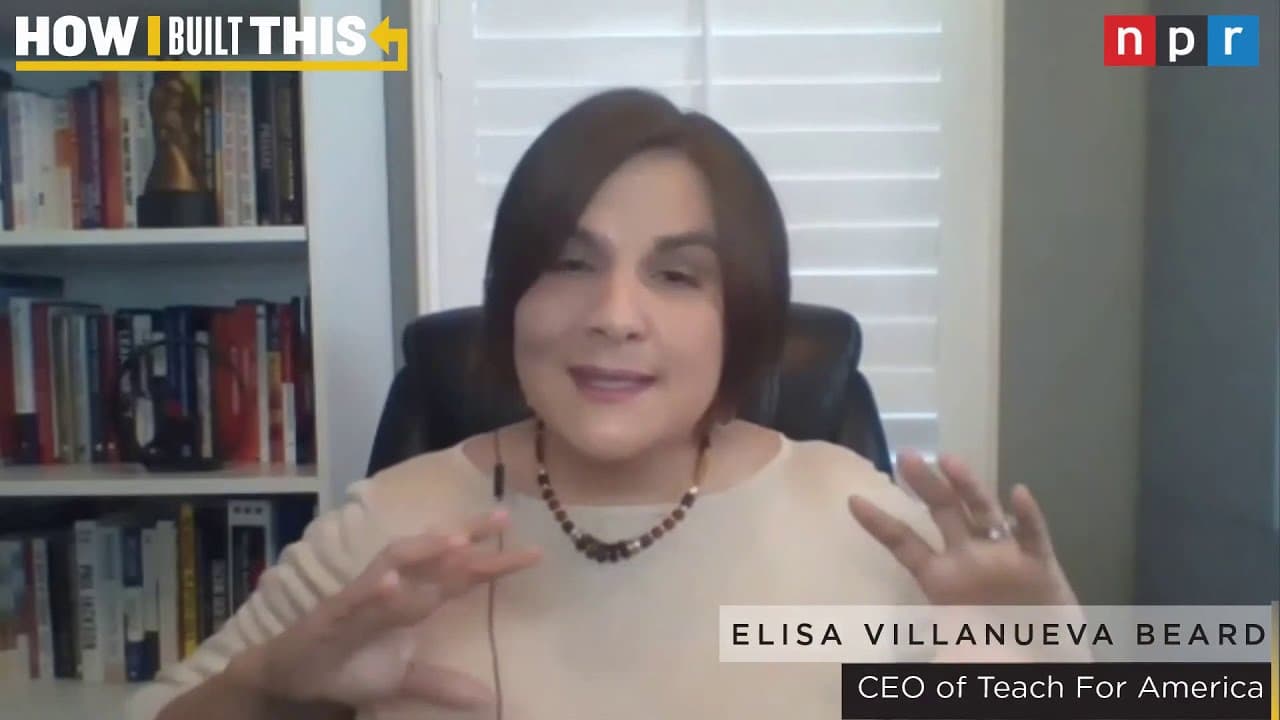
Teachers can help close opportunity gaps by combining effective classroom instruction with long-term advocacy for educational equity. Teach For America recruits people to teach in underserved urban and rural communities, trains and supports them, and encourages them to remain lifelong change agents. The pandemic intensified existing inequities by disrupting school-based services, exposing weak virtual-learning infrastructure, and leaving many students without reliable devices or broadband.
Transcript
hello everybody happy new year welcome to how i built this resilience edition from npr i'm guy roz uh it's great to see you all this is of course where we talk about how businesses are building resilience into their organizations in these challenging times um so welcome back this is our first episode of the new year and what what a new year it's be... Read More
Key Insights
- Educational opportunity is strongly influenced by where a child is born, according to Teach For America's stated rationale. The organization rejects that unequal reality and treats it as a systemic problem requiring several interventions, including sustained leadership focused on equity and justice.
- Teach For America's model is built around recruiting people who commit to teaching in underserved urban and rural communities. Participants receive training and support, then are encouraged to become lifelong advocates and change agents working to ensure that every child has an equal chance.
- Teachers provide more than academic instruction because schools also connect children with meals, social services, emotional support, and other essential resources. Pandemic closures made these overlapping responsibilities especially visible when educators began worrying about whether students could eat, learn, and remain supported away from school.
- Elisa Villanueva Beard's interest in education is rooted in personal experience. Although she had excelled throughout high school, she arrived at college underprepared for its academic demands, struggled during her initial adjustment, and later recognized that systemic inequities had shaped the preparation available in her community.
- Persistence was central to Villanueva Beard's college experience. When she questioned whether she belonged, her mother insisted that she complete her degree. Working through the difficulty allowed her to thrive academically and prompted her to investigate why a successful high school student could still arrive at college unprepared.
- Pandemic resilience required Teach For America to redesign a training model that had depended on in-person work with schools and students. The organization created a virtual curriculum within nine weeks so it could continue preparing educators and provide schools with a new cohort of teachers.
- The digital divide became a basic educational access problem when learning moved online. Villanueva Beard compared broadband and a suitable device to traditional classroom essentials such as pencil and paper, emphasizing that students cannot meaningfully participate in remote instruction without this infrastructure.
- Educators demonstrated resilience by seeking ways to reach students despite technological and institutional barriers. Villanueva Beard described teachers, school leaders, and communities creating support systems, exploring partnerships, and confronting the continuing problem of students who had not participated in learning after schools closed.
Install to Summarize YouTube Videos and Get Transcripts
Explore YouTube Video Summarizer or Get YouTube Transcript Extractor
Questions & Answers
Q: How does Teach For America work?
Teach For America recruits people who want to address educational inequity and prepares them to teach in urban and rural communities for at least two years. It trains and supports those educators while they work with students. The broader aim is for participants to remain lifelong advocates and change agents whose careers contribute to equity, justice, and equal opportunity for children.
Q: Why does Teach For America focus on educational equity?
Teach For America begins from the view that where children are born can largely determine their opportunities and life outcomes. The organization considers that condition unjust and argues that every child deserves an equal chance. Because the problem is systemic, it requires many interventions. Teach For America contributes by developing leaders who can serve students directly and continue pursuing change throughout their careers.
Q: What inspired Elisa Villanueva Beard to work in education?
Elisa Villanueva Beard entered college after excelling in high school but discovered that she was underprepared for its academic rigor. She initially doubted whether she belonged, then persisted with strong encouragement from her parents and eventually thrived. That experience led her to question why a student could do everything expected in school yet remain inadequately prepared, drawing her toward educational equity work.
Q: What role did Elisa Villanueva Beard's family play in her education?
Villanueva Beard described education as central to her family's understanding of opportunity. Her mother came from Mexico with a formal eighth-grade education and concluded that education offered a pathway forward in the United States. When Villanueva Beard struggled in college and considered leaving, her mother firmly told her to complete her degree, while her father supported that expectation.
Q: Why are teachers especially important during a crisis?
Teachers are important during a crisis because schools support many needs beyond classroom lessons. Students may depend on schools for food, social services, emotional care, and structured learning. When schools closed during the pandemic, educators had to consider how children would receive those supports while also adapting instruction. Their work therefore involved student welfare, family connection, and learning continuity.
Q: How did Teach For America adapt teacher training during the pandemic?
Teach For America had relied on an in-person preparation model that included working with school districts and having new teachers teach students during training. When that approach became impossible, the organization redesigned its curriculum for virtual delivery within nine weeks. It also established virtual spaces for teachers and school leaders, allowing training and support to continue while schools faced disruption.
Q: Why is broadband access essential for remote education?
Broadband access is essential because students cannot consistently participate in virtual instruction without an internet connection and a suitable device. Villanueva Beard described those tools as modern equivalents of basic classroom materials such as pencil and paper. The pandemic exposed that many schools lacked the infrastructure for a rapid online transition, leaving a large number of children unable to access learning.
Q: What challenges prevented students from participating in pandemic learning?
Students faced several barriers, including missing devices, unavailable hotspots, inadequate broadband, and school systems that were not prepared to shift quickly to virtual instruction. Some children also depended on schools for meals, emotional assistance, and social services that became harder to deliver remotely. Villanueva Beard said schools were still trying to locate students who had not engaged in learning since closures began.
Summary
In this episode of "How I Built This Resilience Edition," host Guy Raz interviews Alisa Villanueva Beard, CEO of Teach for America. They discuss the challenges faced by the education system during the pandemic and the importance of building resilience in the face of adversity. Alisa shares her personal story and explains how Teach for America works to address inequities in education.
Questions & Answers
Q: Can you explain how Teach for America works?
Teach for America exists to address the systemic problem of inequity in education. The organization recruits individuals who are committed to creating change and provides them with training and support. These individuals then teach in low-income communities for at least two years, with the goal of becoming lifelong advocates for equity and justice in education. Teach for America has a network of over 65,000 members, and 80% of its alumni continue to serve in the education field or long-term community service.
Q: As a Teach for America alumna, what motivated you to pursue a career in education?
Alisa Villanueva Beard grew up in South Texas, where she witnessed firsthand the inequities in the education system. Her mother, who immigrated from Mexico, recognized the value of education and instilled in Alisa the belief that it was the pathway to opportunity. Alisa herself faced challenges when she attended college and realized that many students from low-income communities were not adequately prepared for the rigors of higher education. This realization led her to Teach for America, where she could work towards creating a different reality for children in underserved communities.
Q: How did Teach for America adapt to the challenges of the pandemic?
The pandemic highlighted the existing inequities in the education system. Teach for America quickly pivoted to offer virtual support and training to its teachers. They redesigned their curriculum in just nine weeks to accommodate virtual teaching. One of the biggest challenges was the lack of access to technology and internet for many students. Teach for America educators and communities came together to find creative solutions, such as raising funds to provide devices and partnering with organizations to ensure connectivity. However, the digital divide remains a major injustice, and millions of students still do not have access to learning.
Q: How have teachers in underserved communities been creative in their approach to virtual learning?
Teachers in underserved communities have shown incredible creativity in adapting to virtual learning. Some schools have implemented flexible schedules to accommodate students who also have work or other responsibilities. Others have incorporated real-world issues into their curriculum and engaged community members in the learning process. Strong relationships between teachers, students, and families have become crucial during this time, and many teachers have found innovative ways to build and maintain those relationships. Overall, teachers have been focused on making learning relevant, engaging, and personalized for their students.
Q: How has Teach for America focused on recruiting and supporting teachers of color?
Teach for America recognizes the importance of having a racially and ethnically diverse teaching force. In the past six years, they have made it a priority to recruit a diverse group of teachers, with at least 50% of their core members being people of color. They have provided resources and support to ensure the successful recruitment of teachers from diverse backgrounds. Teach for America is now among the largest and most diverse groups of educators going into low-income communities. They will continue to prioritize diversity and strive for greater representation in the teaching profession.
Q: Has Teach for America faced challenges in recruiting during the pandemic?
The pandemic has introduced new challenges to the recruitment process. Teach for America is currently in the middle of its recruitment season, which has been affected by delays and changes due to the uncertainties caused by COVID-19. While the organization expects a smaller core this year, they remain optimistic that individuals committed to making a difference in education will step up. The resilience and dedication of educators have been evident throughout this challenging time.
Q: How do you envision teaching to look like after the pandemic?
Alisa hopes that teaching will undergo a transformation after the pandemic. This crisis has provided an opportunity to reimagine education and move away from the traditional model. Teaching should be centered around relevant and engaging learning experiences that foster critical thinking, collaboration, and problem-solving. Technology will play a role in supporting personalized learning, but it should not be seen as a solution on its own. The focus should be on meeting the needs of individual students and preparing them for the challenges and opportunities of the 21st century.
Q: What advice do you have for parents navigating virtual learning?
Alisa acknowledges the difficulties faced by parents during this time. She emphasizes the importance of empathy and understanding for teachers and the challenges they face. Parents should focus on the well-being of their children, asking them how they are doing and addressing their individual needs. There are numerous resources available, such as Khan Academy and tutoring programs, that can supplement virtual learning. Alisa also recommends implementing screen-free days or activities to encourage family time and physical exercise.
Q: How can we address the issue of the digital divide and ensure access to learning for all students?
The digital divide has long been a problem, but the pandemic has brought it to the forefront. Alisa calls for a systemic solution and a national priority to close the gap. This issue requires collaboration between the education system, government, and private organizations. It is essential to provide devices, broadband internet, and connectivity to all students. Closing the digital divide is not only about providing access to learning; it is about creating equity and ensuring that every child has the opportunity to succeed.
Takeaways
The pandemic has highlighted the inequities in the education system, particularly the digital divide. Teach for America has adapted to the challenges and has been working to recruit and support a diverse group of teachers. Creativity and innovation have been key in addressing the needs of students and communities. Moving forward, teaching should be reinvented to prioritize relevant and engaging learning experiences. Parents can support their children's virtual learning by focusing on their well-being and utilizing available resources. Closing the digital divide should be a national priority to ensure equitable access to learning opportunities.
Summary & Key Takeaways
-
Teach For America seeks to address a system in which a child's birthplace strongly influences access to opportunity. The organization recruits equity-oriented leaders to teach in urban and rural communities, supports their development, and hopes their classroom experience leads to lifelong work advancing educational equity, justice, and better outcomes for children.
-
Elisa Villanueva Beard's commitment to education grew from her experience entering college academically underprepared despite excelling in high school. With encouragement from her parents, she persisted and eventually thrived. The experience made her question the systemic inequities affecting students from her community and motivated her to join Teach For America.
-
The pandemic revealed how much students depend on schools for food, social services, emotional support, and learning. Teach For America responded by creating virtual support spaces and rapidly redesigning teacher preparation for remote delivery. Yet unreliable broadband, limited device access, and disengagement continued to prevent many children from participating in education.
Read in Other Languages (beta)
Share This Summary 📚
Summarize YouTube Videos and Get Video Transcripts with 1-Click
Try YouTube Summary with ChatGPT & Claude or YouTube Transcript Generator
Explore More Summaries from NPR 📚




Summarize YouTube Videos and Get Video Transcripts with 1-Click
Try YouTube Summary with ChatGPT & Claude or YouTube Transcript Generator