Weddings In 2021 With The CEO Of Zola | How I Built This with Guy Raz | NPR
TL;DR
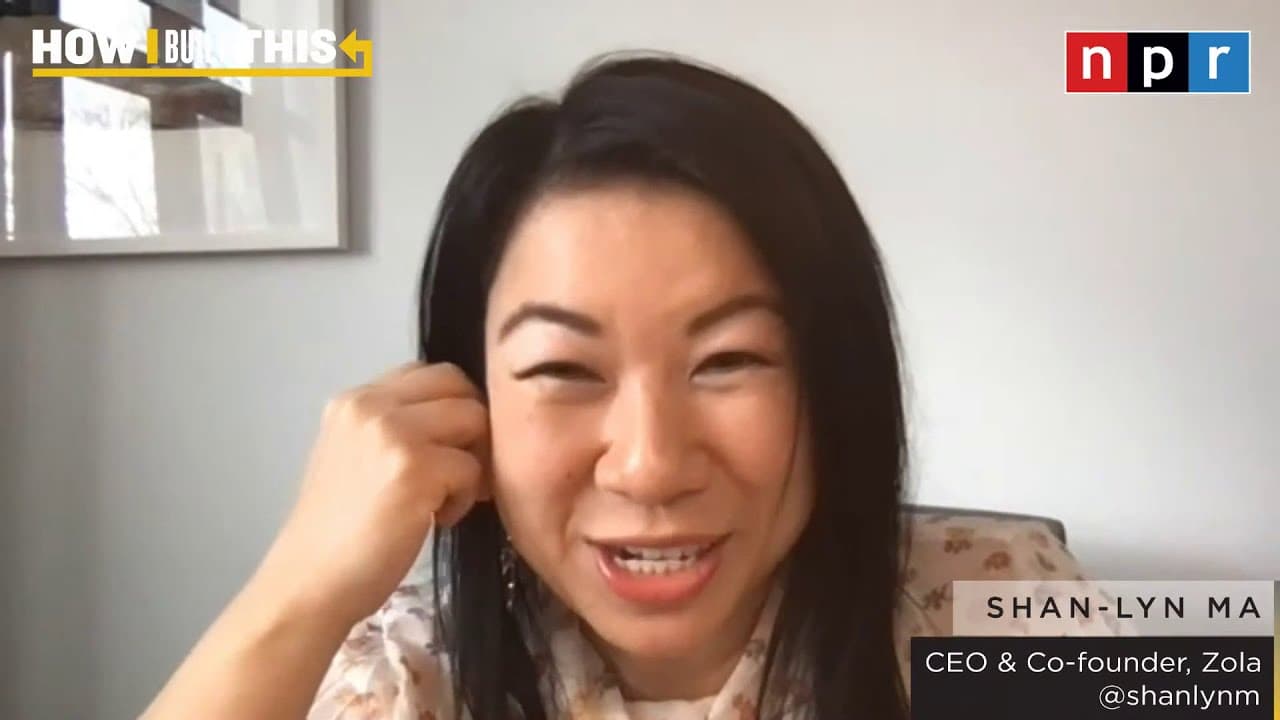
Zola grew by combining an inventory-light wedding registry marketplace with free planning tools and additional products such as invitations, websites, and albums. Co-founder Shan-Lyn Ma identified an underserved customer need, drew on years of product-management experience, secured seed backing through a trusted professional relationship, and used early customer adoption and revenue to support further expansion.
Transcript
hello everyone and welcome to how I built this resilience Edition from NPR I'm guy RZ it's great to have you here uh this is the place of course where we're talking about how businesses are building resilience in these challenging times and before we get to our show today I want to thank uh two of our sponsors uh first to 3M who's using science and... Read More
Key Insights
- Zola is a one-stop wedding platform designed to support couples from engagement through planning, the wedding itself, and their early newlywed years. Its offerings include registries, wedding websites, save-the-dates, invitations, albums, furniture, guest-list tools, and access to wedding vendors.
- Zola originated from a clear customer problem: Ma found buying gifts from friends' registries to be an unusually poor shopping experience, while her co-founder understood similar frustration from the couple's perspective. Their shared product-building experience gave them confidence that they could design a better service.
- Product-management experience is central to Zola's founding story because Ma had learned to work alongside designers and engineers on websites and mobile applications. At Yahoo, experienced product leaders taught her how to create products that customers love and willingly share with friends.
- The wedding market represented an underserved commercial opportunity despite investor skepticism. Ma observed that her friends devoted substantial time and money to weddings, while the average wedding spending figure cited in the interview was $30,000 for a single day intended to create a memorable experience.
- Zola's original registry model is a blend of e-commerce and a marketplace. The company sells products through its platform in a retailer-like experience, while using technology that lets brands drop ship purchases instead of requiring Zola to acquire and hold the registry's broad assortment of inventory.
- The inventory-light model helped Zola fund free planning services. Revenue from registry transactions supported investment in products such as free wedding websites and a guest-list manager, while later expansion into paper invitations introduced a model that Ma compared with a direct-to-consumer business.
- Seed funding came from an established record of trusted work, not a brief introduction. Kevin Ryan, the founder and chairman of Gilt Groupe, had observed Ma and her co-founder working intensely for four years before joining Zola as a co-founder and seed investor.
- Early traction made later fundraising easier because Zola could move beyond an idea and show an operating product. After using seed capital to build and launch its first offering, the company demonstrated real customer use and business results, giving potential funders numerical evidence to evaluate.
Install to Summarize YouTube Videos and Get Transcripts
Explore YouTube Video Summarizer or Get YouTube Transcript Extractor
Questions & Answers
Q: How did Shan-Lyn Ma get the idea for Zola?
Shan-Lyn Ma developed the idea in 2013, when many of her friends were getting married and she was repeatedly buying gifts through their wedding registries. She considered those registries among the worst shopping experiences she had encountered. Her co-founder, Nobu Nakaguchi, described equivalent frustrations for couples, so they decided to apply their shared product-building experience to the problem.
Q: What services does Zola offer engaged couples?
Zola aims to support couples from the day they become engaged through their wedding-planning journey and into their first years as newlyweds. The services discussed include wedding registries, websites, save-the-dates, invitations, guest-list management, albums, furniture, and ways to find vendors such as venues, caterers, florists, and photographers. The platform also began hosting virtual weddings during the pandemic.
Q: How does Zola's wedding registry business model work?
Zola's registry combines elements of e-commerce and a marketplace. Couples can register for products and experiences, and guests can purchase items through Zola in a retailer-like transaction. The underlying technology allows participating brands to drop ship products, which means Zola does not need to purchase and hold the registry's entire broad assortment of inventory before customers place orders.
Q: Why did investors initially doubt Zola's business opportunity?
Some investors argued that weddings could not support a large business because no dominant company had yet emerged. Others questioned whether people spent enough or viewed the industry's fragmentation as evidence that expansion would be difficult. Ma rejected those assumptions because she saw friends committing substantial time and money, an underserved customer need, and a passionate group of potential users.
Q: How did Zola secure its first seed investment?
Kevin Ryan, the founder and chairman of Gilt Groupe, became both a Zola co-founder and its seed investor. He already knew Shan-Lyn Ma and Nobu Nakaguchi from their previous work at Gilt, and he liked the wedding industry. Ma emphasized that the quick decision rested on four years during which Ryan had observed them working intensely and proving their capabilities.
Q: How did Zola reduce the capital demands of its registry?
Zola reduced the need for capital by enabling products to be drop shipped rather than purchasing and storing the full registry assortment itself. Ma said a registry requires a very broad selection, so buying all that inventory would have made the model difficult to operate. Combining marketplace technology with e-commerce transactions provided product variety without the same inventory burden.
Q: How did Zola expand beyond wedding registries?
Revenue from the initial registry business helped finance investment in free products, including wedding websites and a guest-list manager. Zola then expanded into additional offerings and business models, including paper invitations, which Ma characterized as closer to a direct-to-consumer model. The broader platform also came to include save-the-dates, albums, vendor discovery, furniture, and virtual wedding hosting.
Q: What entrepreneurial lessons does Zola's founding story provide?
Zola's founding shows that direct observation of customer frustration can reveal an opportunity even when investors doubt the market. It also shows the value of building relevant product skills and trusted professional relationships before seeking capital. After receiving seed funding, the founders built a working product, attracted users, generated revenue, and used measurable results to make subsequent fundraising easier.
Summary
In this video from NPR's How I Built This Resilience edition, host Guy Raz interviews Shanlin Ma, the founder and CEO of Zola, a one-stop shop for wedding planning. Ma discusses the challenges her business faced during the pandemic and how they pivoted to meet the changing needs of couples. She also shares insights on entrepreneurship and encouraging girls to start their own businesses.
Questions & Answers
Q: What is Zola and what services does it offer?
Zola is a platform that aims to serve couples throughout their entire wedding planning journey. It offers a range of services, from wedding registries and websites to invitations, save-the-dates, and even virtual weddings.
Q: How did the idea for Zola come about?
The idea for Zola came about when Ma and her co-founder, Nobu Nakaguchi, experienced the pain points of shopping for wedding registries firsthand. They saw an opportunity to create a better user experience and decided to start their own company.
Q: How did Ma's background in product management influence the creation of Zola?
Ma's experience in product management, working alongside designers and engineers to build digital websites and mobile apps, gave her the skills and confidence to start her own company. It allowed her to understand how to create products that customers love and want to share with others.
Q: Did Ma face opposition when seeking funding for Zola?
Yes, many investors initially doubted the potential success of a wedding-focused business. They questioned whether people spent enough money on weddings and if there was room for another player in the industry. However, Ma believed there was a strong business opportunity and eventually secured funding from a supportive investor.
Q: How does Zola make money?
Zola initially started with a combination of an e-commerce and marketplace business model. They partnered with brands to sell products through their platform, offering dropshipping to minimize inventory costs. As the business grew, Zola expanded into other revenue streams, such as wedding invitations and home goods.
Q: How did the COVID-19 pandemic impact the wedding industry?
The pandemic caused significant disruptions in the wedding industry, with many weddings being canceled or rescheduled. Couples faced challenges in rescheduling their weddings and turned to Zola for support. The company quickly adapted to help couples navigate these changes and saw a surge in demand for their services.
Q: How did Zola respond to the increased demand during the pandemic?
Zola introduced new features and offerings in response to the changing needs of couples. They launched a wedding vendor search platform, expanded their home goods store, and facilitated virtual weddings through their website. These initiatives were fast-tracked to meet the immediate demands of couples during the pandemic.
Q: Will weddings come back strong in 2022?
According to Ma, there is a strong indication that weddings will rebound in 2022. Many couples are planning their weddings starting from the fall of 2021, and there is a growing sense of optimism and desire for large, in-person celebrations. The wedding industry is expected to see a surge in demand as restrictions ease and couples feel more comfortable planning their events.
Q: How can girls be encouraged to start their own businesses?
Ma emphasizes the importance of providing girls with role models and examples of successful female entrepreneurs. By showcasing women who have broken barriers and achieved success in various industries, girls can be inspired and empowered to pursue their entrepreneurial dreams. It is also crucial to foster creativity and encourage girls to explore different disciplines and pursue their passions.
Q: How can the wedding industry adapt to changing circumstances, such as requiring proof of vaccination at weddings?
Ma acknowledges that the industry may see some instances where couples request proof of vaccination, especially for higher-risk attendees. However, it is still too early to determine if this will become a common practice. The situation will likely evolve as more people get vaccinated, and further guidance is given by health authorities.
Takeaways
Zola, a one-stop shop for wedding planning, faced the challenges of the COVID-19 pandemic by pivoting and offering new services to meet the changing needs of couples. They introduced virtual weddings, expanded their home goods store, and provided support for rescheduling events. Despite initial doubts, Zola has become a major player in the wedding industry, and weddings are expected to bounce back in 2022. Encouraging girls to start their own businesses involves showcasing successful female entrepreneurs as role models and nurturing their creativity and ambitions. The industry may see changes like requiring proof of vaccination at weddings, but the long-term impact remains uncertain.
Summary & Key Takeaways
-
Shan-Lyn Ma and Nobu Nakaguchi founded Zola in 2013 after recognizing that wedding registries created frustrating experiences for gift buyers and couples. Their product-management backgrounds gave them experience working with designers and engineers, helping them create a digital service intended to simplify wedding planning and delight customers enough to encourage sharing.
-
Zola began with a wedding registry that blended e-commerce and marketplace models. Couples could register for products and experiences, while participating brands could drop ship purchases. Avoiding ownership of a broad inventory helped make the model workable, and registry revenue funded free tools such as wedding websites and guest-list management.
-
The founders initially faced skepticism because weddings were fragmented and investors doubted the opportunity. Kevin Ryan provided seed funding after observing Ma and Nakaguchi work intensely at Gilt Groupe for four years. Zola then launched its product, demonstrated customer use and revenue, and expanded into websites, stationery, albums, vendor discovery, and virtual weddings.
-
Key Insights
Read in Other Languages (beta)
Share This Summary 📚
Summarize YouTube Videos and Get Video Transcripts with 1-Click
Try YouTube Summary with ChatGPT & Claude or YouTube Transcript Generator
Explore More Summaries from NPR 📚




Summarize YouTube Videos and Get Video Transcripts with 1-Click
Try YouTube Summary with ChatGPT & Claude or YouTube Transcript Generator