Achievement, Anxiety, and Entrepreneurship | How I Built This with Guy Raz | NPR
TL;DR
Introverted and anxious entrepreneurs can succeed without becoming endlessly charismatic or socially available. The practical approach is to manage energy, treat public speaking and meeting leadership as learnable skills, and maintain relationships through a weekly outreach habit involving several weaker ties. Offering sincere praise or a LinkedIn endorsement can also interrupt anxious thinking while strengthening a professional network.
Transcript
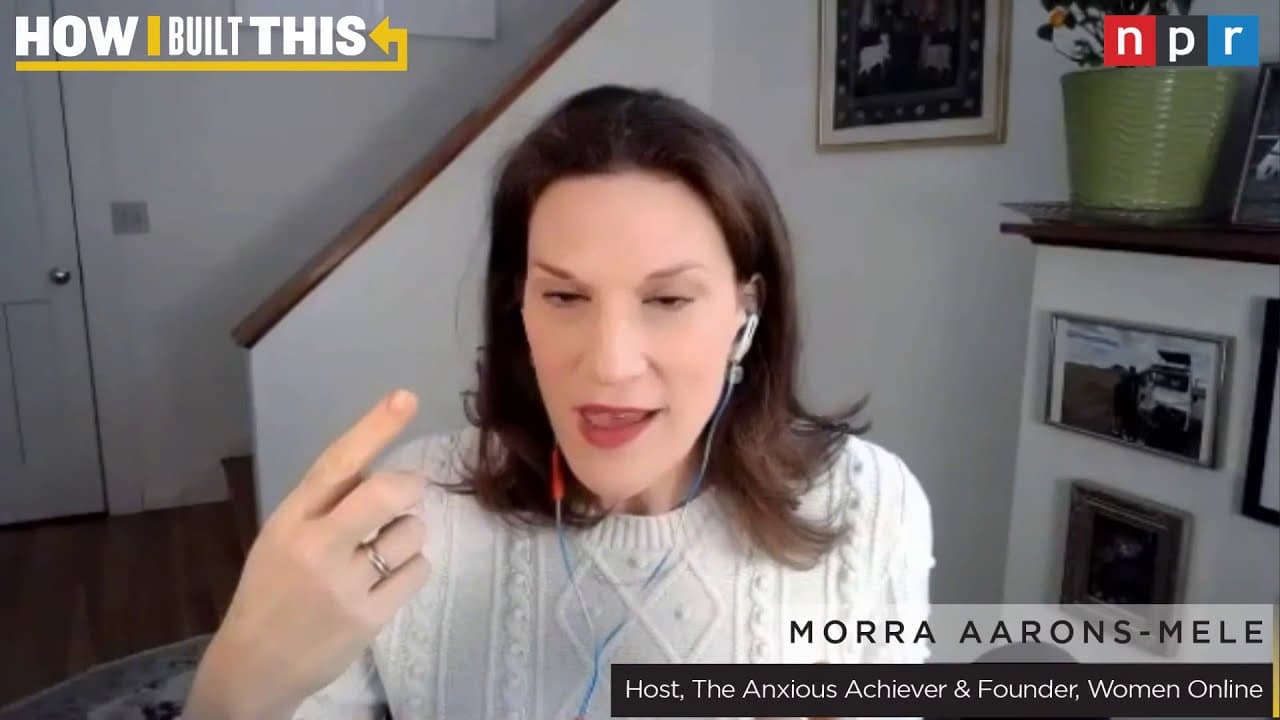
hello and welcome to how i built this resilience edition from npr i'm guy roz i hope everyone is doing well this is where we're talking about how businesses are building resilience during these very challenging times and today my guest is maura aaron smelly she's the host of the anxious achiever it's a podcast that looks at work life and mental hea... Read More
Key Insights
- Introversion is a need to manage energy and stimulation, rather than an inability to speak, lead, entertain, or connect. An introvert may confidently command a large audience and still need solitude, reduced stimulation, or an early night afterward.
- Shyness is not a defining requirement of introversion. Introverts can be funny, talkative, charismatic, or effective in prominent leadership roles, while still finding crowded environments, loud spaces, prolonged meetings, and constant interaction physically or mentally exhausting.
- Leadership presence is a learnable skill similar to running a meeting or using a professional tool. Entrepreneurs who care deeply about their work can practice presenting it compellingly, even when they do not naturally resemble the tireless, commanding salesperson associated with traditional leadership.
- The stereotype of successful entrepreneurs as tireless, charismatic, and constantly available does not represent many people who actually run businesses. Aarons-Mele called this idealized portrayal "entrepreneurship porn" when writing about the gap between public imagery and entrepreneurial reality.
- Women Online is a virtual digital marketing company built without a physical office. Its team creates digital campaigns intended to mobilize women for social change, drawing on Aarons-Mele's early experience of seeing personal, truthful online expression influence other people.
- The Anxious Achiever is a creative project rooted in Aarons-Mele's experience with clinical anxiety and entrepreneurship. She created it because running a business while managing several forms of anxiety was difficult, and she could not find the practical roadmap she needed.
- The ten touches rule is a recurring relationship-building practice for contacting several people in an extended network each week. The contacts can be weak ties, including former collaborators or acquaintances, and the weekly target can be adjusted below ten when necessary.
- Giving sincere professional encouragement can strengthen relationships and improve the giver's mood. Aarons-Mele recommends actions such as endorsing a respected person on LinkedIn, especially when anxiety causes inward rumination, because focusing constructively on someone else can change the emotional direction of the day.
Install to Summarize YouTube Videos and Get Transcripts
Explore YouTube Video Summarizer or Get YouTube Transcript Extractor
Questions & Answers
Q: How can introverts succeed as entrepreneurs?
Introverts can succeed by managing their energy instead of assuming they must change their personality. Public speaking, persuasive communication, and meeting leadership can be learned through practice. An introverted entrepreneur may perform confidently before a large audience but need quiet recovery afterward. Building less stimulation and more solitary time into the schedule makes demanding professional interaction more sustainable.
Q: What is the difference between introversion and shyness?
Introversion concerns how a person responds to stimulation and restores energy, while shyness is not presented as a required characteristic. An introvert may be talkative, funny, confident, or capable of holding the attention of thousands of people. The distinguishing experience is that crowded rooms, loud surroundings, long meetings, and sustained social contact can become exhausting and create a need for solitude.
Q: Do entrepreneurs need charisma to build successful businesses?
Entrepreneurs do not need to begin as naturally charismatic performers. The interview argues that the image of a leader as an endlessly confident salesperson comes from an older command-and-control model. Holding a room, discussing work persuasively, and running meetings are skills that can be learned. Authentic enthusiasm for meaningful work can help an entrepreneur communicate in a compelling way.
Q: What is the ten touches rule for networking?
The ten touches rule is a weekly habit of reaching out to people in an extended professional or personal network. The contacts should include weak ties, such as someone from a project several years earlier or an acquaintance who recently changed jobs. The number is flexible, so an anxious or introverted person might contact five or seven people instead of ten.
Q: How can socially anxious people maintain a professional network?
Socially anxious people can create a repeatable outreach method instead of waiting until contact feels comfortable. Each week, they can identify several weak ties and send messages, make calls, share useful content, or acknowledge changes in those contacts' lives. The interview presents consistent outreach as a way to keep relationships active and continue developing a business pipeline despite anxiety.
Q: Why can praising someone help with anxiety?
Praising another person redirects attention away from anxious internal rumination and toward a constructive act. Aarons-Mele suggests writing a LinkedIn endorsement for someone respected or publicly recognizing valuable work. She says this can change the giver's mood while also strengthening the relationship. Encouragement can remain memorable for years, particularly when it comes from a mentor or senior colleague.
Q: What is The Anxious Achiever about?
The Anxious Achiever is a podcast examining work life and mental health. Aarons-Mele created it from her experience of having clinical anxiety, including several kinds of anxiety, while running a business. She wanted a roadmap for anxious entrepreneurship but could not find one, so the project became a creative outlet for exploring the less polished realities of achievement and leadership.
Q: What does Women Online do?
Women Online is a digital marketing agency founded by Morra Aarons-Mele. The company has always operated virtually and has never maintained an office. Its team creates digital campaigns designed to mobilize women for social change. The organization has worked on three presidential campaigns and with prominent change makers and institutions identified in the interview, including Malala Yousafzai and the United Nations.
Summary
In this episode of "How I Built This: Resilience Edition," host Guy Raz interviews Maura Aaron Smale about her experience as an introverted entrepreneur and how she manages anxiety in the business world. Maura shares insights and advice for navigating networking events, managing energy levels, and finding a balance between vulnerability and oversharing. She also discusses the impact of the pandemic on her business and the importance of resilience and adaptability.
Questions & Answers
Q: Can you tell us a little bit about the anxious achiever and women online?
Maura Aaron Smale explains that she has two jobs: running Women Online, a digital marketing agency that mobilizes women for social change, and hosting The Anxious Achiever podcast. Women Online has worked with high-profile clients such as Malala Yousafzai and the United Nations. The Anxious Achiever was created to support people with anxiety, leveraging Maura's personal experience and journey as an entrepreneur.
Q: How does being an introverted and anxious entrepreneur affect your day-to-day life?
Maura explains that being an introvert and experiencing anxiety can sometimes be challenging in an entrepreneurial role. She discusses the importance of managing her energy and balancing her need for alone time with the demands of running a business. While she may appear extroverted in public settings, it can be draining, and she relies on finding moments of solitude to recharge.
Q: Is it necessary to be charismatic and outgoing to be a successful entrepreneur?
Maura challenges the assumption that entrepreneurs need to be charismatic and outgoing to succeed. She emphasizes that authenticity and passion are more important than being a natural extrovert. While learning to hold a room and engage with others can be a valuable skill, it does not determine one's ability to succeed as an entrepreneur.
Q: When did you realize you could turn your observations and experiences into a business and create a podcast and book?
Maura shares that her realization came after writing an article called "Entrepreneurship Porn" for Harvard Business Review. The article resonated with people, which inspired her to explore and share the realities of running a business. She recognized a need for honest conversations about entrepreneurship and decided to create The Anxious Achiever podcast and write the book "Hiding in the Bathroom."
Q: You created the ten touches rule for networking. Do you still follow it during the pandemic?
Maura explains that she actually increased her networking efforts during the pandemic. The ten touches rule, which involves reaching out to ten people in your extended network each week, is a way to stay connected and build relationships. While in-person meetings may not be possible, she suggests finding alternative ways to connect, such as video calls or sending emails.
Q: What are some coping mechanisms for managing anxiety and introversion at networking events?
Maura advises introverts to embrace their strengths, such as active listening and thoughtful conversations, during networking events. She recommends initiating conversations with a simple question like, "What brings you here?" and letting the other person do the talking. Additionally, she highlights the importance of leaving an event if it causes too much anxiety, as self-care is crucial.
Q: How do you balance vulnerability and over-sharing as a leader with anxiety?
Maura suggests finding a balance between vulnerability and over-sharing, especially in a professional setting. She recommends acknowledging anxiety and struggles to foster an environment of openness but advises against sharing personal details that might overwhelm or distract from the work. Being strong and vulnerable, while knowing the boundaries, can help establish trust and connection with a team.
Q: Are there any guidelines or principles for managing energy levels, especially for someone with bipolar tendencies?
Maura shares her own experience with managing energy levels and explains the importance of recognizing one's patterns and triggers. For high-energy moments, she suggests finding ways to channel that energy, such as using a fidgeting prop. When energy levels are low, she recommends taking breaks, going outside, practicing deep breathing, and engaging in activities that promote relaxation.
Q: Should I wear makeup for a Zoom call with an important person?
Maura advises considering one's personal brand and the image they want to present before deciding whether to wear makeup for a Zoom call. There is no one-size-fits-all answer, as individual preferences and comfort levels differ. It's important to wear what makes you feel powerful and authentic rather than focusing solely on external judgments.
Q: How do you build resilience within yourself and your business during the disruption of 2021?
Maura emphasizes the importance of adaptability and resilience in the face of uncertainty. She shares her experience of navigating the challenges brought by the pandemic and the subsequent shift to virtual events. By empowering her team and allowing them to take charge in finding solutions, she was able to overcome obstacles and successfully pivot. Looking forward, she aims to continue building resilience and adaptability in her business.
Summary & Key Takeaways
-
Morra Aarons-Mele founded Women Online, a virtual digital marketing agency that creates campaigns mobilizing women for social change. Drawing on her experience with clinical anxiety, social anxiety, and entrepreneurship, she also created The Anxious Achiever as a roadmap for discussing the realities of work, leadership, achievement, and mental health.
-
Introversion is primarily an energy-management issue, not proof that someone is shy, quiet, awkward, or incapable of leadership. Introverts can speak publicly, entertain large audiences, and communicate persuasively, but they may need fewer stimuli and more recovery time afterward. Leadership presence can be developed as a practical, repeatable professional skill.
-
The ten touches rule encourages regular contact with several people from an extended network, such as former collaborators or acquaintances whose lives have changed. During periods without in-person meetings, messages, calls, shared content, praise, and LinkedIn endorsements can preserve relationships, support a business pipeline, and redirect attention away from anxious rumination.
Read in Other Languages (beta)
Share This Summary 📚
Summarize YouTube Videos and Get Video Transcripts with 1-Click
Try YouTube Summary with ChatGPT & Claude or YouTube Transcript Generator
Explore More Summaries from NPR 📚

Summarize YouTube Videos and Get Video Transcripts with 1-Click
Try YouTube Summary with ChatGPT & Claude or YouTube Transcript Generator