Jennifer Hyman on Reacting to COVID-19 with Guy Raz | How I Built This | NPR
TL;DR
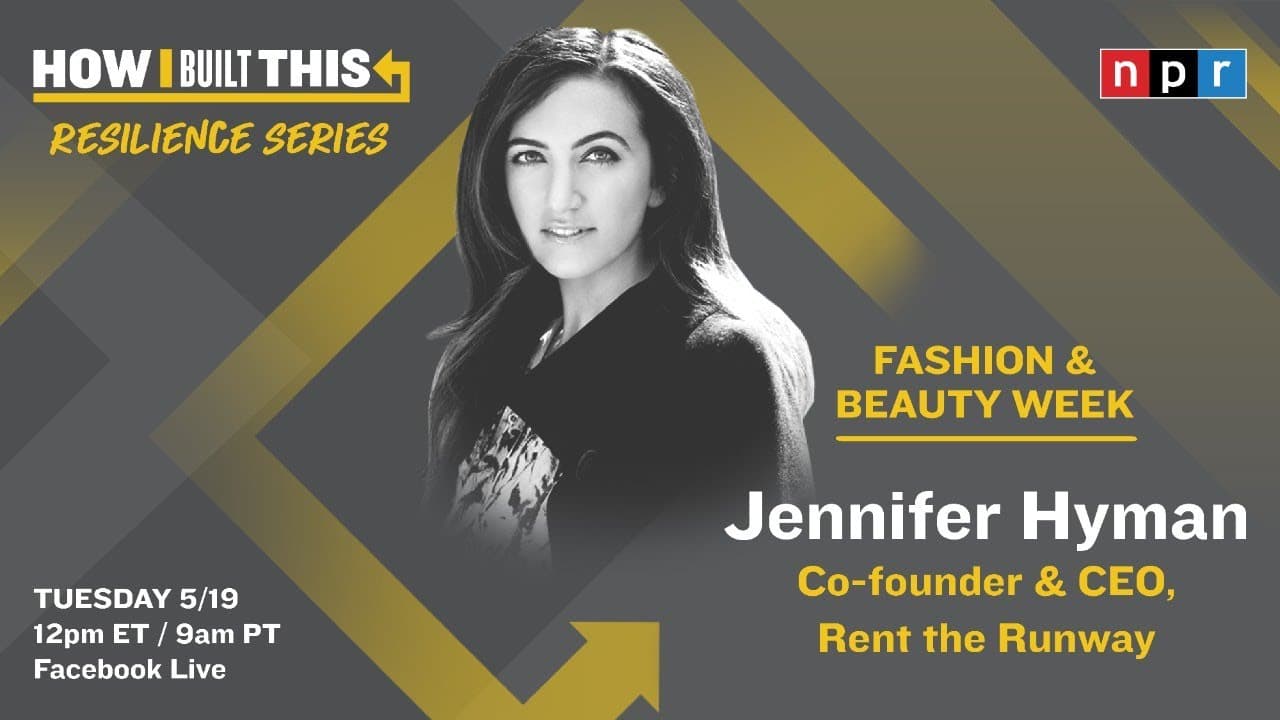
Rent the Runway responded to COVID-19 by first cutting all non-people expenses (capital, inventory, marketing, technology budgets), then executing a small layoff and larger furlough across every division. Founder Jennifer Hyman splits the crisis into two phases: surviving shelter-at-home and recovering into a recession where customers prioritize value, sustainability, and online shopping.
Transcript
hello and welcome to how I built this resilience edition thank you all for being here this is fashion and beauty week here on resilience edition and we are taking your questions right now on YouTube on Facebook and on Twitter for Jen Hyman of Rent the Runway I'm super excited about this conversation as many of you know the fashion industry has been... Read More
Key Insights
- Rent the Runway's business depends on people leaving their homes, since getting dressed is largely an external act; when people shelter at home, they focus far less on clothing, causing revenue to drop dramatically.
- The first crisis response was cutting every non-people expense possible, from capital expenditures to inventory, marketing, and technology budgets, which effectively restructured the business financially before touching staff.
- When shelter-at-home shifted from a short-term to a multi-month reality, the company executed a small layoff and a much larger furlough across every single division, decisions Hyman calls the most challenging of her career.
- Hyman frames the crisis in two distinct phases: making it through shelter-at-home, where thriving is random, and the longer recovery into a recessionary environment where customer values will be different.
- COVID-19 compressed roughly ten years of economic trend acceleration into two months, shifting sales from offline to online, from waste to sustainability, and toward a renewed focus on value and quality.
- Sitting at home staring at overstuffed closets makes people realize they can live with less, strengthening Hyman's belief in the circular economy and pointing toward second-hand resale as a bigger part of the vision.
- The core value 'everyone's a founder' means empowering all employees to take risks and make fast decisions, because the company needs everyone's collective brainpower more than ever during the crisis.
- Radical transparency, sharing all numbers, decisions, and the reasoning behind them in weekly all-hands meetings, both empowers employees to decide quickly and breeds the deep trust a company needs during a crisis.
Install to Summarize YouTube Videos and Get Transcripts
Explore YouTube Video Summarizer or Get YouTube Transcript Extractor
Questions & Answers
Q: How did Rent the Runway respond to the COVID-19 revenue drop?
Rent the Runway first looked at all non-people expenses across the company and cut everything possible, including capital expenditures, inventory, marketing budgets, and technology budgets, effectively restructuring the business financially. After about two more weeks, when it became clear shelter-at-home would last many months rather than being short-term, the company executed a small layoff and a much larger furlough of its employee base across every single division of the company.
Q: Why was Rent the Runway hit hard by the pandemic?
So much of Rent the Runway's business is based on people leaving their homes, whether going to work or hanging out with friends. Jennifer Hyman explains that getting dressed is somewhat an external act, where you get dressed for something. When people are sheltered at home, they focus a lot less on getting dressed and on clothing in general, which caused revenue to drop pretty dramatically during the shelter-at-home period.
Q: What are the two phases Jennifer Hyman uses to think about the crisis?
Hyman thinks about the period in two distinct phases. First is the period of making it through shelter-at-home, a time she describes as random in terms of which businesses thrive, bearing no resemblance to life before or after. Second is the larger period of recovery, which she notes is a recovery into a recessionary environment where people will have a different set of values, requiring the company to think about who it wants to be.
Q: What trends did COVID-19 accelerate according to Rent the Runway?
Hyman says the last two months compressed almost ten years of trend acceleration into a short period. She identifies a movement from offline sales to online sales, a shift from waste to sustainability as people stare at overstuffed closets and realize they can live with less, and a renewed focus on value, quality, and affordability as tens of millions of people lose their jobs and rethink how they spend money.
Q: How does Rent the Runway plan to expand in the circular economy?
Coming out of the crisis, Hyman says she is an even bigger believer in the circular economy, which the company pioneered. While Rent the Runway has been a big player in rental and subscription, she thinks the world of second-hand for-sale could become a bigger piece of the company's vision. The goal is to become a larger player in the circular economy and truly own the message of sustainability.
Q: What does 'everyone's a founder' mean at Rent the Runway?
One of the company's core values is that everyone is a founder of Rent the Runway. To Hyman, being a founder means taking risks, making decisions quickly, feeling a sense of ownership, and feeling passion for the work. During the crisis she spent a lot of time trying to empower everyone at the company to act like a founder and make important, quick decisions, because the company needs everyone's collective brainpower more than ever before.
Q: Why does Rent the Runway emphasize transparency during the crisis?
Hyman says the company changed how it leads by holding weekly all-hands meetings that share all decisions, the reasoning behind them, and all the data, being as transparent as possible. Transparency does two things: it empowers people with data to make decisions quickly for themselves, which the company needs, and it breeds deeper trust. She stresses that during a crisis you need trust more than anything, and their approach to trust is through transparency.
Q: What emotional challenge did Jennifer Hyman describe during the pandemic?
Hyman says the hardest part was not the revenue drop but the acknowledgement that the company was built on the collective energy of thousands of people over the past decade believing in a vision of a smarter way to get dressed. She describes feeling like everyone pushed a boulder up a mountain together, and her moment-to-moment fear is that the boulder cannot be allowed to drop, owing it to everyone who ever believed in the vision to keep it alive.
Summary
In this video, Guy Raz interviews Jen Hyman, the CEO of Rent the Runway, a company that offers clothing and accessory rentals through subscriptions. They discuss how the fashion industry has been impacted by the economic crisis and how businesses are trying to build resilience. Hyman talks about the challenges Rent the Runway has faced, including laying off and furloughing employees and closing physical stores. She also discusses the importance of making decisions based on values and the changes she has made in leadership during this time. Hyman addresses criticisms of the fashion industry and explains why she believes fashion is still important in people's lives. She also shares her thoughts on the future of the industry and how Rent the Runway is looking to pivot and expand its offerings.
Questions & Answers
Q: How has the fashion industry been affected by the economic crisis?
The fashion industry has been hit hard by the economic crisis, with many businesses experiencing a drop in revenue. People are focusing less on getting dressed and clothing in general while sheltered at home. The challenge for Rent the Runway is not just about revenue drop, but also about maintaining the vision and energy of the company that thousands of people have believed in over the past decade.
Q: What difficult decisions has Rent the Runway had to make during this time?
Rent the Runway had to cut non-essential expenses throughout the company and financially restructure the business. As it became clear that the shelter at home period would last for a longer duration, the company had to execute a small layoff and a larger furlough of its employee base. These decisions were gut-wrenching but necessary to ensure the survival of the company during this crisis.
Q: How will the fashion industry look when it comes out of the crisis?
The fashion industry is likely to see a shift towards online sales rather than offline sales. The crisis has accelerated trends that were already happening, such as the movement towards sustainability and the focus on value. Rent the Runway is investing in enabling people to personalize their subscriptions and buy from their website in addition to renting. They are also looking to become a larger player in the circular economy and own the message of sustainability.
Q: How is Rent the Runway keeping its fulfillment centers open during this time?
Rent the Runway keeps its warehouses and fulfillment centers open because the business cannot survive without them. The company prioritizes the safety and health of its employees and operates with safety measures to minimize the risk of spreading the virus. Closing down the warehouses would mean not having any revenue coming in, which is an unsustainable situation for most businesses.
Q: How has this crisis changed the way you think about leadership?
This crisis has forced leaders to make decisions with incomplete information and without knowing what the future holds. It has highlighted the importance of making decisions based on values and being transparent with your team. Transparency not only empowers individuals to make quick decisions, but it also fosters deeper trust within the organization. Jennifer Hyman believes in empowering her team to act like founders and encourages open communication and transparency.
Q: How do you stay positive during this challenging time?
Jennifer Hyman acknowledges that it is difficult to stay positive during this time and that she has moments where she feels overwhelmed. She finds support and joy by reaching out to her network of peers, not to ask for advice or give advice, but simply to be a friend and listen to what they're going through. She also emphasizes the importance of being present for her team and creating intimacy through one-on-one meetings and coffee chats, which has brought her hope and joy.
Q: How do you address criticisms that fashion is trivial during this time?
Jennifer Hyman believes that anything that brings normalcy and joy into our lives during this challenging time is important. Fashion has the power to change lives and can provide a sense of confidence and normalcy. She rejects the notion that the fashion industry is frivolous and argues that it is one of the most important and largest industries on earth. Rent the Runway aims to democratize the power of fashion and bring joy to people's lives.
Q: Are you considering pivoting Rent the Runway to other products and industries?
Rent the Runway has already expanded into other product categories, such as ski gear and activewear, and is open to further partnerships and expansions. Jennifer Hyman believes in becoming a larger player in the circular economy and enabling people to personalize their subscriptions. The company aims to be a better partner to designers and is exploring ways to offer more value and sustainability to its customers.
Q: How do you envision the future of work and its impact on women's empowerment?
Jennifer Hyman believes that this crisis may be a turning point for women's empowerment, particularly in terms of remote work. It has proven that work can be done from anywhere and in a more balanced and thoughtful way. The physical sacrifices that have been made in the past, such as leaving the workforce after having kids, may no longer be necessary. She hopes that this reset moment will lead to a greater focus on relationships, human connection, and work-life balance.
Takeaways
The COVID-19 crisis has posed significant challenges for the fashion industry, including plummeting revenue and the need for difficult decisions regarding layoffs and furloughs. Rent the Runway has been proactive in cutting expenses and shifting its focus to online sales and sustainability. Jennifer Hyman's leadership philosophy has evolved during this time, prioritizing values and transparency in decision-making. She sees this crisis as an opportunity to reshape the industry and work culture, with a greater emphasis on work-life balance and remote work. Ultimately, the crisis has highlighted the importance of relationships and human connection in both business and personal life.
Summary & Key Takeaways
-
Jennifer Hyman, founder of Rent the Runway, joined Guy Raz for NPR's How I Built This resilience edition. Her subscription apparel-rental business was hit hard because it depends on people leaving home; when customers shelter at home, they focus far less on getting dressed, and revenue dropped dramatically during the period.
-
The company first cut every non-people expense, from capital expenditures to inventory, marketing, and technology, restructuring finances effectively. When it became clear shelter-at-home would last months rather than being short-term, Rent the Runway executed a small layoff and a much larger furlough across every division, decisions Hyman called the most gut-wrenching of her career.
-
Hyman sees two phases: surviving shelter-at-home and recovering into a recession. She expects accelerated shifts toward online sales, sustainability, and value, plus a bigger role in the circular economy through second-hand resale. Internally, she embraces the 'everyone's a founder' value and radical transparency to empower fast decisions and build trust.
Read in Other Languages (beta)
Share This Summary 📚
Summarize YouTube Videos and Get Video Transcripts with 1-Click
Try YouTube Summary with ChatGPT & Claude or YouTube Transcript Generator
Explore More Summaries from NPR 📚



Summarize YouTube Videos and Get Video Transcripts with 1-Click
Try YouTube Summary with ChatGPT & Claude or YouTube Transcript Generator