How to Build Reliable AI Agent Skills in Practice
TL;DR
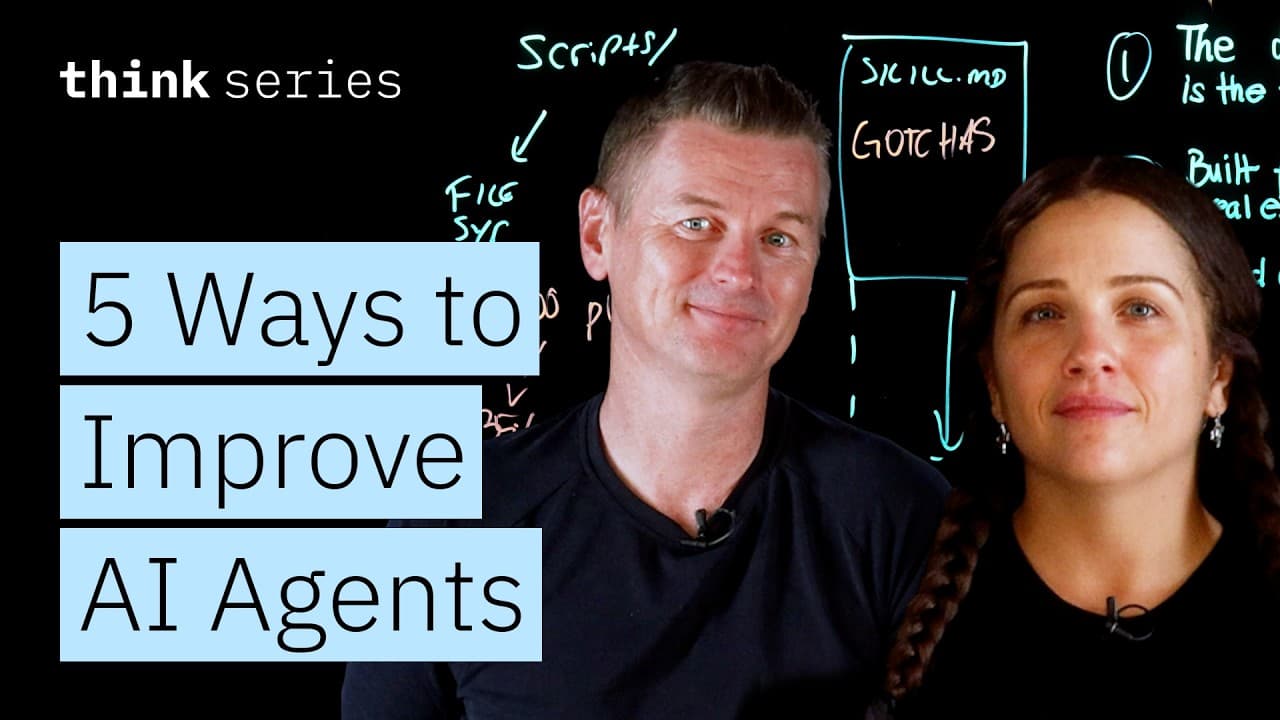
The most useful fact is to design skills so they trigger reliably by writing precise names and descriptions that explain when to use them. Build from real hands on expertise by recording what works and including gotchas. Keep skill bodies lean, split large bodies into references, and use deterministic scripts for fragile steps while vetting every skill before running it.
Transcript
Agent skills are about the simplest way there is to make an AI agent better at a specific job. Because they're so simple, they're also really easy to get wrong. Yeah, so we are going to cover the five agent skills best practices for building these skills. And a quick reminder of what a skill even is. It's procedural knowledge handed to an AI agent.... Read More
Key Insights
- A skill is the procedural knowledge that tells an AI agent how to perform a job.
- Trigger design is crucial because the agent decides when to use a skill based on the description.
- Skills should be built from real expertise, not just prompts, by capturing practical corrections and existing artifacts.
- Too much detail in the skill body harms context limits; keep core knowledge concise and essential.
- Deterministic scripts should replace fragile in steps that must be exact, reducing errors.
- Scripts reside in a separate directory and are invoked by the skill to avoid improvisation by the model.
- Progressive disclosure reduces context load by placing extra references in a separate folder.
- Vet skills before use due to potential security risks and harmful behavior from untrusted code.
- More videos from this channel:
- More from this channel: IBM Technology
Install to Summarize YouTube Videos and Get Transcripts
Explore YouTube Video Summarizer or Get YouTube Transcript Extractor
Questions & Answers
Q: How to ensure a skill actually triggers when needed
A skill should be described with a clear name and a descriptive text that tells the agent not only what the skill does but also when it should be used. The description should be specific enough to differentiate similar skills and should be designed to avoid being ignored due to overly vague language. This helps the agent decide to run the skill at the appropriate time.
Q: What is meant by building from real expertise
Building from real expertise means capturing practical methods, corrections, and artifacts from actual work. Use hands on walkthroughs and synthesize information from run books, old reports, and feedback to craft a skill body that reflects how work is done in the real world. This makes the skill accurate and actionable.
Q: Why keep the skill body lean
The skill body must stay lean because the model has limited context window and already knows general concepts. Include only information not already part of the AI model's training data, focusing on unique, environment specific details and corrections. This preserves context for the crucial parts and improves performance.
Q: What is the role of deterministic scripts
Deterministic scripts are used for steps that must be exact and reliable. If a step could be error prone, replace it with a script that performs the operation exactly as written. The model then calls the script rather than improvising, reducing variability and improving trust in outcomes.
Q: How should you handle long or risky content
Long or risky content should be placed in a references folder and accessed only when needed. Use progressive disclosure to reveal it later, minimizing token usage and cognitive load. This keeps the immediate skill body manageable while still providing access to deeper information when necessary.
Q: What should you do to vet a skill before use
Vet a skill by reviewing its code, dependencies, and potential external reach before running it. Look for any access to local files, secrets, or external APIs. The goal is to prevent security flaws, prompt injections, or malware by understanding what the skill can reach and how it behaves.
Q: How does triggering relate to context window management
At startup the agent only reads the skill name and description; the rest of the skill body is loaded when a skill is selected. This approach maximizes context efficiency, ensuring the most relevant information is in the model's active context while keeping rest offline until needed.
Q: What is the benefit of framing skills as a standard
Using a standardized skill format ensures consistency and interoperability across platforms. It makes it easier to manage many skills, compare behavior, and implement best practices. However, safety and vetting remain essential because a standard does not guarantee security or correctness of individual skills.
Summary & Key Takeaways
-
A skill should trigger reliably by having a clear name and description that tell the agent when to run it and what it does. The description should be verbose enough to catch the right scenarios but concise enough to fit the context window. This reduces missed activations and incorrect executions.
-
Skills should be built from real expertise, not generic outputs. Capture hands on corrections and artifacts like run books, reports, and feedback to create accurate, domain specific bodies that resist generic mistakes.
-
Keep the skill content lean and safe. Put long or detailed information in a references folder, use progressive disclosure to reveal it only when needed, and replace risky steps with deterministic scripts to improve reliability and safety.
Read in Other Languages (beta)
Share This Summary 📚
Summarize YouTube Videos and Get Video Transcripts with 1-Click
Try YouTube Summary with ChatGPT & Claude or YouTube Transcript Generator
Explore More Summaries from IBM Technology 📚


Summarize YouTube Videos and Get Video Transcripts with 1-Click
Try YouTube Summary with ChatGPT & Claude or YouTube Transcript Generator