How to Answer Difficult IELTS Speaking Questions
TL;DR
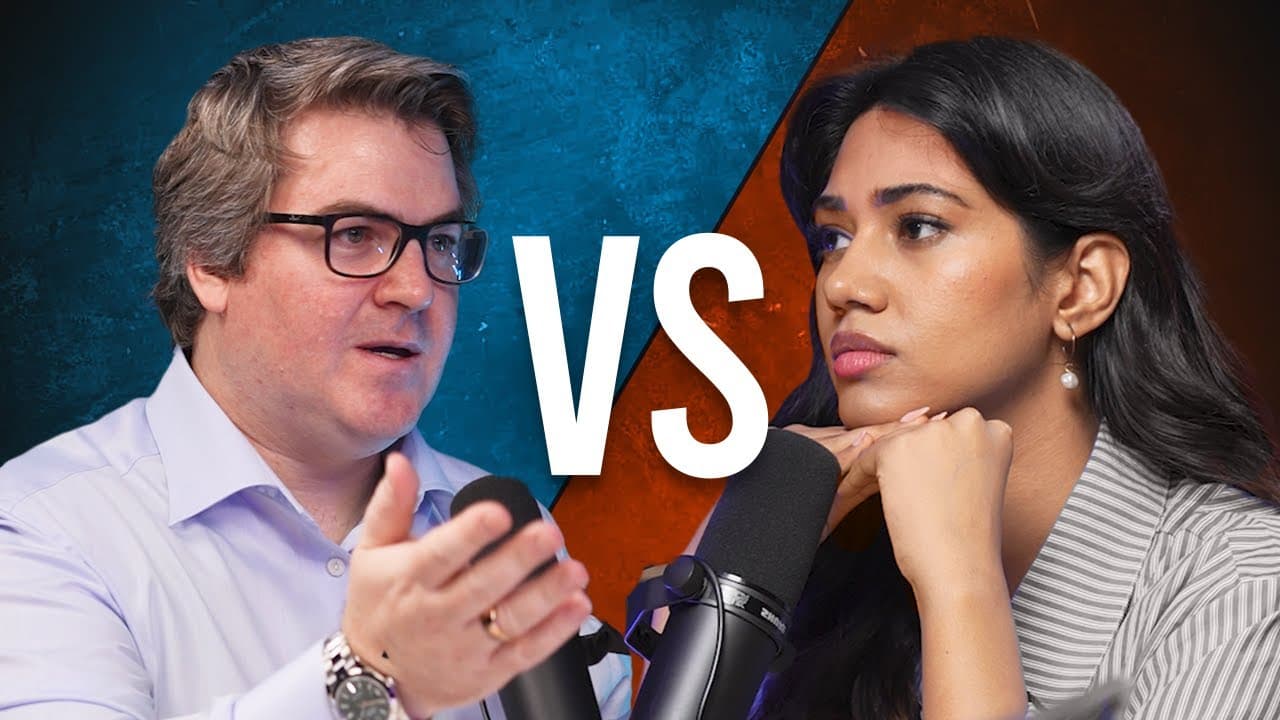
Strong IELTS Speaking answers acknowledge complexity, take a clear position, and support it with a specific personal story or example. When a question is difficult, ask for repetition if necessary, organize the response around a central idea, explain both sides honestly, and keep speaking even when vocabulary becomes repetitive or the answer is not perfect.
Transcript
welcome to the IELTS speaking test Let's start off by talking about online education In the future do you think that AI will replace teachers in the classroom Yeah I mean come on guys This is not that difficult Like this is the first question That's quite complicated though It's not a simple answer Come on You can do better than this You think it's... Read More
Key Insights
- Complex IELTS questions are easier to answer when they are connected to a specific personal experience. Chris grounds abstract subjects in memories about his father, his family, business leadership, technology use, and a career change from corporate law to teaching English.
- Requesting repetition is a valid response when a question is difficult to process. Chris asks to hear the question about personal ambitions and social or familial obligations again, then gives a detailed answer centered on the conflict between building his company and spending time with family.
- A strong extended answer is built around a clear tension or central idea. Chris explains that working on IELTS Advantage supports his family financially while simultaneously reducing the time he can spend with them, creating a conflict that gives his response depth and coherence.
- Leadership responsibility sometimes requires action outside a person's comfort zone. Chris describes performance discussions and dismissing employees as emotionally difficult, especially because he is introverted, but says avoiding those duties could harm the company and other team members.
- Technology can provide major professional benefits while intruding on personal life. Chris credits cameras and computers with helping him communicate globally and operate his business, yet admits that email, website data, and comments make it difficult for him to switch off at home.
- Discipline creates periods of freedom by concentrating work into demanding sprints. Chris describes filming for a week and working 16 to 18 hours a day so he can later visit the beach, travel, or spend enjoyable time with his family.
- A minor decision can produce consequences that could not reasonably be anticipated. Buying a TEFL book led Chris to complete a CELTA course, move to Vietnam, teach English, meet his wife, have his son, and establish his education business.
- Long-term decision making is difficult because immediate rewards are more visible than distant costs. Chris uses eating at McDonald's to contrast short-term pleasure with later weight gain and a possible heart attack, illustrating what he calls first, second, and third order consequences.
Install to Summarize YouTube Videos and Get Transcripts
Explore YouTube Video Summarizer or Get YouTube Transcript Extractor
Questions & Answers
Q: How should you answer difficult IELTS Speaking questions?
Start by identifying one clear idea that directly addresses the question, then support it with a personal story, example, or consequence. If the wording is difficult, ask for repetition before answering. Chris demonstrates that an effective response can acknowledge complexity, present both sides, and include honest uncertainty without requiring perfect vocabulary or an instantly polished opinion.
Q: Can you ask the examiner to repeat an IELTS Speaking question?
The demonstration shows Chris asking for the question about personal ambitions and familial obligations to be repeated. After hearing it again, he answers fully by describing the tension between developing IELTS Advantage and spending time with his family. Repetition gives him another opportunity to process the wording and identify a useful personal example.
Q: How can personal stories improve an IELTS Speaking answer?
Personal stories turn an abstract prompt into a specific and logically connected response. Chris answers questions by describing his father's work as a chef, difficult leadership duties, family sacrifices, and the purchase of a TEFL book. Each story supplies context, concrete details, emotions, and consequences, allowing him to continue speaking while remaining relevant to the original question.
Q: What should you do if you repeat vocabulary while speaking?
Continue developing the idea instead of abandoning the answer. While discussing technology, Chris notices that he keeps saying "coding" and openly comments that the repetition is not good. He still completes the response by explaining why coding would save money and help him create products such as apps, student feedback tools, or a Chris bot.
Q: How can you answer an IELTS question with yes and no?
State that both positions have merit, then explain the conditions supporting each side. Chris says society both does and does not rely too heavily on digital tools. Technology enables his global communication and business operations, but it also enters his personal life through constant checking of email, website information, data, and comments, making it difficult to switch off.
Q: How do you extend an answer about responsibility and freedom?
Define the conflict, describe a personal method, and admit any limitation. Chris says his roles as a father and business owner require responsibility, while freedom remains highly important to him. He works intensely in sprints, including filming days lasting 16 to 18 hours, to create later freedom for beaches, travel, and family holidays, while acknowledging neglected health responsibilities.
Q: How can a small decision change a person's career?
Chris describes buying a TEFL book from a charity shop while operating an online bookstore after being laid off from corporate law during the 2008 financial crisis. Reading it led him to a CELTA course, English teaching, and a move to Vietnam. Those steps eventually connected him with his wife, son, business, and a profession better suited to him than law.
Q: Why is predicting the long-term impact of decisions difficult?
Immediate consequences are easier to notice and value than distant ones. Chris illustrates this with a McDonald's meal: the first consequence is enjoyable food, the second is gaining weight, and the third is a possible future heart attack. He argues that people seek short-term pleasure while struggling to predict consequences that may occur much later.
Summary & Key Takeaways
-
Difficult IELTS Speaking questions become manageable when the respondent connects abstract topics to concrete experiences. Chris answers questions about education, family obligations, leadership, technology, freedom, health, and career changes by selecting relevant stories, stating his position, and explaining the consequences behind his choices rather than searching for a flawless response.
-
The answers demonstrate several practical speaking techniques: requesting repetition, acknowledging that an issue has two sides, giving detailed examples, admitting uncertainty, and explaining cause and effect. Chris remains understandable even when he repeats the word "coding," changes direction, or openly identifies areas where his behavior conflicts with his stated values.
-
Personal stories provide substance for extended answers. Chris discusses lessons from his father's work, sacrificing family time to build IELTS Advantage, handling difficult employee conversations, relying on digital tools, and discovering English teaching through a TEFL book. These examples turn broad questions into structured, specific, and credible responses.
Read in Other Languages (beta)
Share This Summary 📚
Summarize YouTube Videos and Get Video Transcripts with 1-Click
Try YouTube Summary with ChatGPT & Claude or YouTube Transcript Generator
Explore More Summaries from IELTS Advantage 📚
Summarize YouTube Videos and Get Video Transcripts with 1-Click
Try YouTube Summary with ChatGPT & Claude or YouTube Transcript Generator