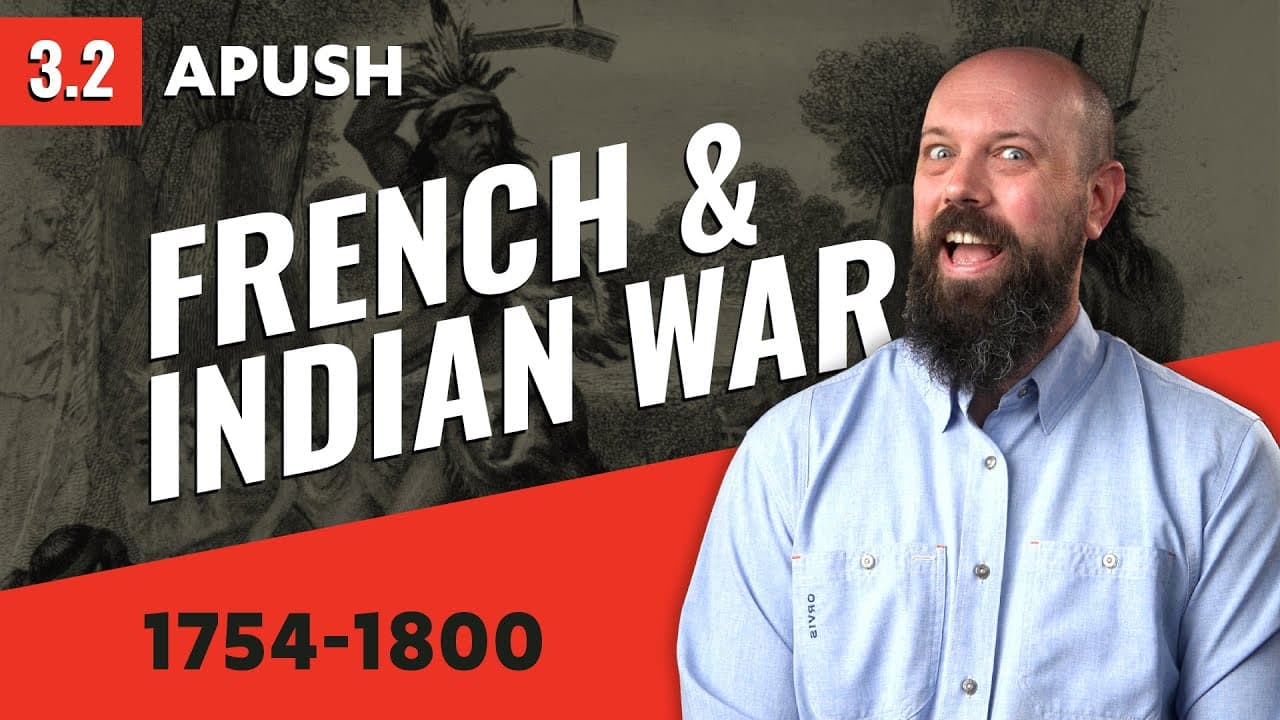
How Did the French and Indian War Start and End?
TL;DR
The war began when Washington attacked a French post after tensions over the Ohio River Valley. Britain then sought native alliances and built up forces, while colonial plans to unite failed. The war ended with Britain gaining major territorial gains and imposing postwar controls that fueled colonial resentment.
Transcript
Hey, you know that smooth part of your brain that's supposed to hold all your knowledge of the causes and effects of the French and Indian War? Well, I reckon you're here to get that thing all kinds of wrinkly, and I'm here to help. So, if you're ready to get them brain cows milt, let's get to it. So, we are now in a new time period, namely 1754 to... Read More
Key Insights
- The conflict started with Washingtons confrontation over French encroachment and escalated into a broader struggle in North America.
- The Albany Congress and Franklin’s plan signified an early attempt at colonial unity, but opposition from both colonies and Britain doomed the plan.
- Britain sought to manage costs after a costly war by restricting westward migration and raising revenue through new laws.
- Indigenous alliances shifted the balance of power, influencing military and diplomatic strategies on both sides.
- Britain outnumbered the French in North America, contributing to a strategic advantage and a looming victory.
- The Peace of Paris in 1763 redrew North American maps, transferring Florida to Britain and ceding western lands to Britain and Spain.
- The Proclamation of 1763 aimed to stabilize frontiers but angered colonists who wanted to settle west of the Appalachians.
- The war dramatically increased Britain’s debt and the cost of governing colonies, helping fuel later imperial policies and colonial resentment.
- More videos from this channel:
- More from this channel: Heimler's History
Install to Summarize YouTube Videos and Get Transcripts
Explore YouTube Video Summarizer or Get YouTube Transcript Extractor
Questions & Answers
Q: What sparked the initial clash that began the French and Indian War?
The initial clash arose when George Washington was sent to confront French forces in the Ohio River Valley, and after a warning was ignored, Washington returned with his men and attacked the French. This skirmish sparked a broader conflict, as both sides mobilized and allied with various indigenous groups, turning a local dispute into a continental war.
Q: Why did Britain want to form alliances with American Indians during the war?
Britain sought alliances with American Indians to secure support against French encroachment and to gain strategic advantages in the frontier regions. Native alliances would help protect colonial settlements, improve supply lines, and provide intelligence, which were crucial for waging war across a vast and difficult North American landscape.
Q: What was the Albany Congress and what happened to Franklin’s plan?
The Albany Congress was a meeting of colonial representatives with the aim of forming a unified colonial government. Benjamin Franklin proposed the Albany Plan of Union, which would create a council with taxation and defense powers, but colonial and British leaders rejected it as too powerful or too weak, ending the plan.
Q: How did indigenous groups participate on both sides of the war?
Indigenous groups partnered with either the British or the French, depending on strategic interests and cultural ties. The Iroquois initially sought neutrality or balanced trade but eventually aligned with the British, while Algonquin and Huron groups allied with the French, shaping frontier warfare and diplomacy.
Q: What were the key territorial outcomes of the Peace of Paris 1763?
The Peace of Paris redrew the map by transferring Florida to Britain, ceding French lands west of the Mississippi to Spain, and handing western territories in the Ohio River Valley to Britain. These settlements altered colonial expansion opportunities and set the stage for future imperial conflicts.
Q: What was the Proclamation of 1763 and why did it upset colonists?
The Proclamation of 1763 barred colonial migration west of the Appalachian Mountains to stabilize frontier tensions and reduce military costs. Colonists resented this restriction because it blocked land speculation and settlement opportunities they believed they had earned through their wartime efforts.
Q: How did Britain justify new taxes after the war?
Britain argued that the war had created a large national debt and increased the costs of administering distant colonies. To cover these expenses, Parliament passed new taxation and trade measures, expecting colonists to contribute to the cost of their own defense and governance.
Q: What long term effects did this war have on American colonial attitudes?
The victory and subsequent policies fostered resentment and a growing sense of separation from imperial authority among colonists. Increased debt, taxation, and limits on western expansion highlighted tensions that contributed to the eventual push for independence and broader debates about self rule.
Summary & Key Takeaways
-
The overview explains the origins of the war in colonial expansion and early clashes, highlighting British restrictions on westward migration and indigenous alliances. It details the Albany Congress and Franklin’s plan, noting why the proposal failed and what it meant for colonial cooperation. Finally, it describes the war’s outcome and its consequences for Britain and the colonies.
-
The summary emphasizes the military and diplomatic events that decided the war, including Washington’s early actions, the Albany Congress, and the Proclamation of 1763. It links these to the broader shift in imperial policy and rising colonial tensions that would influence future American independence movements.
-
This section connects the end results of the peace with the territorial and political changes that affected colonial life, British debt, and the postwar administration, setting up the next phase of imperial policy and colonial dissent.
Read in Other Languages (beta)
Share This Summary 📚
Summarize YouTube Videos and Get Video Transcripts with 1-Click
Try YouTube Summary with ChatGPT & Claude or YouTube Transcript Generator
Explore More Summaries from Heimler's History 📚



Summarize YouTube Videos and Get Video Transcripts with 1-Click
Try YouTube Summary with ChatGPT & Claude or YouTube Transcript Generator