How to Use B1, B2, and C1 English Grammar
TL;DR
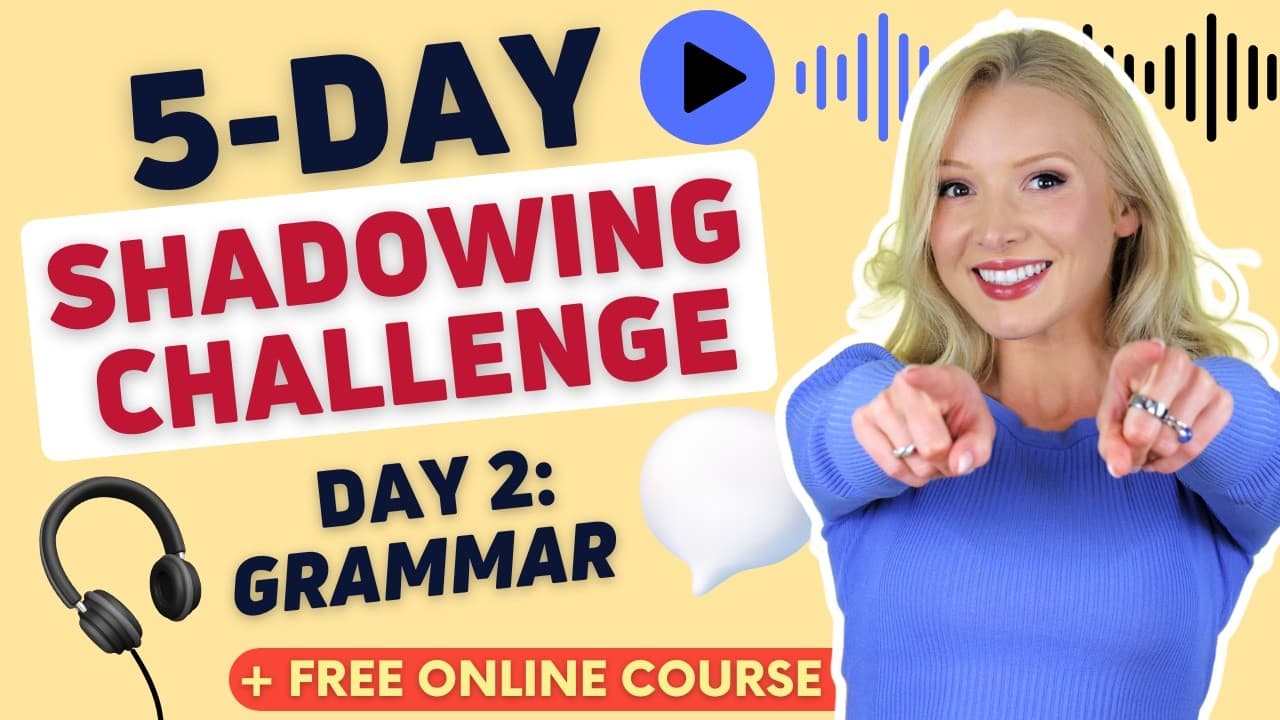
Improve natural English by shadowing complete travel-story sentences and noticing how grammar changes meaning, emphasis, and tone. The lesson progresses from B1 structures such as the present perfect continuous and third conditional to B2 future forms and comparisons, then to C1 cleft sentences, idiomatic expressions, and negative inversion.
Transcript
Hello and welcome back to English with Lucy. Today's focus is grammar. And in under 30 that make your English sound clear and natural. make sure you start with Day 1 so that you There's a link in the description that takes where you can watch all the lessons in order and great news. Day 2 of your free Consolidation interactive grammar exercises wit... Read More
Key Insights
- The present perfect continuous describes an action that began before now and remains ongoing or unfinished. Its structure combines have or has, been, and an ing-form, as illustrated by the contracted opening, I've been trying.
- The third conditional imagines a different result for a past situation that did not happen. Its if-clause uses the past perfect, formed with had and a past participle, while the result can use the contracted form I'd've for I would have.
- A non-defining relative clause adds information that can be removed without destroying the main sentence. It can begin with which, is separated from the main clause by commas in writing, and is marked by slight pauses in speech.
- The future perfect continuous describes an activity continuing until a specified future point. The example I'll have been traveling focuses on the duration of the journey by the time the speaker reaches the destination, specifically more than 13 hours.
- Being used to something means that it is normal or familiar to a person. In this construction, to is followed by a noun or a gerund, as demonstrated by the example I'm used to traffic jams.
- The paired comparative structure shows a linked change between two conditions. In the example, the further the speaker drives, the more beautiful the scenery becomes, creating a clear cause-and-effect relationship between distance and perceived beauty.
- A what-cleft sentence emphasizes selected information by beginning with what and a clause, followed by a form of be. What struck me as I drove along was how quickly the weather changed places emphasis on the surprising feature.
- Negative inversion creates emphasis when expressions such as little or never begin a sentence. Little did I realise reverses the usual affirmative word order and adds the auxiliary did because the uninverted statement would not contain an auxiliary verb.
Install to Summarize YouTube Videos and Get Transcripts
Explore YouTube Video Summarizer or Get YouTube Transcript Extractor
Questions & Answers
Q: How do you use the present perfect continuous?
Use the present perfect continuous for an action that began before the present and is still ongoing or unfinished. The lesson gives its structure as have or has, followed by been and an ing-form. In natural speech, I have can contract to I've, and the pronunciation of been is reduced while shadowing the complete sentence.
Q: How does the third conditional describe the past?
The third conditional imagines a past situation and a different result that did not actually occur. The if-clause uses the past perfect, built with had plus a past participle. In the travel example, the speaker says that knowing how beautiful the route was would have led to booking a window seat, expressing an unreal past alternative.
Q: What is a non-defining relative clause?
A non-defining relative clause supplies additional information rather than identifying the main noun. The lesson uses a clause beginning with which to add information about a journey lasting around 8 hours. The clause can be removed while leaving the main sentence intact. Commas separate it in writing, and slight pauses mark its boundaries in speech.
Q: When should you use the future perfect continuous?
Use the future perfect continuous for an activity that will continue until a particular future point, especially when its duration matters. The structure appears as I will have been traveling. In the example, the future point is reaching the destination, and the emphasized duration is more than 13 hours. Natural speech contracts the phrase to I'll've been traveling.
Q: What does being used to something mean?
Being used to something means that the situation or activity feels normal or familiar. The construction uses a form of be followed by used to, then a noun or gerund. The lesson illustrates it with I'm used to traffic jams while contrasting that familiar experience with how quickly the speaker reaches the countryside during the journey.
Q: How does the paired comparative structure work?
The paired comparative structure connects two changing conditions through the pattern the plus comparative, followed by another the plus comparative. The example links driving further with the scenery becoming more beautiful. As one condition increases or changes, the other changes with it. A comma separates the two clauses in the sentence presented for shadowing.
Q: How do what-cleft sentences add emphasis?
A what-cleft sentence begins with what followed by a clause, then uses a form of be to introduce the emphasized information. The lesson's example starts with What struck me as I drove along and emphasizes how quickly the weather changed. This structure helps advanced speakers direct attention toward the most important or surprising part of a statement.
Q: Why does little did I realise use inversion?
Little did I realise uses inversion because the negative-style adverb little has been moved to the beginning for emphasis. The normal affirmative word order is reversed, producing an auxiliary-before-subject pattern similar to a question. Because the ordinary statement has no auxiliary, did is added. The lesson also presents Never had I eaten as another inversion example.
Summary & Key Takeaways
-
The B1 section uses a train journey to practise the present perfect continuous, third conditional, and non-defining relative clauses. It explains how these structures describe unfinished actions, imagine different past outcomes, and insert removable information. Learners also shadow contractions and pauses that make the example sentences sound more natural.
-
The B2 section introduces the future perfect continuous through a journey lasting more than 13 hours. It then distinguishes being used to something from related constructions and demonstrates the paired comparative pattern, the further, the more beautiful. Shadowing highlights reduced pronunciation, including the double contraction in I'll've been traveling.
-
The C1 section focuses on grammar for emphasis, tone, and impact. It presents a what-cleft sentence, the expression on the verge of, and inversion after little. The travel story provides meaningful contexts for repeating these advanced patterns while connecting grammatical form with the specific meaning each structure conveys.
Read in Other Languages (beta)
Share This Summary 📚
Summarize YouTube Videos and Get Video Transcripts with 1-Click
Try YouTube Summary with ChatGPT & Claude or YouTube Transcript Generator
Explore More Summaries from English with Lucy 📚


Summarize YouTube Videos and Get Video Transcripts with 1-Click
Try YouTube Summary with ChatGPT & Claude or YouTube Transcript Generator