How to Talk About Weather in English: Grammar, Adjectives, Verbs, Nouns, and Idioms
TL;DR
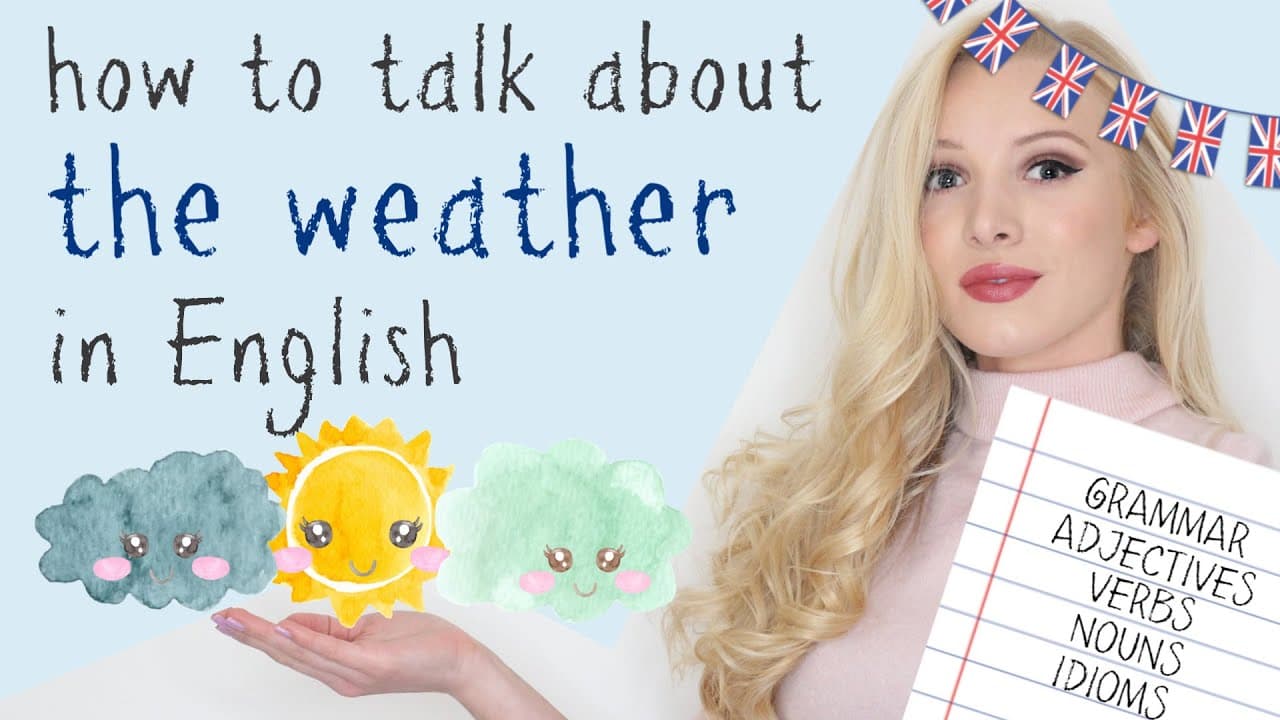
To describe weather in English, use patterns such as “It is warm,” “It is raining,” and “There is a storm,” then choose vocabulary suited to the season and conditions. The lesson covers all four seasons, explains rain from drizzle to downpours, distinguishes sleet from hail, and introduces idioms such as “soaked through.” Read on for practical grammar patterns and precise weather expressions.
Transcript
(upbeat music) - Hello, everyone, and welcome Today I'm going to talk to the weather in English. We're going to start off quite basic and move up to more advanced vocabulary. I'm going to guide you hot weather, cold weather, and I'm going to give you and idiomatic expressions. Idioms. We're also going to do a at the beginning. But very, very easy. ... Read More
Key Insights
- Weather adjectives are used in structures such as “The weather is warm,” “It is warm,” and “It is a warm day.” The shorter “It is warm” works because the adjective clearly signals that the subject is the weather.
- Weather verbs change with time: “It is raining” describes an ongoing event, “Yesterday, it rained” describes the past, and “It will rain tomorrow” or “It is going to rain tomorrow” describes the future.
- Weather nouns can follow forms of “there is”: “There is a storm” refers to the present, “There was a storm” refers to the past, and “There will be a storm” refers to the future.
- Winter weather is described with words such as cold, bitter, chilly, crisp, icy, frosty, wintry, bleak, and harsh. “Bitterly cold” intensifies cold, while “crisp” generally describes conditions that are cold and dry or possibly icy.
- Frozen precipitation includes snow, sleet, and hail. Sleet is partly frozen, very wet rain, while hail consists of small balls of completely frozen rain. Water can also “freeze over,” meaning that a surface such as a pond becomes covered with ice.
- Rain varies in intensity and duration: drizzle is constant, very light rain, showers are more intermittent, and pouring describes very heavy rain. A downpour is a particularly heavy period that can inundate ground that cannot absorb more water.
- Hot weather can be described as scorching, sweltering, boiling, sunny, dry, clear, humid, or blistering. The sun can shine, burn, or scorch, while people may “catch some rays,” “go brown,” or “soak up the sun.”
- Autumn weather is often described as autumnal, windy, blustery, misty, or foggy. Wind can blow or howl, and relevant nouns include gale, hurricane, tornado, mist, and fog. British English generally uses “autumn,” while American English uses “fall.”
Install to Summarize YouTube Videos and Get Transcripts
Explore YouTube Video Summarizer or Get YouTube Transcript Extractor
Questions & Answers
Q: How do you describe weather in English?
Use an adjective in patterns such as “The weather is warm,” “It is warm,” or “It’s a warm day.” For an ongoing weather action, use “It is” plus a verb ending in “-ing,” as in “It is raining.” You can also use a weather noun after “there is,” as in “There is a storm.”
Q: How do you talk about rain in the present, past, and future?
Say “It is raining” for rain happening now and “Yesterday, it rained” for the past. For the future, use either “It will rain tomorrow” or “It’s going to rain tomorrow.” Irregular verbs have their own past conjugations rather than following the regular “-ed” pattern.
Q: How do you use weather nouns with there is, there was, and there will be?
Use “There is a storm” for the present and “There was a storm” for the past. For the future, say “There will be a storm.” These structures pair a form of “there” with a weather noun.
Q: Which English words describe cold winter weather?
Winter adjectives include cold, bitter, chilly, crisp, icy, wintry, bleak, and harsh. “Bitter” is a step beyond cold and can be used in “It’s bitterly cold,” while “crisp” normally means cold and dry or possibly icy. Grey, unpleasant weather can be bleak, and a winter with substantial snow can be harsh.
Q: What is the difference between sleet and hail?
Sleet is partly frozen rain, described as very wet and almost frozen. Hail consists of little balls of completely frozen rain, though some hailstones can be larger. A related expression is “freeze over,” meaning that water, such as a pond, becomes covered with ice.
Q: What is the difference between drizzle, showers, pouring rain, and a downpour?
Drizzle is constant, very light rain, while showers are more intermittent. Pouring means that it is raining very heavily. A downpour is a very heavy patch of rain that can inundate the ground when it cannot absorb more water.
Q: Which English idioms describe heavy rain or getting extremely wet?
“To chuck it down” and “to bucket down” mean that it is raining very heavily. “It’s raining cats and dogs” has the same general meaning, although the lesson says it is not used very much in reality. Someone made extremely wet by rain can say, “I’m soaked through.”
Q: Which English words describe spring and summer weather?
Spring weather can be cool, mild, fresh, bright, breezy, overcast, muggy, or wet. Summer conditions can be hot, scorching, sweltering, boiling, sunny, dry, clear, humid, or blistering. “Clear” means there are no clouds in the sky, while “humid” describes very wet air.
Summary & Key Takeaways
-
English weather descriptions can use adjectives, verbs, or nouns. Adjectives follow patterns such as “The weather is warm” and “It is warm.” Ongoing conditions use “It is” plus a verb ending in “-ing,” while past and future conditions use forms such as “it rained,” “it will rain,” or “it is going to rain.”
-
Winter vocabulary covers cold, bitter, chilly, crisp, icy, frosty, wintry, bleak, and harsh conditions. Spring introduces cool, mild, fresh, bright, breezy, overcast, muggy, and wet weather. Rain can drizzle, shower, pour, chuck it down, or bucket down, while a person caught outside may become soaked through.
-
Summer conditions can be hot, scorching, sweltering, boiling, sunny, dry, clear, humid, or blistering. Autumn can be autumnal, windy, blustery, misty, or foggy. Seasonal nouns and verbs include sunshine, wind blowing or howling, gales, hurricanes, tornadoes, mist, and fog, with “fall” identified as the American term for autumn.
Read in Other Languages (beta)
Share This Summary 📚
Summarize YouTube Videos and Get Video Transcripts with 1-Click
Try YouTube Summary with ChatGPT & Claude or YouTube Transcript Generator
Explore More Summaries from English with Lucy 📚





Summarize YouTube Videos and Get Video Transcripts with 1-Click
Try YouTube Summary with ChatGPT & Claude or YouTube Transcript Generator