How to Speak English Fluently When You Go Blank
TL;DR
Speaking fluently requires regular language output, not only listening and reading practice. Talk to yourself in English, record vocabulary gaps for later review, rehearse useful sentences aloud, and work with a suitable tutor who can recreate difficult situations, correct mistakes, and provide targeted feedback in a safe environment.
Transcript
- Hello, lovely students. And welcome back to English with Lucy. I want to know if you can relate with this. I can understand English, but I can't speak it fluently. I receive so many emails and questions from students and the vast majority of them in one way or another make this same point. Do you feel that you've spent hours, days, years studying... Read More
Key Insights
- Understanding English and speaking it are different abilities because listening and reading use receptive skills, while speaking requires productive skills. Heavy exposure to English can improve comprehension and vocabulary without providing enough practice in actively retrieving and producing language.
- A balance between input and output is necessary for spoken development. Watching films, following English videos, listening to podcasts, and reading books remain valuable, but these activities should be combined with deliberate speaking practice rather than treated as substitutes for it.
- Talking to yourself is a free method for increasing daily English output. Learners can give their inner voice an English alter ego, narrate routine activities mentally, or speak aloud when possible to practise producing words and forming unfamiliar sounds.
- Speaking aloud provides physical pronunciation practice because learners must create sounds and feel how words form in the mouth. Silent narration can still help when other people are nearby, but vocal practice more directly exercises the movements required for speech.
- A vocabulary diary turns daily communication gaps into useful study material. When learners notice an unknown word while narrating their lives, they can record it in a notebook or app, schedule a reminder, translate it later, and practise it aloud in sentences.
- A tutor can recreate specific conversations that previously caused difficulty. Rehearsing a networking question, professional introduction, or another challenging exchange allows learners to develop stronger responses before encountering the same situation again.
- Useful tutor feedback covers more than grammatical accuracy. A knowledgeable tutor can correct vocabulary and pronunciation while also identifying whether speech sounds clear and natural, with successful communication taking priority over absolute perfection.
- Writing before speaking can prepare learners for predictable situations. They can identify what they want to communicate, write complete sentences, and rehearse those sentences aloud as part of daily practice, without expecting to script every spontaneous conversation.
Install to Summarize YouTube Videos and Get Transcripts
Explore YouTube Video Summarizer or Get YouTube Transcript Extractor
Questions & Answers
Q: Why can I understand English but not speak it fluently?
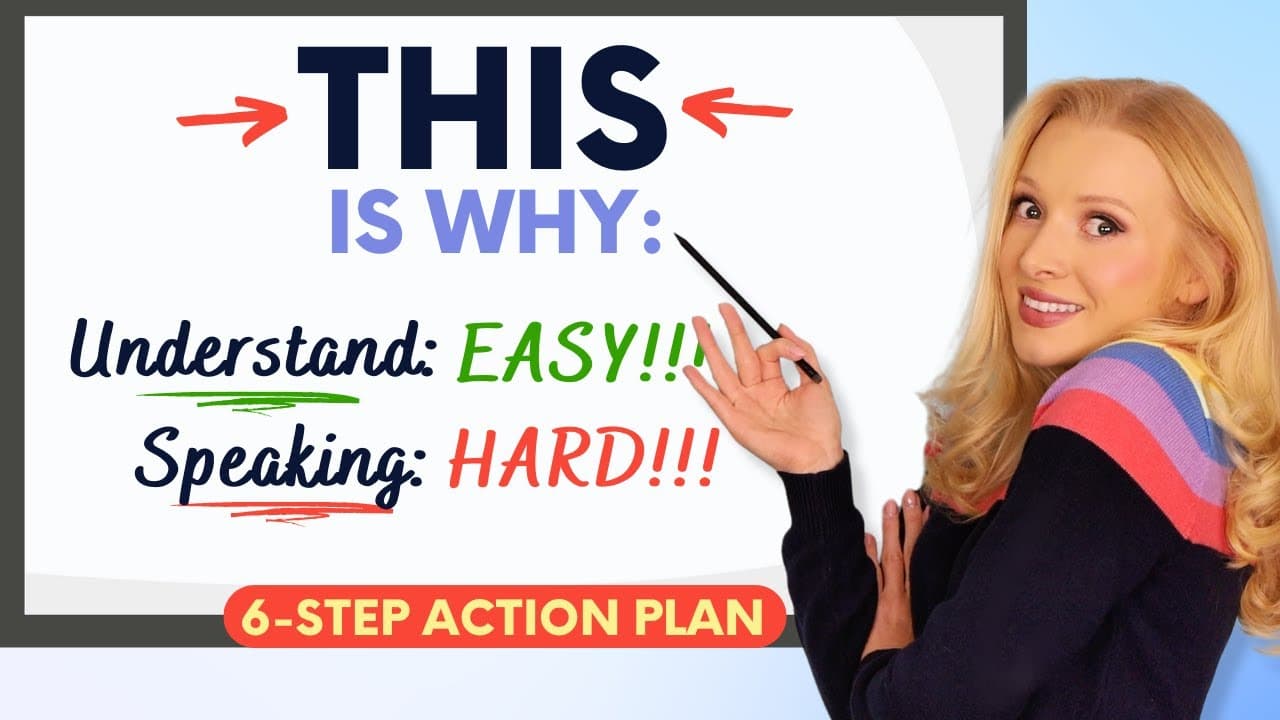
Understanding and speaking depend on different kinds of language practice. Listening and reading are receptive skills, so watching films, following videos, hearing podcasts, and reading books train comprehension. Speaking is a productive skill that requires active retrieval and repeated output. A learner may therefore understand grammar and vocabulary very well but still go blank because that knowledge has not been practised sufficiently in spoken use.
Q: How can I practise speaking English when I am alone?
Talk to yourself in English throughout the day by narrating ordinary actions, thoughts, and plans. You might describe watching television, washing dishes, picking up a plate, or hoping for a particular dinner. Silent narration is useful when people are nearby, but speaking aloud is recommended because it also lets you practise creating sounds and feeling how English words form in your mouth.
Q: How can self-talk improve English speaking fluency?
Self-talk increases the amount of English you actively produce without requiring a conversation partner or paid tutor. Turning your inner voice into an English-speaking alter ego creates frequent opportunities to retrieve words and build smoother sentences. Speaking the narration aloud also develops pronunciation movements. The method can be started immediately and incorporated into activities that already occur during an ordinary day.
Q: How can I build vocabulary from my daily life?
Narrate your daily activities in English and notice every specific word or phrase you cannot express. Save each gap in a vocabulary diary, notebook, notes app, or voice-enabled device. Set a reminder to translate and review the collected items later. After finding the English expressions, use them in original sentences and say those sentences aloud so the vocabulary becomes part of active speaking practice.
Q: Why should I practise English with a tutor?
A tutor can tailor conversations to your needs, recreate situations in which you previously struggled, and provide accurate corrections. Feedback can address grammar, vocabulary, pronunciation, clarity, and naturalness. A tutor also offers a safe place to make mistakes and request advice without feeling ridiculed. Because tutors regularly encounter learner errors, they can provide targeted suggestions for improving recurring speaking problems.
Q: How should I choose an online English tutor?
Look for a tutor whose availability, location or time zone, hourly price, and teaching focus match your circumstances. The lesson describes filtering tutors by motivations such as career development, moving to another country, or preparing for an exam. Introductory videos can help you judge personal compatibility, while a free trial session can show whether the tutor and teaching approach suit you before further paid lessons.
Q: Should English learners aim for perfect spoken accuracy?
Absolute perfection should not be the main target. The more practical goal is to speak clearly enough that other people understand what you mean. Corrections remain valuable because a tutor can identify problems with grammar, vocabulary, pronunciation, clarity, and natural phrasing. However, feedback should support effective communication instead of making fear of every possible mistake prevent the learner from speaking.
Q: How can writing help me prepare to speak English?
Think about an upcoming or recurring situation, write the sentences you would like to say, and then practise saying them aloud. This connects deliberate planning with productive speaking practice and can make a future response easier to retrieve. The exercise belongs in regular English study rather than every live interaction, since carrying a notebook and scripting every statement before speaking would be impractical.
Summary & Key Takeaways
-
Understanding English relies mainly on receptive skills such as listening and reading, while speaking requires productive practice. Films, podcasts, videos, and books can build vocabulary and clarify how English functions, but learners also need frequent opportunities to retrieve words, form sounds, and express ideas actively if they want greater spoken fluency.
-
Talking to yourself provides a free and accessible way to increase English output throughout the day. Learners can narrate ordinary activities internally or aloud, notice words they cannot express, save those vocabulary gaps in a diary or notes app, review them at a chosen time, and practise using them in complete spoken sentences.
-
A personal tutor can recreate situations in which a learner previously struggled, correct grammar, vocabulary, pronunciation, clarity, and naturalness, and offer feedback without ridicule. Writing planned responses and practising them aloud can also prepare learners for anticipated conversations, although carrying a script into every spontaneous interaction would be impractical.
Read in Other Languages (beta)
Share This Summary 📚
Summarize YouTube Videos and Get Video Transcripts with 1-Click
Try YouTube Summary with ChatGPT & Claude or YouTube Transcript Generator
Explore More Summaries from English with Lucy 📚



Summarize YouTube Videos and Get Video Transcripts with 1-Click
Try YouTube Summary with ChatGPT & Claude or YouTube Transcript Generator