The Elementary Particles: How Do VFX Artists Adapt Effects for Devil May Cry 5 and Dishonored 2?
TL;DR
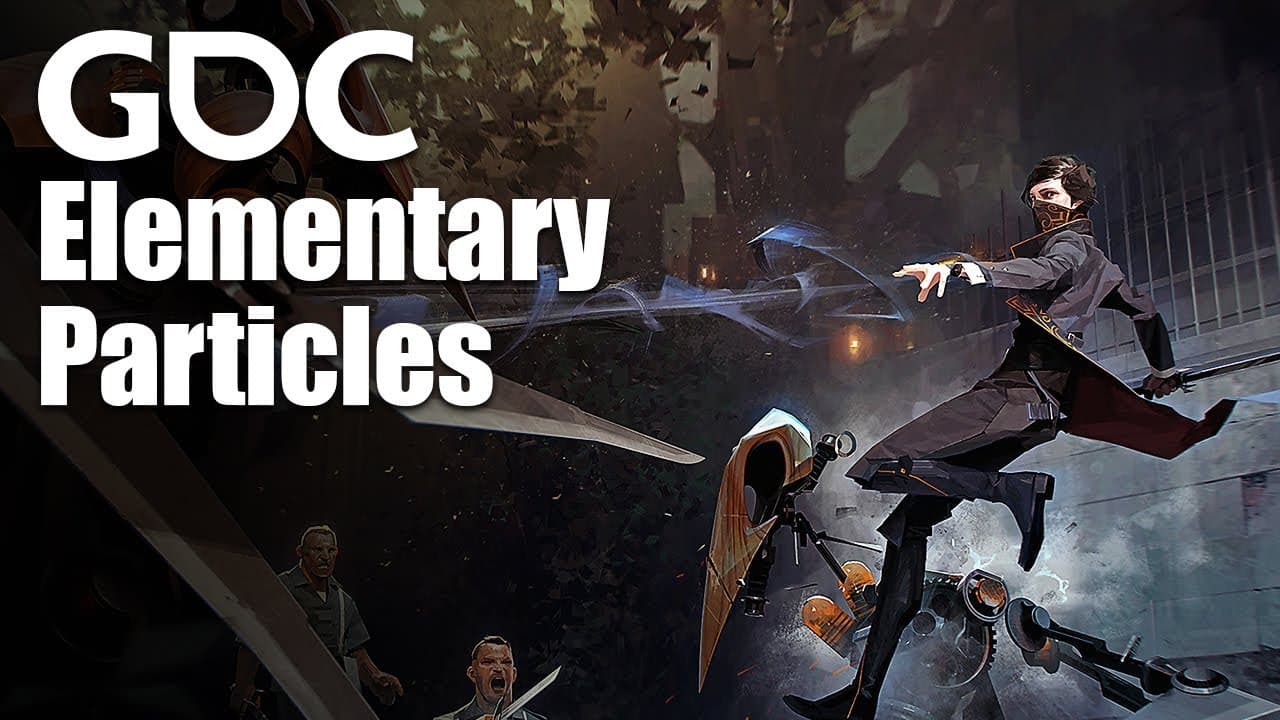
VFX artists adapt their work by analyzing each game’s perspective, pace, gameplay, and art direction, then changing how effects communicate and behave. Devil May Cry 5 requires stylized, clearly identifiable signatures for its fast third-person combat, while Dishonored 2 needs believable, detailed effects that work across unpredictable first-person interactions. Read on to see how gameplay transforms particle design from visual language to implementation.
Transcript
i work for arkhan studios in france and today we're going to talk about change and adaptation from a vfx artist's perspective and we'll see how working for different companies makes your personal practice evolve so um this morning with ryan and mike we were talking about the outside of vfx and we'll keep on talking about art here we're back to basi... Read More
Key Insights
- Adapting VFX across games involves understanding unique gameplay needs.
- VFX must balance creative freedom with game mechanics constraints.
- Different camera perspectives (first vs. third person) affect VFX design.
- Realistic effects require layers of detail and believable integration.
- The game's narrative and art direction heavily influence VFX style.
- Gameplay features can dictate both the look and creation method of VFX.
- Smooth animation transitions are crucial for games with slow-motion features.
- Console commands and debugging tools are vital for effective VFX development.
Install to Summarize YouTube Videos and Get Transcripts
Explore YouTube Video Summarizer or Get YouTube Transcript Extractor
Questions & Answers
Q: How do VFX artists adapt their design process for different games?
They analyze the game’s perspective, pace, mechanics, and desired world, then adjust their habits and effect-building methods to fit that brief. The speaker contrasts the stylized visual language needed for Devil May Cry 5 with the believable, flexible effects required by Dishonored 2.
Q: How did moving from Ninja Theory to Arkane Studios change the speaker’s VFX practice?
After five years at Ninja Theory and reaching a senior position, the speaker moved back to France to work for Arkane Studios. A new company, team, game type, and technology pushed the artist out of a comfortable routine and made changing established habits necessary.
Q: Why does Devil May Cry 5 need a clear VFX visual language?
Its fast-paced combat communicates many weapons, moves, enemy states, immunities, and timing demands within short periods. The VFX team therefore used shapes and colors as a visual language, while making every move read as a distinct signature.
Q: How does Dishonored 2’s gameplay influence its VFX design?
Dishonored 2 gives players a toolbox and encourages creative combinations and multiple approaches. Its effects must preserve the illusion of a tangible world, remain believable, and function under every condition the player might create.
Q: How does camera perspective affect VFX design in Devil May Cry 5 and Dishonored 2?
Devil May Cry 5 is presented as a third-person game, while Dishonored 2 is first-person. These perspectives form part of the broader contrast the speaker uses to explain why VFX methods must change between the two projects.
Q: Why do Dishonored 2’s effects need layers of detail?
The game emphasizes depth, consistency, and a world that feels tangible. Minimal effects would not echo the detailed surroundings, so the VFX need multiple layers and must feel as though they belong in that world without necessarily being photorealistic.
Q: How must Dishonored 2’s VFX handle unpredictable player actions?
The effects need to cover every possible case because developers cannot know exactly what the player will do. For example, an effect planted on a movable object, such as a chopped head or limb, must continue working while that object is carried around.
Q: What fundamental VFX concepts does The Elementary Particles focus on?
The talk returns to basics by concentrating on particles and their fundamental behaviors. It compares effects from two games before examining Dishonored 2 more deeply, especially how gameplay and specific features influence VFX creation.
Summary & Key Takeaways
-
Transitioning between different game projects requires VFX artists to adapt their design processes to align with the specific gameplay and stylistic needs of each title. This involves balancing creative freedom with the constraints imposed by game mechanics and player interaction, ensuring effects are both visually compelling and functionally appropriate.
-
The differences between first-person and third-person perspectives significantly impact VFX design. In first-person games, effects must be adjusted to remain visible despite perspective shortcuts, whereas third-person games allow for more straightforward visual representation of effects.
-
The narrative and art direction of a game heavily influence the style of VFX. For example, effects in 'Dishonored 2' need to feel accidental and noisy to fit the game's world, while 'Devil May Cry 5' allows for more stylized and extravagant effects due to its fantasy setting.
Read in Other Languages (beta)
Share This Summary 📚
Summarize YouTube Videos and Get Video Transcripts with 1-Click
Try YouTube Summary with ChatGPT & Claude or YouTube Transcript Generator
Explore More Summaries from GDC Festival of Gaming 📚


Summarize YouTube Videos and Get Video Transcripts with 1-Click
Try YouTube Summary with ChatGPT & Claude or YouTube Transcript Generator