How to Design a Game Without a Clear Pitch
TL;DR
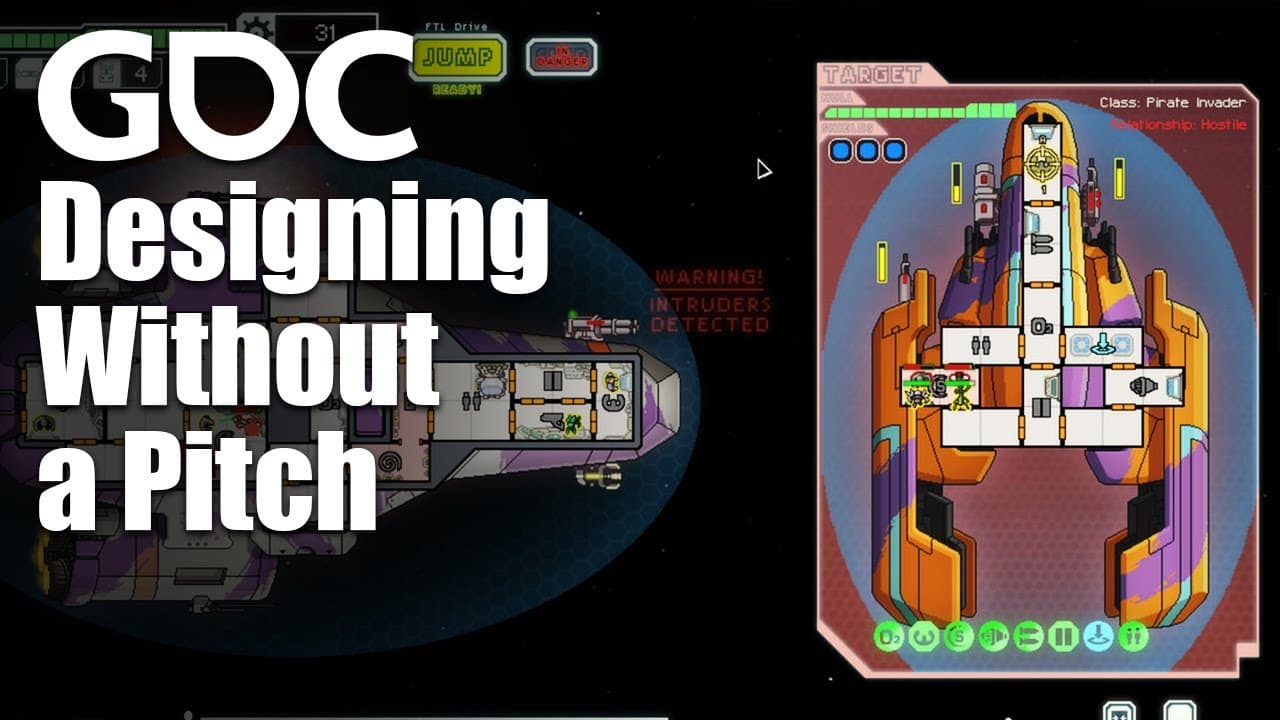
FTL: Faster Than Light was developed with a focus on creating the captain experience in a starship, emphasizing internal ship management over traditional space combat. By allowing flexibility in design and embracing procedural generation, the team crafted a unique, high-difficulty game. Their iterative process, supported by crowdfunding, enabled them to refine and expand the game, resulting in a successful indie title.
Transcript
hello everybody uh my name is Justin Ma I did the art and um half of the design and I'm Matthew Davis and I did the programming and the other half of the design um we are pretty much the only two creators that were on FTL we had a few important contractors like music and for writing but it was pretty much just the two of us the whole time um it was... Read More
Key Insights
- FTL focuses on giving players the experience of being a starship captain, managing crew and resources rather than piloting.
- The game was developed by a small team, primarily two creators, who embraced an iterative design process without a fixed pitch.
- Procedural generation and high difficulty were key elements, ensuring each playthrough offered a unique challenge.
- Initial designs included multiple ships and spatial combat, but these were cut to focus on the core captain experience.
- Crowdfunding through Kickstarter was pivotal, providing 20 times the initial funding goal and enabling expanded content.
- Community feedback during beta testing influenced the final game's difficulty and features, emphasizing challenge and replayability.
- Design decisions were guided by a singular focus on capturing a specific feeling, allowing for agile adjustments and feature cuts.
- Despite initial financial constraints, living in China allowed the developers to sustain development with a lower cost of living.
Install to Summarize YouTube Videos and Get Transcripts
Explore YouTube Video Summarizer or Get YouTube Transcript Extractor
Questions & Answers
Q: How did the developers of FTL: Faster Than Light prioritize design features?
The developers prioritized features that aligned with the core feeling of being a starship captain, focusing on internal ship management rather than piloting. They embraced an iterative design process, allowing them to frequently alter or abandon aspects that didn't fit this vision. Community feedback and practical considerations, such as balancing and replayability, also influenced feature prioritization.
Q: What role did procedural generation play in FTL's development?
Procedural generation was crucial in FTL's development, ensuring that each playthrough offered a unique and challenging experience. This approach complemented the game's high difficulty, as players faced different scenarios each time. It also allowed the small development team to create a game world that felt expansive and varied without needing to handcraft every element.
Q: How did crowdfunding impact the development of FTL?
Crowdfunding through Kickstarter was pivotal for FTL, providing 20 times the initial funding goal and enabling the team to expand the game's content and polish. It also introduced community feedback into the development process, influencing final decisions on difficulty and features. The success of the campaign allowed the developers to contract additional resources, such as music and writing, enhancing the overall game experience.
Q: Why did the developers choose to focus on internal ship management in FTL?
The developers aimed to capture the experience of being a starship captain, inspired by science fiction series like Star Trek. They wanted players to manage crew and resources, dealing with internal ship challenges rather than traditional piloting. This focus distinguished FTL from other space games and aligned with the team's vision of creating a unique, high-difficulty experience.
Q: What challenges did the developers face when balancing FTL's difficulty?
Balancing FTL's difficulty was challenging due to its high-stakes, permadeath nature. The developers aimed to create a game that was challenging yet rewarding, appealing to players who enjoyed overcoming difficult scenarios. Community feedback during beta testing was instrumental in fine-tuning the difficulty, ensuring it provided a satisfying experience without being overly punishing.
Q: How did living in China affect the development of FTL?
Living in China provided the developers with a lower cost of living, which was beneficial given their initial financial constraints. This allowed them to sustain development for a longer period despite limited resources. The international environment in Shanghai also offered a unique backdrop for their work, although it contributed to a sense of isolation during the development process.
Q: What were some of the initial design concepts that were cut from FTL?
Initial design concepts for FTL included multiple ships, spatial combat, and detailed atmospheric elements within the ship. These were ultimately cut to maintain focus on the core captain experience, emphasizing internal management over external piloting. The developers prioritized features that aligned with their singular vision, allowing them to create a cohesive and focused game.
Q: How did community feedback influence the final design of FTL?
Community feedback during beta testing was crucial in refining FTL's difficulty and features. The developers engaged with players to understand their experiences, using this input to adjust balancing and add replayability elements. This interaction helped ensure that the final game resonated with its audience, providing a challenging yet rewarding experience that encouraged repeated playthroughs.
Summary & Key Takeaways
-
FTL: Faster Than Light was designed to immerse players in the role of a starship captain, focusing on internal management over piloting. Developed by a small team, the game embraced procedural generation and high difficulty, offering unique challenges in each playthrough. Crowdfunding enabled expanded content, while community feedback during beta testing helped refine difficulty and features.
-
The development process was highly iterative, starting without a fixed pitch and allowing for frequent design changes. Initial concepts like multiple ships and spatial combat were cut to maintain focus on the core captain experience. The team prioritized capturing a specific feeling, guiding design decisions and enabling agile adjustments.
-
Living in China provided a lower cost of living, aiding development despite financial constraints. Kickstarter success allowed the team to enhance the game's content and polish, ultimately resulting in a successful indie title that resonated with players seeking a challenging and replayable experience.
-
(Content reviewed on 2026-08-27.)
Read in Other Languages (beta)
Share This Summary 📚
Summarize YouTube Videos and Get Video Transcripts with 1-Click
Try YouTube Summary with ChatGPT & Claude or YouTube Transcript Generator
Explore More Summaries from GDC Festival of Gaming 📚
Summarize YouTube Videos and Get Video Transcripts with 1-Click
Try YouTube Summary with ChatGPT & Claude or YouTube Transcript Generator