Why Do Some People Prefer to Play MMOs Alone?
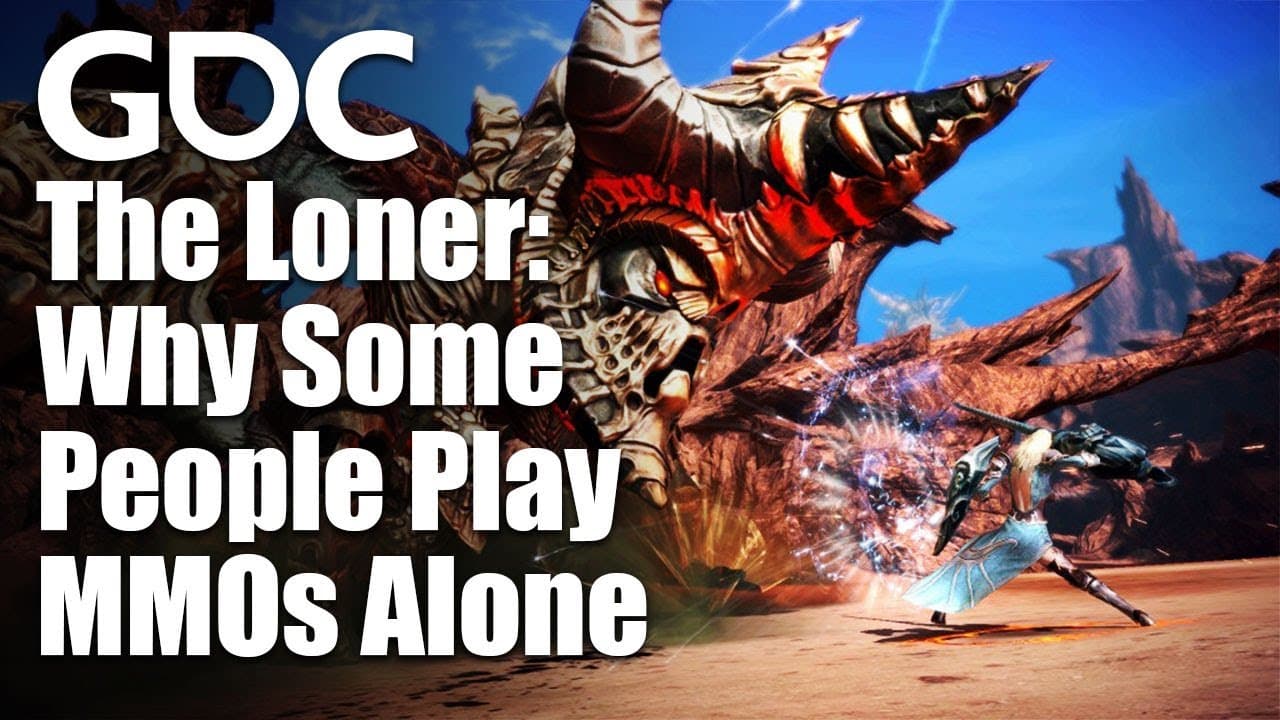
TL;DR
Solo players belong in massively multiplayer games because playing alone can still depend on a populated, socially meaningful world. MMORPGs should support substantial solo progression while reserving distinctive experiences, such as raids, city sieges, and large conflicts, for groups. Designers must also distinguish deliberate solitude from temporary isolation or onboarding problems that prevent players from finding communities.
Transcript
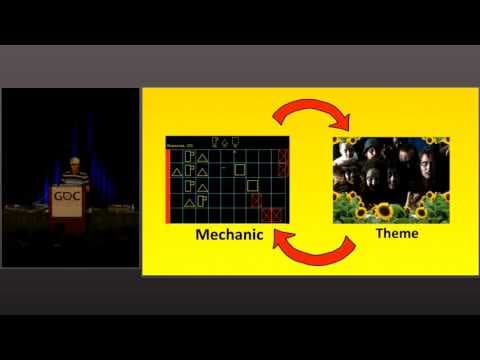
hello can you hear me excellent I can't see any of you this is awesome I'd like to congratulate all of you for finding the secret talk I feel like the the Foo Fighters at South by Southwest - the secret show that no one knows about congratulations again what I want to talked about is sort of an interesting question I hear come up a lot which is why... Read More
Key Insights
- Solo play is a recurring behavior in massively multiplayer games, even when designers and communities assume that everyone should group. The speaker describes repeatedly seeking ways to play MMOs alone despite years of expectations that meaningful progress required cooperation with other players.
- MMO design changed from mandatory grouping toward broad solo accessibility. EverQuest and Shadowbane are presented as games where playing alone was severely limited, while World of Warcraft, Free Realms, and City of Heroes allowed players to experience most, though not all, content independently.
- Being a loner is inherently social because the identity requires other people from whom the player can remain separate. A single-player game cannot create the same contrast, while a populated MMO lets independence function as part of a heroic fantasy.
- Massive social activity remains the genre's unique selling proposition. Raids, city sieges, epic fights, and large groups working together or against one another create experiences that distinguish MMOs from single-player and lightly multiplayer role-playing games.
- MMO production requires priorities that support scale. Developers creating continents and large populations cannot necessarily match the detailed avatars or compact environments of games with much narrower scope, so resources should reinforce the experiences that make the genre distinctive.
- Cities illustrate how solitude and social density can coexist. Manhattan is described as having the largest percentage of single-individual dwellings among cities, while large cities also contain many small social circles that help residents find people who share their beliefs.
- Urban populations can be more social and civic-minded than stereotypes suggest. The talk attributes this pattern to the greater number of available communities in cities, where people can search for compatible groups instead of depending on the limited circles available in smaller places.
- New players often appear solitary because they lack knowledge, relationships, or access rather than because they reject social play. Their friends may be absent, delayed, on another server, or no longer playing, leaving them temporarily alone while they learn where enjoyable activities are.
Install to Summarize YouTube Videos and Get Transcripts
Explore YouTube Video Summarizer or Get YouTube Transcript Extractor
Questions & Answers
Q: Why do some people play MMORPGs alone?
People play MMORPGs alone for several different reasons. Some deliberately enjoy independence and the heroic identity of a loner within a populated world. Others are only temporarily alone because their friends are unavailable, stopped playing, entered another server, or have not yet joined them. New players may also lack knowledge of the game's systems, social conventions, communities, and enjoyable activities.
Q: Is solo play incompatible with massively multiplayer games?
Solo play is not inherently incompatible with massively multiplayer games because solitude gains meaning from the presence of other people. A player can explore independently while still observing a populated world, participating in its economy, and defining themselves in relation to its communities. The design challenge is to support independent activity without removing raids, sieges, epic conflicts, and other experiences built around large groups.
Q: How did MMO design become more friendly to solo players?
Earlier MMO design often treated grouping as a requirement for basic progress. The talk describes EverQuest as dangerous and highly restrictive for solo characters and Shadowbane as offering little value to someone playing alone. Later games, including World of Warcraft, Free Realms, and City of Heroes, adopted the position that players should complete most content independently while some activities remain reserved for groups.
Q: What multiplayer content should MMOs preserve?
MMOs should preserve experiences that depend on scale and coordinated participation. The talk identifies raids, city sieges, epic battles, and conflicts involving many people working toward or against a common cause as central examples. These activities excite interest in the genre because they cannot be reproduced in the same way by a single-player game or a lightly multiplayer role-playing game.
Q: Why is being a loner considered a social identity?
Being a loner is a social identity because it requires a surrounding population from which someone chooses to remain separate. In a single-player game, there is no community to stand apart from, so solitude is simply the default condition. In an MMO, independence becomes a visible relationship to other players and can support heroic fantasies associated with solitary figures such as Batman or the Lone Ranger.
Q: What can cities teach MMO designers about solo players?
Cities show that a person can choose personal solitude while valuing a dense social environment. The talk uses New York City and Manhattan to illustrate how many individuals live alone amid a large population. Cities may initially feel alienating, but they also contain thousands of smaller social circles, giving people more opportunities to find communities that match their interests and beliefs.
Q: Why might a new MMO player appear to prefer solo play?
A new player may appear solitary simply because they entered the game without useful knowledge or dependable connections. They may not understand the rules, social expectations, available activities, or locations of enjoyable content. A friend might have quit, joined another server, become delayed by preorder problems, or planned to return later, forcing the newcomer to play alone during the initial experience.
Q: How should MMO designers respond to different kinds of loners?
Designers should first determine why a person is playing alone instead of treating solitude as one abnormal behavior. Deliberate solo play can be a valid and satisfying preference, while temporary isolation may indicate onboarding, scheduling, server selection, or community-access problems. Each situation creates a different design challenge, so immediately forcing every solitary player into a group may not address the actual reason for their behavior.
Summary & Key Takeaways
-
Solo play is not necessarily contrary to the purpose of an MMORPG. A player can value a shared world, populated cities, social context, and the identity of being a loner without joining a group. Earlier games often required grouping, while later designs allowed players to complete much more content independently.
-
Massive social experiences remain the genre's central advantage. Raids, city sieges, epic battles, and conflicts involving many coordinated players create possibilities that single-player or lightly multiplayer games cannot reproduce. Supporting solo players should therefore complement these experiences instead of turning an MMORPG into a purely single-player game.
-
People play alone for different reasons, so designers should not treat every loner as the same kind of player. Some deliberately prefer independence, while others are temporarily alone because friends are unavailable, they joined the wrong server, or they are new and do not understand the world's systems or social conventions.
Read in Other Languages (beta)
Share This Summary 📚
Summarize YouTube Videos and Get Video Transcripts with 1-Click
Try YouTube Summary with ChatGPT & Claude or YouTube Transcript Generator
Explore More Summaries from GDC Festival of Gaming 📚
Summarize YouTube Videos and Get Video Transcripts with 1-Click
Try YouTube Summary with ChatGPT & Claude or YouTube Transcript Generator