How to Build an Exposure Ladder to Overcome Anxiety
TL;DR
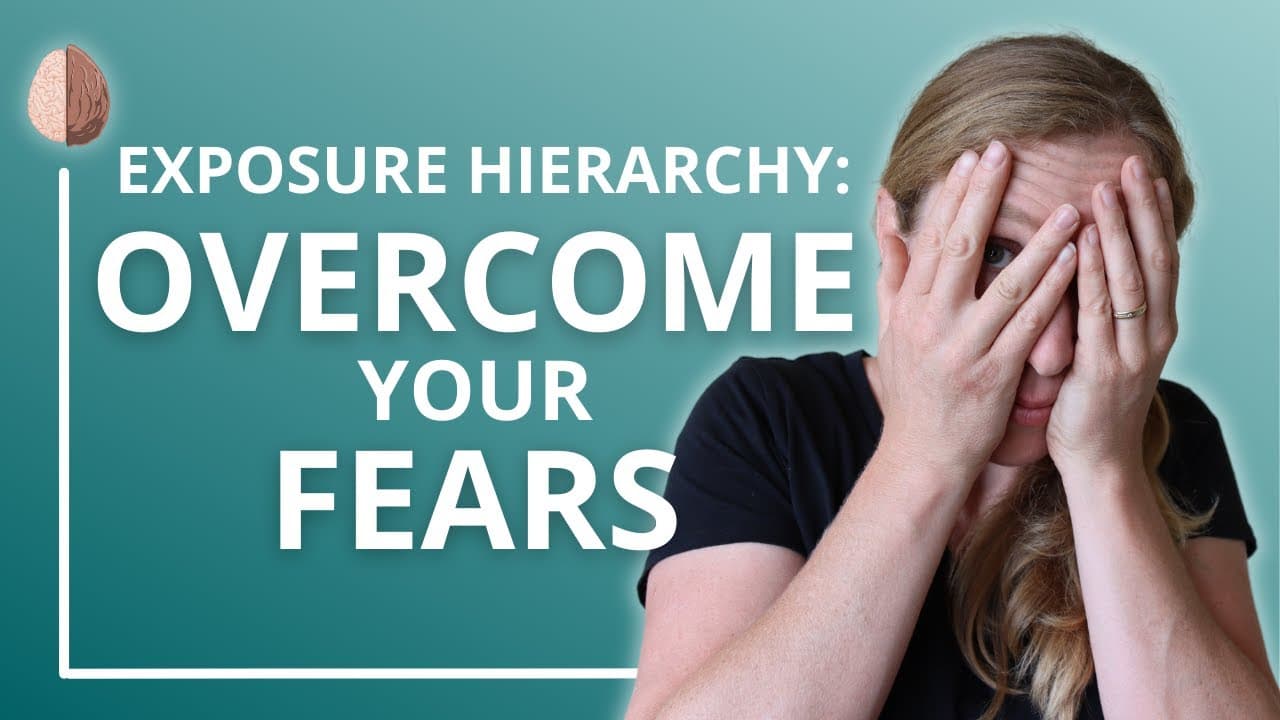
Exposure therapy works by gradually facing fears to rewire the brain so you feel safer. Start with a fear ladder, identify tiny steps, and build up exposure while tracking your anxiety and staying with the task until it lowers. Use scaffolding to adjust difficulty and practice consistently for lasting change.
Transcript
In this video, I'm not going to teach you an anxiety hack or a trick. I'm going to teach you the number one most powerful way to decrease anxiety fears and phobias As backed by research. I'm going to teach you the six steps to kicking fears butt by using an exposure hierarchy. If you want to learn to beat your anxiety, one of the most powerful ... Read More
Key Insights
- Exposure is a safe, effective process that reduces anxiety.
- An exposure ladder orders fears from least to most scary.
- Avoidance reinforces anxiety and retruamatizes fear.
- Start with smaller steps and gradually increase exposure.
- Scaffolding adjusts length, companions, time of day, and environment.
- Track fear levels on a 0 to 10 scale during exposure.
- Repeat exposures to build neuroplasticity and reduce anxiety.
- Reinforce courage with self acknowledgment and rewards.
Install to Summarize YouTube Videos and Get Transcripts
Explore YouTube Video Summarizer or Get YouTube Transcript Extractor
Questions & Answers
Q: How to create a fear ladder for anxiety and start exposure work
To create a fear ladder for anxiety, list all fears you want to work on and break them into smaller steps. Start with the least scary, record a goal, and build a sequence from simple to more challenging tasks. Then practice the steps repeatedly, gradually increasing exposure time or complexity while monitoring your anxiety level on a 0 to 10 scale.
Q: What is the first step in using an exposure hierarchy effectively
The first step is to make a list of fears and pick the initial target to work on. This involves detailing situations from watching, reading, being around, or interacting with the feared object. Establish a clear, achievable objective for the first tiny exposure and commit to practicing it regularly.
Q: Why is avoiding fear often harmful when facing anxiety
Avoidance locks the brain into a cycle of increasing anxiety by preventing learning that the feared stimuli are not as dangerous as believed. Facing fears through guided exposure helps the brain relearn safety cues, reduce the fight or flight response, and gradually lower the intensity of anxiety over repeated practice.
Q: How does scaffolding help during exposure therapy
Scaffolding supports exposure by varying task length, adding companions, changing the time of day, or altering the environment. These adjustments make tasks easier or harder and help maintain a manageable anxiety level, enabling sustained practice without overwhelming you during initial attempts.
Q: What role does tracking anxiety play in exposure work
Tracking anxiety provides a measurable way to monitor progress, observe how fear changes over time, and decide when to extend exposure. Recording scores and reflecting on what you learn helps build self efficacy and keeps you motivated to continue practicing the exposure ladder.
Q: How should one handle the feeling of fear during exposure
During exposure, accept that anxiety is uncomfortable but not dangerous. Use breathing and self talk to stay present, and remind yourself that fear is a normal part of the process. The goal is to stay with the situation long enough for anxiety to decrease, then gradually repeat.
Q: What is the recommended frequency for practice in exposure therapy
Practice with the exposure ladder should be as frequent as possible, with repetitions that reinforce learning. The more you expose yourself to feared situations, while keeping anxiety manageable, the faster neural pathways adapt and the fear response weakens over time.
Q: Why is celebrating small wins important in exposure work
Reinforcing courage through self acknowledgment and small rewards boosts motivation and dopamine related reward signaling. Recognizing progress helps you feel capable, encourages ongoing effort, and strengthens the belief that you can tackle harder exposures in future sessions.
Summary & Key Takeaways
-
Exposure therapy rewires the brain by reducing avoidance and teaching that feared situations are not as dangerous as initially believed. It emphasizes a gradual, structured approach to confront anxiety with a growth mindset.
-
A fear ladder or exposure hierarchy structures tasks from mildly to highly anxiety provoking. It helps you pace progress, prevent panic, and consistently challenge yourself in manageable steps.
-
Consistency and self reinforced rewards strengthen motivation and neural changes. Repetition lowers the anxiety response over time and builds belief in your ability to do hard things.
Read in Other Languages (beta)
Share This Summary 📚
Summarize YouTube Videos and Get Video Transcripts with 1-Click
Try YouTube Summary with ChatGPT & Claude or YouTube Transcript Generator
Explore More Summaries from Therapy in a Nutshell 📚





Summarize YouTube Videos and Get Video Transcripts with 1-Click
Try YouTube Summary with ChatGPT & Claude or YouTube Transcript Generator