Is Grok Bot Better Than Hermes and OpenClaw?
TL;DR
Grok Bot is best suited to people who want an accessible, multi-agent system with built-in cloud computers, reusable taught workflows, cross-agent communication, routines, plugins, and mobile control. The available transcript presents these features as meaningful advantages over Hermes Agent and OpenClaw, but it ends before delivering a complete replacement verdict or discussing the strongest reasons to keep either alternative.
Transcript
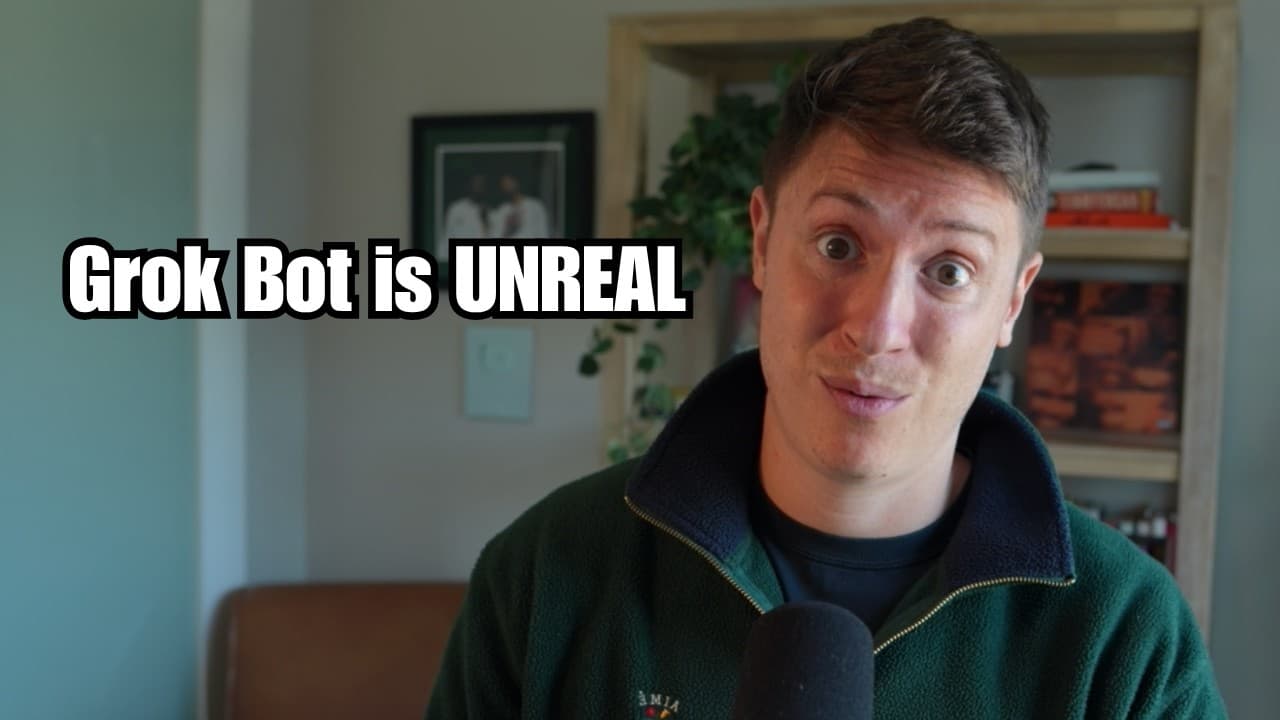
SpaceX AI just released Grockbot, a direct competitor to Hermes Agent and OpenClaw. It's powered by their brand new AI model Gro 4.6 and it can do anything a human being can do on a computer while also having its own computer in the cloud. I've been testing it the last week and it is a really really good tool. But the question becomes, should you r... Read More
Key Insights
- Grok Bot is structured around multiple named AI agents with individual personas, profile images, and computers, creating the impression of a digital team. The transcript contrasts this model with the chief-of-staff-style experience attributed to Hermes Agent and OpenClaw.
- Each Grok Bot agent can use a cloud computer that remains visible to the user in real time. Users can open that computer, control its browser directly, complete login steps, and monitor the agent while it performs assigned work.
- Teach a Task converts a demonstrated browser workflow into a reusable skill. A user records a process, such as finding source information and creating a document, then the agent analyzes the demonstration so it can repeat the same sequence in future work.
- Grok Bot asks clarifying questions after receiving instructions or learning a workflow. In the demonstrated example, it asks what the recorded process should become and whether the user wants a dry run, helping refine the task before repeated execution.
- Grok Bot agents can communicate directly with one another to exchange context and work history. The demonstration shows one agent requesting a content-repurposing inventory from another, receiving the response, and exposing their messages so the user can inspect the coordination.
- The plugin marketplace gives agents access to context from other applications. The transcript identifies this as a notable capability available in the product and presents integrations as a way to connect agents with information and tools beyond their built-in computers.
- Routines provide scheduled, repeatable automation comparable to cron jobs. Users can choose when routines run, review previous runs, supply specific instructions, test them immediately, and ask an agent to recommend or create routines based on existing conversations and tasks.
- The recommended onboarding method is a brain dump followed by reverse prompting. Users first describe themselves and their work in detail, then ask what the agent can do, allowing it to recommend tasks, connected tools, and routines based on that supplied context.
- More videos from this channel:
- More from this channel: Alex Finn
Install to Summarize YouTube Videos and Get Transcripts
Explore YouTube Video Summarizer or Get YouTube Transcript Extractor
Questions & Answers
Q: What is Grok Bot and how does it work?
Grok Bot is presented as an AI agent platform powered by Grok 4.6 that can perform computer-based tasks. Its defining design is a team of named agents with distinct personas rather than one central assistant. Each agent can work through a local or cloud computer, and the user can watch, guide, or directly take control of the cloud environment.
Q: How is Grok Bot different from Hermes Agent and OpenClaw?
Grok Bot emphasizes a built-in multi-agent team whose members have separate identities and computers. The transcript describes Hermes Agent and OpenClaw as offering more of a chief-of-staff-style experience and says neither is built around the same multi-agent approach. Grok Bot also supports direct agent-to-agent communication, cloud computers, and demonstration-based skill creation within its interface.
Q: Can Grok Bot learn a task by watching a user?
Grok Bot can learn a browser-based process through its Teach a Task feature. The user starts a screen recording and manually demonstrates the desired workflow, including finding information, navigating pages, or building a document. After the recording stops, the agent reviews the demonstration, asks what the skill should accomplish, and turns the process into a reusable capability.
Q: Can Grok Bot agents communicate with each other?
Grok Bot agents can message one another to share context, knowledge, and information about completed work. In the demonstration, a newly instructed agent contacts Barry, another agent responsible for content repurposing, and requests an inventory of existing outputs. The user can inspect this conversation, reducing the need to copy context manually or explain the same business history repeatedly.
Q: How do Grok Bot routines automate recurring work?
Routines let users schedule tasks, provide recurring instructions, test an automation immediately, and inspect its past runs. The example routine repurposes weekly videos into newsletters. Users can also ask an agent which routines would be useful based on their work, and the agent can create those routines without requiring the user to configure every automation manually.
Q: Can users control a Grok Bot cloud computer directly?
Users can open an agent's cloud computer and operate it themselves, including controlling the browser and signing into accounts required for a task. The computer remains visible while the agent works, giving the user a way to monitor activity continuously. This direct access also supports teaching workflows and handling steps that require the user's credentials or intervention.
Q: What is the best way to start using Grok Bot?
The recommended starting method is to give the agent a detailed brain dump about your identity, responsibilities, workflows, and goals. After supplying that context, ask what it can do for you. The agent can then propose appropriate tasks, recommend tools or accounts to connect, and suggest routines, reducing the need to invent every use case independently.
Q: Does Grok Bot replace Hermes Agent and OpenClaw?
The available transcript does not contain the complete final verdict because it ends as the replacement discussion begins. It does establish that Grok Bot offers a strong out-of-the-box multi-agent design, built-in cloud computers, teachable workflows, agent-to-agent communication, routines, plugins, and mobile access. A definitive claim that it replaces Hermes Agent or OpenClaw would go beyond the supplied material.
Summary & Key Takeaways
-
Grok Bot presents AI assistance as a team of named agents rather than a single chief-of-staff-style assistant. Creating another agent is designed to be simple, and every agent can receive its own persona and computer. The approach aims to make delegated work feel like coordination among several persistent digital coworkers working for one user.
-
Each agent can operate a cloud computer that users may watch and control in real time. The interface also records demonstrations through its Teach a Task feature, analyzes the completed workflow, and converts it into a reusable skill. Users can additionally sign into accounts that an agent needs while monitoring its actions continuously.
-
Grok Bot combines cross-agent messaging, app plugins, scheduled routines, clarifying questions, and mobile computer control. The recommended onboarding method is to provide a detailed personal brain dump, then ask the agent to suggest useful tasks, tools, and routines. The transcript highlights clear differentiators but stops before giving its final replacement recommendation.
Read in Other Languages (beta)
Share This Summary 📚
Summarize YouTube Videos and Get Video Transcripts with 1-Click
Try YouTube Summary with ChatGPT & Claude or YouTube Transcript Generator
Explore More Summaries from Alex Finn 📚
Summarize YouTube Videos and Get Video Transcripts with 1-Click
Try YouTube Summary with ChatGPT & Claude or YouTube Transcript Generator